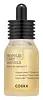
This calming ampoule is formulated around Propolis Extract and Panthenol to calm redness and hydrate skin.
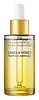
This hydrating ampoule is formulated around Propolis Extract and Honey Extract to hydrate skin and calm redness.

What's inside
What's inside
 Key Ingredients
Benefits
Concerns
No concerns
Ingredients Side-by-side
Propolis Extract 32.32%
Skin Conditioning




Glycerin
Humectant

Dipropylene Glycol
HumectantWater
Skin ConditioningHoney Extract 10.698%
Humectant
Butylene Glycol
Humectant
Glycereth-26
Humectant
Sodium Hyaluronate
Humectant

Adenosine
Skin Conditioning
Lactobacillus/Soybean Ferment Extract
Skin ConditioningDioscorea Japonica Root Extract
Skin Conditioning
Tremella Fuciformis Extract
Humectant
Aloe Barbadensis Leaf Extract
Emollient
Brassica Oleracea Italica Extract
AstringentCitrus Unshiu Peel Extract
MaskingActinidia Chinensis Fruit Extract
EmollientCymbopogon Schoenanthus Extract
Skin ConditioningPersea Gratissima Fruit Extract
EmollientPEG-60 Hydrogenated Castor Oil
Emulsifying


Trehalose
Humectant
Sodium Polyacrylate
Absorbent
Phenoxyethanol
Preservative
Ethylhexylglycerin
Skin ConditioningDisodium EDTA
ChelatingParfum
Masking



CI 19140
Cosmetic ColorantCI 14700
Cosmetic ColorantPropolis Extract 32.32%, Glycerin, Dipropylene Glycol, Water, Honey Extract 10.698%, Butylene Glycol, Glycereth-26, Sodium Hyaluronate, Adenosine, Lactobacillus/Soybean Ferment Extract, Dioscorea Japonica Root Extract, Tremella Fuciformis Extract, Aloe Barbadensis Leaf Extract, Brassica Oleracea Italica Extract, Citrus Unshiu Peel Extract, Actinidia Chinensis Fruit Extract, Cymbopogon Schoenanthus Extract, Persea Gratissima Fruit Extract, PEG-60 Hydrogenated Castor Oil, Trehalose, Sodium Polyacrylate, Phenoxyethanol, Ethylhexylglycerin, Disodium EDTA, Parfum, CI 19140, CI 14700
Reviews
Ingredients Explained
These ingredients are found in both products.
Ingredients higher up in an ingredient list are typically present in a larger amount.
Butylene Glycol (or BG) is used within cosmetic products for a few different reasons:
Overall, Butylene Glycol is a safe and well-rounded ingredient that works well with other ingredients.
Though this ingredient works well with most skin types, some people with sensitive skin may experience a reaction such as allergic rashes, closed comedones, or itchiness.
Learn more about Butylene GlycolGlycerin (or glycerol) is a compound naturally found in your skin. It's a powerhouse humectant that pulls water into the stratum corneum.
Topically, glycerin does several things at once:
Your skin makes glycerin on its own (mostly from sebaceous oil breakdown) and shuttles it to your outermost layer of skin, or your epidermis, via aquaporin-3.
Aquaporin-3 is a transporter that is essential for normal skin hydration, elasticity, and repair. Interestingly, mice lacking in AQP3 have dry and less elastic skin that can be fully corrected with glycerin.
This ingredient is non-irritating, plays well with almost every ingredient, and works across all skin types. Typical use is anywhere between 3-10% but can go up to 79% in some leave-on products.
Just know very high concentrations (>40%) can feel tacky in low humidity.
Glycerin is the name for this ingredient in American English. British English uses Glycerol/Glycerine.
Learn more about GlycerinPropolis Extract is a natural ingredient derived from propolis (also known as bee glue). Bees make propolis by mixing their saliva and beeswax with resins collected from tree buds and plants.
This ingredient is packed with bioactive compounds like flavonoids, phenolic acids, and amino acids that give it antioxidant and anti-inflammatory properties.
Research shows it can help:
It also pairs nicely with hydrating ingredients like niacinamide and ceramides.
Just so you know, Propolis Extract is recognized as a contact allergen. In patch tests done in the EU, roughly 1-6% of patients react to it. Be sure to steer clear of this ingredient if you have a known allergy to bee products.
Since it is an animal-derived product, this ingredient is not considered vegan. For vegan alternatives, check out Galactomyces Ferment Filtrate or Centella Asiatica Extract.
Learn more about Propolis ExtractSodium Hyaluronate is the salt form of hyaluronic acid. It is a long sugar chain that is naturally found in your skin, joints, and connective tissue that maintains hydration and elasticity.
In skincare, it works as a humectant. It pulls water from the environment and deeper layers of skin and binds it to the surface.
Interestingly, the size of the molecule affects its behavior:
Some clinical evidence links low molecular weight versions to improved wrinkle depth, elasticity, anti-inflammatory effects, and barrier repair.
Many serums use a blend of both weights so you can get surface hydration plus longer-lasting and deeper effects.
You'll typically see concentrations between 0.1-2% for this ingredient.
Learn more about Sodium Hyaluronate

