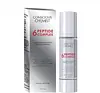
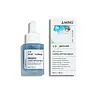
Conscious Chemist 6 Peptide Complex Collagen Boosting Firming Essence Versus Aminu The Azure Copper Peptide Serum
This anti-aging essence is formulated around Acetyl Hexapeptide-8 and Copper Tripeptide-1 to soften the look of wrinkles and refine skin texture.
This anti-aging serum is formulated around Rosa Damascena Flower Water and Copper Tripeptide-1 to soften the look of wrinkles.

What's inside
What's inside
 Key Ingredients
Benefits
Concerns
Ingredients Side-by-side
Water
Skin ConditioningPropylene Glycol
Humectant


Acetyl Hexapeptide-8
Humectant

Copper Tripeptide-1
Skin Conditioning

Palmitoyl Pentapeptide-4
Skin Conditioning
Tripeptide-1
Skin Conditioning
Hexapeptide-9
Skin Conditioning
Palmitoyl Tripeptide-1
Skin Conditioning
Polyglyceryl-10 Laurate
Skin Conditioning
Butylene Glycol
Humectant
1,2-Hexanediol
Skin Conditioning
Glycerin
Humectant
Niacinamide
Smoothing







Phenoxyethanol
Preservative
Carbomer
Emulsion StabilisingSodium Hyaluronate
Humectant
Allantoin
Skin Conditioning
Disodium EDTA
ChelatingAcrylates/C10-30 Alkyl Acrylate Crosspolymer
Emulsion StabilisingSodium Hydroxide
BufferingPropanediol
Solvent
Himanthalia Elongata Extract
Skin Protecting
Water, Propylene Glycol, Acetyl Hexapeptide-8, Copper Tripeptide-1, Palmitoyl Pentapeptide-4, Tripeptide-1, Hexapeptide-9, Palmitoyl Tripeptide-1, Polyglyceryl-10 Laurate, Butylene Glycol, 1,2-Hexanediol, Glycerin, Niacinamide, Phenoxyethanol, Carbomer, Sodium Hyaluronate, Allantoin, Disodium EDTA, Acrylates/C10-30 Alkyl Acrylate Crosspolymer, Sodium Hydroxide, Propanediol, Himanthalia Elongata Extract
Rosa Damascena Flower Water
Masking
Glycerin
Humectant
Silanetriol
Hyaluronic Acid
Humectant
Diglucosyl Gallic Acid
Methylpropanediol
SolventMethylglucoside Phosphate
Skin ConditioningCopper Lysinate/Prolinate
Skin ConditioningCaprylyl Glycol
Emollient
Propanediol
Solvent
Psidium Guajava Leaf Extract
AstringentLysine
Skin ConditioningHistidine
Humectant
Arginine
Masking
Aspartic Acid
Masking
Threonine
Serine
Masking
Glutamic Acid
Humectant
Proline
Skin Conditioning
Glycine
Buffering
Alanine
Masking
Valine
MaskingMethionine
Skin ConditioningIsoleucine
Skin ConditioningLeucine
Skin ConditioningTyrosine
MaskingPhenylalanine
Masking
Cysteine
Antioxidant
Sodium Benzoate
Masking
Potassium Sorbate
Preservative
Saccharomyces Lysate Extract
Humectant
Hydroxypropyl Starch Phosphate
Xanthan Gum
EmulsifyingPhenylpropanol
Masking

Copper Tripeptide-1
Skin Conditioning
Rosa Damascena Flower Water, Glycerin, Silanetriol, Hyaluronic Acid, Diglucosyl Gallic Acid, Methylpropanediol, Methylglucoside Phosphate, Copper Lysinate/Prolinate, Caprylyl Glycol, Propanediol, Psidium Guajava Leaf Extract, Lysine, Histidine, Arginine, Aspartic Acid, Threonine, Serine, Glutamic Acid, Proline, Glycine, Alanine, Valine, Methionine, Isoleucine, Leucine, Tyrosine, Phenylalanine, Cysteine, Sodium Benzoate, Potassium Sorbate, Saccharomyces Lysate Extract, Hydroxypropyl Starch Phosphate, Xanthan Gum, Phenylpropanol, Copper Tripeptide-1
Ingredients Explained
These ingredients are found in both products.
Ingredients higher up in an ingredient list are typically present in a larger amount.
Copper Tripeptide-1 (GHK-Cu) is a skin repairing ingredient said to boost collagen, improve firmness, and support skin regeneration.
It is a complex made up of a naturally occurring peptide (glycine-histidine-lysine) and copper, an essential trace element.
While studying wound healing, researchers noticed GHK-Cu stimulated hair follicle enlargement and growth by keeping hair in its active growth phase longer. This has made it a promising ingredient for hair regrowth treatments.
Some people have reported increased facial hair. While GHK-Cu can make your hair follicles bigger, it usually doesn’t turn soft, barely-visible facial hairs into thick, dark ones.
Anecdotal reports suggest that overusing copper peptides might lead to premature aging due to excess free copper or enzyme imbalances. This claim isn’t backed by large-scale studies.
Unfortunately, there are limited human studies for this ingredient. While early results are promising, many studies are either small, in-vitro, or not rigorously controlled.
For example, there is a 1998 study that explored the effects of copper tripeptide, vitamin C, tretinoin, and melatonin on skin repair and collagen synthesis.
After one month, increased procollagen production was seen in 7 out of 10 participants using copper tripeptide (more than those using vitamin C, melatonin, or tretinoin.
While the study was exploratory, it offers early evidence that copper tripeptide may support collagen production. Larger, well-designed trials are still needed to confirm its potential and understand individual responses.
Read more about other common types of peptides here:
Learn more about Copper Tripeptide-1Glycerin (or glycerol) is a compound naturally found in your skin. It's a powerhouse humectant that pulls water into the stratum corneum.
Topically, glycerin does several things at once:
Your skin makes glycerin on its own (mostly from sebaceous oil breakdown) and shuttles it to your outermost layer of skin, or your epidermis, via aquaporin-3.
Aquaporin-3 is a transporter that is essential for normal skin hydration, elasticity, and repair. Interestingly, mice lacking in AQP3 have dry and less elastic skin that can be fully corrected with glycerin.
This ingredient is non-irritating, plays well with almost every ingredient, and works across all skin types. Typical use is anywhere between 3-10% but can go up to 79% in some leave-on products.
Just know very high concentrations (>40%) can feel tacky in low humidity.
Glycerin is the name for this ingredient in American English. British English uses Glycerol/Glycerine.
Learn more about GlycerinPropanediol is an all-star ingredient. It softens, hydrates, and smooths the skin.
It’s often used to:
Propanediol is not likely to cause sensitivity and considered safe to use. It is derived from corn or petroleum with a clear color and no scent.
Learn more about Propanediol

