This lip moisturizer is formulated around Ricinus Communis Seed Oil and Butyrospermum Parkii Butter to hydrate lips.


What's inside
What's inside
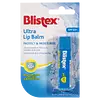 Key Ingredients
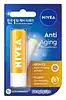
Benefits
No benefits
Concerns
Ingredients Side-by-side



Octyldodecanol
Emollient
Ricinus Communis Seed Oil
Masking




Hydrogenated Rapeseed Oil
Emollient
Beeswax
Emulsion Stabilising


Homosalate
Skin Conditioning

Octocrylene
UV Absorber
Cetyl Palmitate
Emollient
Butyl Methoxydibenzoylmethane
UV Absorber
Ethylhexyl Salicylate
UV Absorber
Cetyl Ricinoleate
Emollient
Bis-Diglyceryl Polyacyladipate-2
Emollient
Cetearyl Alcohol
Emollient
Butyrospermum Parkii Butter
Skin Conditioning
Persea Gratissima Oil
Skin Conditioning
Simmondsia Chinensis Seed Oil
Emollient
Tocopheryl Acetate
Antioxidant


BHT
Antioxidant
Parfum
Masking
CI 77891
Cosmetic ColorantCI 77492
Cosmetic ColorantOctyldodecanol, Ricinus Communis Seed Oil, Hydrogenated Rapeseed Oil, Beeswax, Homosalate, Octocrylene, Cetyl Palmitate, Butyl Methoxydibenzoylmethane, Ethylhexyl Salicylate, Cetyl Ricinoleate, Bis-Diglyceryl Polyacyladipate-2, Cetearyl Alcohol, Butyrospermum Parkii Butter, Persea Gratissima Oil, Simmondsia Chinensis Seed Oil, Tocopheryl Acetate, BHT, Parfum, CI 77891, CI 77492
Reviews
Alternatives
Ingredients Explained
These ingredients are found in both products.
Ingredients higher up in an ingredient list are typically present in a larger amount.
Also known as Avobenzone, this ingredient is an oil-soluble used to absorb the full spectrum of UVA rays (peak 357 nm).
It's one of the most effective UVA filters available but has a major caveat of photostability: avobenzone is susceptible to photodegradation.
This means it can lose efficacy when exposed to sunlight without the help of a stabilizing agent.
Studies show antioxidants (like vitamin E or vitamin C) and some UV filters (like octocrylene and Tinosorb S) can meaningfully improve its stability in a formulation.
The maximum allowable concentration according to regulation is 3% in the US + Canada, and 5% in the EU, Australia, China, Korea, and ASEAN countries.
It has a well-support safety profile: a comprehensive 2025 review found minimal toxicity with no evidence of carcinogenicity.
Overall, avobenzone is a safe and regulated ingredient used in sunscreen for over 40 years.
Learn more about Butyl Methoxydibenzoylmethane

