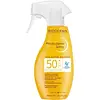
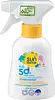
This sunscreen offers SPF 50 protection with a dewy, hydrating finish.
This chemical sunscreen covers the full UV range and blocks ~98% of UVB at SPF 50.


What's inside
What's inside
 Key Ingredients
Benefits
Concerns
Ingredients Side-by-side
Ethylhexyl Methoxycrylene
Skin Conditioning
C20-22 Alcohols
Emulsion Stabilising
Pentylene Glycol
Skin Conditioning
Microcrystalline Cellulose
AbsorbentDisodium EDTA
1,2-Hexanediol
Skin Conditioning
Caprylyl Glycol
Emollient
Mannitol
Humectant
Xylitol
Humectant
Propylene Glycol
Humectant

Cellulose Gum
Emulsion StabilisingCitric Acid
Buffering

Sodium Hydroxide
BufferingRhamnose
HumectantXanthan Gum
EmulsifyingEctoin
Skin Conditioning




Tocopherol
Antioxidant


Fructooligosaccharides
Humectant
Caprylic/Capric Triglyceride
Masking
Laminaria Ochroleuca Extract
Skin Conditioning
Ethylhexyl Methoxycrylene, C20-22 Alcohols, Pentylene Glycol, Microcrystalline Cellulose, Disodium EDTA, 1,2-Hexanediol, Caprylyl Glycol, Mannitol, Xylitol, Propylene Glycol, Cellulose Gum, Citric Acid, Sodium Hydroxide, Rhamnose, Xanthan Gum, Ectoin, Tocopherol, Fructooligosaccharides, Caprylic/Capric Triglyceride, Laminaria Ochroleuca Extract
Water
Skin ConditioningDibutyl Adipate
EmollientDiethylamino Hydroxybenzoyl Hexyl Benzoate
UV Filter
Glycerin
Humectant
C12-15 Alkyl Benzoate
AntimicrobialEthylhexyl Salicylate
UV Absorber
Ethylhexyl Triazone
UV Absorber
Phenylbenzimidazole Sulfonic Acid
UV Absorber
Propylheptyl Caprylate
EmollientVp/Hexadecene Copolymer
Bis-Ethylhexyloxyphenol Methoxyphenyl Triazine
Skin Conditioning
Triacontanyl Pvp
HumectantTocopheryl Acetate
Antioxidant
Caprylyl Glycol
Emollient
Microcrystalline Cellulose
AbsorbentSodium Hydroxide
BufferingAcrylates Copolymer
Disodium EDTA
Galactoarabinan
Cellulose Gum
Emulsion StabilisingCaprylhydroxamic Acid
Acrylates/C10-30 Alkyl Acrylate Crosspolymer
Emulsion StabilisingCitric Acid
Buffering
Tocopherol
Antioxidant
Water, Dibutyl Adipate, Diethylamino Hydroxybenzoyl Hexyl Benzoate, Glycerin, C12-15 Alkyl Benzoate, Ethylhexyl Salicylate, Ethylhexyl Triazone, Phenylbenzimidazole Sulfonic Acid, Propylheptyl Caprylate, Vp/Hexadecene Copolymer, Bis-Ethylhexyloxyphenol Methoxyphenyl Triazine, Triacontanyl Pvp, Tocopheryl Acetate, Caprylyl Glycol, Microcrystalline Cellulose, Sodium Hydroxide, Acrylates Copolymer, Disodium EDTA, Galactoarabinan, Cellulose Gum, Caprylhydroxamic Acid, Acrylates/C10-30 Alkyl Acrylate Crosspolymer, Citric Acid, Tocopherol
Reviews
Ingredients Explained
These ingredients are found in both products.
Ingredients higher up in an ingredient list are typically present in a larger amount.
Caprylyl Glycol is a humectant, skin conditioner, emollient, and preservative booster derived from either caprylic acid or synthetically created.
Typical use levels vary from 0.3-1% as a preservative booster and go up to 2% to condition skin.
Because it is not a free-fatty acid, this ingredient is fungal acne safe (there's nothing for Malassezia to feed on).
Learn more about Caprylyl GlycolCellulose Gum is a water-soluble polymer that comes from cellulose. It is used to change the texture of a product and to help stabilize emulsions.
As an emulsifier, cellulose gum specifically thicken the texture of water-based products.
This ingredient is considered hypoallergenic and non-toxic. Cellulose Gum can be found in cosmetics, food, and other household goods such as paper products.
Learn more about Cellulose GumCitric Acid is an alpha hydroxy acid (AHA) naturally found in citrus fruits like oranges, lemons, and limes.
Like other AHAs, citric acid can exfoliate skin by breaking down the bonds that hold dead skin cells together. This helps reveal smoother and brighter skin underneath.
However, this exfoliating effect only happens at high concentrations (20%) which can be hard to find in cosmetic products.
Due to this, citric acid is usually included in small amounts as a pH adjuster. This helps keep products slightly more acidic and compatible with skin's natural pH.
In skincare formulas, citric acid can:
While it can provide some skin benefits, research shows lactic acid and glycolic acid are generally more effective and less irritating exfoliants.
Most citric acid used in skincare today is made by fermenting sugars (usually from molasses). This synthetic version is identical to the natural citrus form but easier to stabilize and use in formulations.
Read more about some other popular AHA's here:
Learn more about Citric AcidDisodium EDTA is a chelating agent. It grabs onto and deactivates metal ions that sneak into your products from water, packaging, or air.
This ingredient mainly works behind the scenes and helps with:
On top of that, this ingredient can counteract the effects of hard water by binding to the minerals in it.
One thing worth knowing is that Disodium EDTA has been shown to be a mild penetration enhancer. It can help other ingredients absorb into skin more effectively which can be a double-edged sword (great for actives, but can also make the active too strong if you have sensitive skin).
Clinical patch testing showed no significant skin irritation at typical use concentrations and minimal dermal absorption.
You'll most likely see this ingredient near the end of an ingredient list. It's typically found in concentrations less than 1%.
Learn more about Disodium EDTAMicrocrystalline Cellulose is another name for refined wood pulp. It is used as an emulsifier and mattifying ingredient. As an emulsifier, it helps keep ingredients together.
Sodium Hydroxide is also known as lye or caustic soda. It is used to adjust the pH of products; many ingredients require a specific pH to be effective.
In small amounts, sodium hydroxide is considered safe to use. However, large amounts may cause chemical burns due to its high alkaline.
Your skin has a natural pH and acid mantle. This acid mantle helps prevent harmful bacteria from breaking through. The acid mantle also helps keep your skin hydrated.
"Alkaline" refers to a high pH level. A low pH level would be considered acidic.
Learn more about Sodium HydroxideTocopherol is a fat-soluble antioxidant known as Vitamin E.
You'll find this ingredient in the vast majority of skincare (for good reason). It works to neutralize free radicals, or unstable molecules generated by UV exposure, pollution, and other environmental stressors, before they can cause oxidative damage to your skin cells.
Topically applied tocopherol has been shown to protect against UV damage by ramping up the skin's own natural defense enzymes.
It also acts as a skin conditioning agent; some studies show that regular topical use can improve the skin's water-binding capacity over 2-4 weeks.
This ingredient is especially loved for being a team player. When combined with Vitamin C, the photoprotective effect of both ingredients roughly doubles and the combo also helps reduce UV-induced DNA damage.
This ingredient has some brightening potential but it's more of a prevention ingredient than spot-fader. Cell studies show it can slow down melanin production but it's worth noting that it's not the most powerful brightener out there.
In formulations, it also serves as a stabilizer that helps protect other oxidation-prone ingredients from degrading.
Concentrations usually range from 0.1-1% in most leave-on products.
Learn more about Tocopherol

