Ariul The Perfect Cleansing Tissue Plus Versus Simple Skincare Kind to Skin Micellar Makeup Remover Wipes
This mild micellar makeup remover is made to dissolve makeup, sunscreen, and daily buildup.
This cleansing wipe is made to dissolve makeup, sunscreen, and daily buildup.


What's inside
What's inside
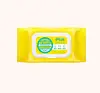 Key Ingredients
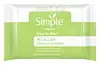
No key ingredients
Benefits
Concerns
Ingredients Side-by-side
Water
Skin ConditioningOlive Oil PEG-8 Esters
Emollient


Butylene Glycol
Humectant

Dipropylene Glycol
HumectantPEG-7 Glyceryl Cocoate
Emulsifying


Helianthus Annuus Seed Oil
Emollient
Coix Lacryma-Jobi Ma-Yuen Seed Extract
Skin ConditioningAnanas Sativus Fruit Extract
Skin ConditioningPrunus Mume Fruit Extract
Humectant
Bromelain
Skin Conditioning
Lactobacillus/Pumpkin Ferment Extract
Skin ConditioningMyrciaria Dubia Fruit Extract
Skin ConditioningChamomilla Recutita Extract
Skin Conditioning

Papain
Skin Conditioning
PEG-60 Hydrogenated Castor Oil
Emulsifying
Cetylpyridinium Chloride
AntimicrobialCaprylyl Glycol
Emollient
Cocamidopropyl Pg-Dimonium Chloride Phosphate
Citric Acid
Buffering

Sodium Citrate
BufferingDisodium EDTA
ChelatingEucalyptus Globulus Leaf Oil
Perfuming



Citrus Aurantifolia Oil
Cleansing
Pinus Sylvestris Leaf Extract
TonicCitrus Aurantium Dulcis Peel Oil
Masking
Citrus Aurantium Bergamia Fruit Oil
Masking
Citrus Limon Peel Oil
Masking
Citral
Perfuming
Limonene
Perfuming
Linalool
Perfuming
Water, Olive Oil PEG-8 Esters, Butylene Glycol, Dipropylene Glycol, PEG-7 Glyceryl Cocoate, Helianthus Annuus Seed Oil, Coix Lacryma-Jobi Ma-Yuen Seed Extract, Ananas Sativus Fruit Extract, Prunus Mume Fruit Extract, Bromelain, Lactobacillus/Pumpkin Ferment Extract, Myrciaria Dubia Fruit Extract, Chamomilla Recutita Extract, Papain, PEG-60 Hydrogenated Castor Oil, Cetylpyridinium Chloride, Caprylyl Glycol, Cocamidopropyl Pg-Dimonium Chloride Phosphate, Citric Acid, Sodium Citrate, Disodium EDTA, Eucalyptus Globulus Leaf Oil, Citrus Aurantifolia Oil, Pinus Sylvestris Leaf Extract, Citrus Aurantium Dulcis Peel Oil, Citrus Aurantium Bergamia Fruit Oil, Citrus Limon Peel Oil, Citral, Limonene, Linalool






Ingredients Explained
These ingredients are found in both products.
Ingredients higher up in an ingredient list are typically present in a larger amount.
Disodium EDTA is a chelating agent. It grabs onto and deactivates metal ions that sneak into your products from water, packaging, or air.
This ingredient mainly works behind the scenes and helps with:
On top of that, this ingredient can counteract the effects of hard water by binding to the minerals in it.
One thing worth knowing is that Disodium EDTA has been shown to be a mild penetration enhancer. It can help other ingredients absorb into skin more effectively which can be a double-edged sword (great for actives, but can also make the active too strong if you have sensitive skin).
Clinical patch testing showed no significant skin irritation at typical use concentrations and minimal dermal absorption.
You'll most likely see this ingredient near the end of an ingredient list. It's typically found in concentrations less than 1%.
Learn more about Disodium EDTASodium Citrate is the sodium salts of citric acid. In skincare, it is used to alter pH levels and acts as a preservative.
Its main functions are to maintain the pH of a product and neutralize metal ions.
The acidity of our skin is maintained by our glands and skin biome; normal pH level of skin is slightly acidic (~4.75-5.5).
Being slightly acidic allows our skin to create an "acid mantle". This acid mantle is a thin barrier that protects our skin from bacteria and contaminants.
Learn more about Sodium CitrateWater. It's the most common cosmetic ingredient of all. You'll usually see it at the top of ingredient lists, meaning that it makes up the largest part of the product.
So why is it so popular? Water most often acts as a solvent - this means that it helps dissolve other ingredients into the formulation.
You'll also recognize water as that liquid we all need to stay alive. If you see this, drink a glass of water. Remember to stay hydrated!
Learn more about Water

