Pestle & Mortar Superstar Retinoid Night Oil
A oil with 14 ingredients, including retinoid.
This anti-aging oil is formulated around Hydroxypinacolone Retinoate and Vitis Vinifera Seed Oil to soften the look of wrinkles and refine skin texture.
Worth noting
Contains a retinoid, which is best introduced gradually.
We independently verify ingredients, backed by peer-reviewed research. Suggest an update.
What's inside
Ingredients List
Vitis Vinifera Seed Oil
Emollient




Simmondsia Chinensis Seed Oil
Emollient

Persea Gratissima Oil
Skin Conditioning

Rosa Canina Fruit Oil
Emollient
Punica Granatum Seed Oil
Emollient
Ribes Nigrum Fruit Oil
Perfuming


Hydroxypinacolone Retinoate
Skin Conditioning






Daucus Carota Sativa Seed Oil
Emollient
Nigella Sativa Seed Oil
Emollient
Calophyllum Inophyllum Seed Oil
Antimicrobial
Vaccinium Macrocarpon Seed Oil
Skin Conditioning
Dimethyl Isosorbide
SolventCalendula Officinalis Flower Oil
Masking
Helianthus Annuus Seed Oil
Emollient
Vitis Vinifera Seed Oil, Simmondsia Chinensis Seed Oil, Persea Gratissima Oil, Rosa Canina Fruit Oil, Punica Granatum Seed Oil, Ribes Nigrum Fruit Oil, Hydroxypinacolone Retinoate, Daucus Carota Sativa Seed Oil, Nigella Sativa Seed Oil, Calophyllum Inophyllum Seed Oil, Vaccinium Macrocarpon Seed Oil, Dimethyl Isosorbide, Calendula Officinalis Flower Oil, Helianthus Annuus Seed Oil
Key Ingredients
Benefits
Concerns
Ingredients Explained
Vitis Vinifera Seed Oil comes from the grape vine. Grape seeds are a byproduct of creating grape juice or wine.
The components of grape seeds have many skin benefits. Research has found it to be antimicrobial and anti-inflammatory. It also contains many potent antioxidants such as Vitamin E , Vitamin C, proanthocyanidins, polyphenols, flavonoids, and anthocyanins. Proanthocyanidin has been shown to help even out skin tone.
Antioxidants help fight free-radical molecules. Free-radical molecules are capable of damaging our cells and other genetic material. Antioxidants help stabilize free-radicals by donating extra electrons. Grape seed extract may help reduce the signs of aging.
The antimicrobial properties of grape seed may help treat acne. However, more research is needed to support this claim.
Grape seed has also been found to help absorb UV rays. Grape seed extract should not replace your sunscreen.
The fatty acids of grape seed oil give it emollient properties. Emollients help soothe and soften your skin by creating a film. This film traps moisture within, keeping your skin hydrated.
Learn more about Vitis Vinifera Seed OilJojoba oil is one of the most well-studied plant-derived ingredients in cosmetics. It is an emollient with a special structure.
Because it is made up of 97-98% wax esters, it closely mirrors the linear monoesters found in human sebum. This makes it skin compatible, non-greasy, and lightweight.
Unlike other plant oils, jojoba wax doesn't easily penetrate skin. It mostly works in the uppermost layers as an emollient. This just means it forms a light barrier on the skin to help retain moisture.
Formulations with jojoba esters up to 90% reduced transepidermal water loss (TEWL) and increased barrier recovery by 81% (outperforming bisabolol at 47%).
Besides barrier support, the science also suggests jojoba to have anti-inflammatory effects and potential applications for skin infections, aging, and wound healing.
Fun fact: Indigenous cultures have used jojoba as a moisturizer and to help treat burns for centuries.
Fungal acne: The Malassezia yeast is known to metabolize fatty acids in the C11-24 range and jojoba's dominant fatty acid components fall into this range. This ingredient may not be fungal acne safe.
Learn more about Simmondsia Chinensis Seed OilThis ingredient is also known as Avocado oil. It's the cold-pressed oil from the flesh of the avocado fruit packed with fatty acids (mostly oleic acid).
The rich fatty acid profile allows it to function as a skin conditioning agent and emollient; it helps soften and smooth skin while reducing water loss.
Preclinical research has found that topical avocado oil increased collagen synthesis and reduced inflammation during wound healing, giving it some skin-repairing credibility.
The unsaponifiable fraction of the oil is also interesting: studies on avocado unsaponifiables showed that it helped skin produce more collagen and other structural compounds that support healing.
The CIR Expert Panel has found this ingredient to be non-irritating in formulations.
This ingredient may not be fungal acne safe. This is because the oleic acid content falls within the range that Malassezia can use as a food source.
This ingredient does have a comedogenic rating of 0-3, but this doesn't mean a formula with this ingredient will clog pores. Human testing has proved that any finished product with a comedogenic ingredient won't automatically make you break out; it really comes down to concentration, formula, and your skin.
Learn more about Persea Gratissima OilRosa Canina Fruit Oil is a non-fragrant plant oil that has earned its skincare reputation through chemistry.
It's dominated by fatty acids like linoleic acid (~35-55%), alpha-linolenic acid (~17-27%), and oleic acid (~14-22%). This is the exact profile that supports skin barrier, locks in hydration, and calms inflammation.
A 2024 review found evidence for the Rosa canina species supports its use for scarring, hyperpigmentation, wrinkles, and atopic dermatitis; this was mostly credited to its vitamin C content and fatty acid composition as the primary active mechanisms.
You might see this ingredient marketed as a "natural retinol". Some rosehip seed oils contains traces of all-trans-retinoic acid but these trace amounts are far below biologically active levels.
The Cosmetic Ingredient Review Panel has deemed this ingredient safe and it's well-tolerated.
Fungal acne: The fatty acids of this oil fall into the C11-24 range that Malassezia yeast can metabolize, so this ingredient may not be fungal acne safe.
Learn more about Rosa Canina Fruit OilPunica Granatum Seed Oil is created from the seeds of the pomegranate. Pomegranate seed oil helps hydrate the skin, is anti-inflammatory, and contains antioxidants.
Pomegranates are rich in fatty acids, including an unsaturated fatty acid by the name of Punicic acid. Other components of pomegranates include Vitamin E, Vitamin C, and bioactive lipids such as phytosterols, phospholipids, and triterpenes. Punicic acid helps soothe inflammation.
As an emollient, pomegranate oil creates a thin film on the skin. This film helps prevent moisture loss, keeping your skin hydrated.
Learn more about Punica Granatum Seed OilRibes Nigrum Fruit Oil is a fragrance and is an oil.
Hydroxypinacolone Retinoate (aka Granactive Retinoid or HPR) is a retinoid that is part of the same vitamin A family as retinol.
It is an ester of retinoic acid that binds directly to your skin's retinoic acid receptors so it doesn't need your skin to convert it through several steps before it can do anything.
In practice, this means it does the classic retinoid jobs in a formula:
The best part is that it can do all this with noticeably less redness, flaking, and stinging than traditional retinoids.
That gentle reputation is backed by lab work as well; a 2018 study on skin models found that HPR triggered higher retinoid-gene activity than retinol, retinal, or retinyl propionate at the same concentrations while being less irritating to cells.
It also boosted procollagen production to levels similar to retinoic acid itself.
A 2023 study showed HPR works synergistically with retinyl propionate to switch on collagen-building pathways and a 2025 clinical serum study in women with mild photoaging saw improvements in wrinkles and elasticity (though that formula also contained retinol, peptides, and Silybin).
One naming quirk worth mentioning:
You'll likely see this ingredient sold under the trade name "Granactive Retinoid", which is actually only 10% HPR blended with 90% Dimethyl Isosorbide solvent. This means a 5% Granactive Retinoid really only means about 0.5% HPR.
Finished products typically land somewhere between 0.05-1% and it's happiest formulated at a mildly acidic to neutral pH (~5.5-6.5).
Another perk is that this is one of the more light- and temperature-stable retinoids which is a nice bonus for shelf life.
Learn more about Hydroxypinacolone RetinoateDaucus Carota Sativa Seed Oil is also known as carrot seed oil. In skincare, it behaves as an emollient as a fixed oil and as a fragrance ingredient as an essential oil.
It's a fatty emollient oil whose main fatty acids are petroselinic (about 59%), linoleic (about 12%), palmitic (about 10%) and stearic (about 2%).
All studies done on this ingredient are in vitro or animal; carrot seed essential oil has been shown to speed up wound closure in rats. Cell culture has also shown it to have anti-inflammatory and anti-microbial activity against gram-positive bacteria.
There is a myth going around that this ingredient has an SPF of 38-40. It traces back to a 2009 paper that tested multi-ingredient herbal sunscreen and not just this oil. When tested properly, carrot seed oil measured SPF 0.1 in vitro and 2.5 in vivo. Please do not treat this ingredient as sun protection!
Allergies are documented but uncommon and most of the documented cases come from canning factory workers. It's safe to patch test if you have botanical sensitivities or allergies.
The essential oil version of this ingredient is a terpene-rich fragrance material so those with fragrance sensitivities should also patch test.
There is a published case of phytophotodermatitis after use of a carrot extract-containing sunscreen that presented as a hyperpigmented patch. This is because Apiaceae plants can carry furanocoumarins.
Carrot is in the same plant family as celery and parsley, which contain furanocoumarins. These are compounds that can make skin more reactive to sunlight.
Carrots themselves have very little of them (usually only trace amounts) and the steam-distilled version shouldn't carry them at all since they're too heavy to come through distillation.
If you're using a leave-on product with it during the day, wearing sunscreen covers it.
This ingredient shows up on a lot of "pore-clogging" lists but there's no real evidence behind that. It doesn't even have a comedogenic rating from an actual study; the numbers you'll find online come from blogs citing other blogs.
Ratings for other ingredients mostly come from a 1980s rabbit ear test. This test doesn't translate well to human skin or to real products because the ingredient sits at a much lower percentage.
Some people still find it breaks them out due to the fatty acid profile. So if that's you, definitely trust your skin.
The Malassezia yeast feeds on long-chain fatty acids (C11-24). The fatty acids in this ingredient fall right into that range, making it not fungal acne safe.
Learn more about Daucus Carota Sativa Seed OilThis ingredient is also known as black seed oil or black cumin. It has emollient, skin conditioning, and perfuming properties.
It is rich in linoleic and oleic acids, making it a great skin hydrator or emollient. Other compounds found in black seed oil include thymoquinone, sterols, and various terpenes; these compounds give it antioxidant, anti-inflammatory, and antimicrobial properties.
Studies show thymoquinone helps reduce oxidative stress and dampens the inflammatory pathways. Combining this with the oils makes this ingredient great for barrier repair and moisturization.
Other studies have found this ingredient to have antimicrobial activity against several acne-causing bacteria.
Learn more about Nigella Sativa Seed OilCalophyllum Inophyllum Seed Oil comes from the Tamanu tree. This tree grows in tropical regions of Asia and Polynesian countries such as Fiji.
Calophyllum Inophyllum Seed Oil contains many fatty acids such as linoleic, oleic, stearic, and palmitic acid. These properties help your skin stay hydrated.
As an antioxidant, Calophyllum Inophyllum Seed Oil may also slow down the signs of aging. Antioxidants help fight unstable free-radical molecules.
These molecules may damage your skin cells and speed up aging. By helping to stabilize these molecules, antioxidants may help slow the signs of aging.
A study from 2015 found Tamanu oil to have antibacterial and anti-inflammatory properties.
Another study from 2009 found Tamanu Oil to help absorb UV rays. However, this should not replace your sunscreen.
Due to the fatty acid content, this ingredient may not be fungal-acne safe.
Learn more about Calophyllum Inophyllum Seed OilThis is a yellow-greenish oil cold-pressed from cranberry sides that's packed with a balanced 1:1 ratio of omega-3 (linolenic acid) and omega-6 (linolenic acid) fatty acids at around 30-38%.
There's also a solid dose of skin-nourishing omega-9, vitamin E, and polyphenols.
In cosmetics, it functions as an emollient with real staying power for hydration and barrier support.
Studies show it reduces oxidative stress in cells, lowers inflammatory markers, and has wound-healing potential that outperformed standard treatments in animal models.
It's also been shown to have antimicrobial properties against problematic bacteria while promoting beneficial skin flora.
Allergic reactions are rare but patch testing is a good idea if you have sensitive skin or fruit allergies.
Typical use concentrations are usually 2-20%.
Learn more about Vaccinium Macrocarpon Seed OilDimethyl Isosorbide (often shortened to DMI) is a sugar-derived solvent made from sorbitol. It's used to dissolve tricky ingredients and help them mix smoothly into a formula.
Many actives sit as gritty crystals when undissolved, so DMI swoops in to full dissolve them. This helps improve texture, stability, and how evenly an active is distributed.
It does have a penetration-enhancing reputation that is a bit more nuanced than marketing suggests; a cell study on human skin found that 10% DMI didn't significantly boost the permeation of Hydroquinone, Salicylic Acid, or Octadecenedioic Acid compared to controls (though it did improve their solubility in the formula itself).
Typical usage concentrations usually range from 1-10% depending on the formula's needs; this ingredient is also well tolerated at these levels.
Learn more about Dimethyl IsosorbideCalendula Officinalis Flower Oil comes from the common Marigold plant. Marigolds have antioxidant and anti-inflammatory properties.
This is due to their flavonoid content. Flavonoids are a group of substances found naturally in plants. They possess antioxidant and inflammation properties.
This ingredient is skin soothing and helps reduce inflammation. Emerging studies show it inhibits NO (nitric oxide) production to reduce inflammation. NO acts as a signaling molecule that can tell the skin to become inflammed. By regulating NO, marigold can effectively soothe the skin.
A study from 2008 found marigold to have potential anti-fungal properties against 23 types of fungus found on the human body. Please note - fungal acne comes from a yeast (not a fungus).
Marigolds have been used in traditional medicine throughout Asia and Europe.
Learn more about Calendula Officinalis Flower OilHelianthus Annuus Seed Oil is a plant oil derived from the seeds of a sunflower.
It is rich in fatty acids, primarily linoleic acid and oleic acid. This gives it emollient and skin conditioning properties.
The reason this ingredient is so effective is because it forms a thin film on the skin that reduces transepidermal water loss (TEWL) while supplying linoleic acid to the stratum corneum to improve barrier strength.
The high linoleic acid content is particularly noteworthy for acne-prone skin.
Research suggests that acne-prone skin tends to be deficient in linoleic acid in sebum. Topical application may help replenish this to support a healthier follicular environment and less comedone-promoting sebum.
One randomized study found sunflower seed oil preserved skin barrier integrity in adult volunteers with and without atopic dermatitis (outperforming olive oil).
This ingredient is well-studied, gentle, and an effective emollient suitable for most skin types.
On fungal acne: This ingredient may not be Fungal acne (Malassezia folliculitis) safe. This is because it contains fatty acids with carbon chain lengths in the C11-C24 range.
Learn more about Helianthus Annuus Seed OilReviews
No written reviews yet. Be the first to review this product.
Recent searches
Search reviews by skin type, ingredient, or keyword.
Where it's from
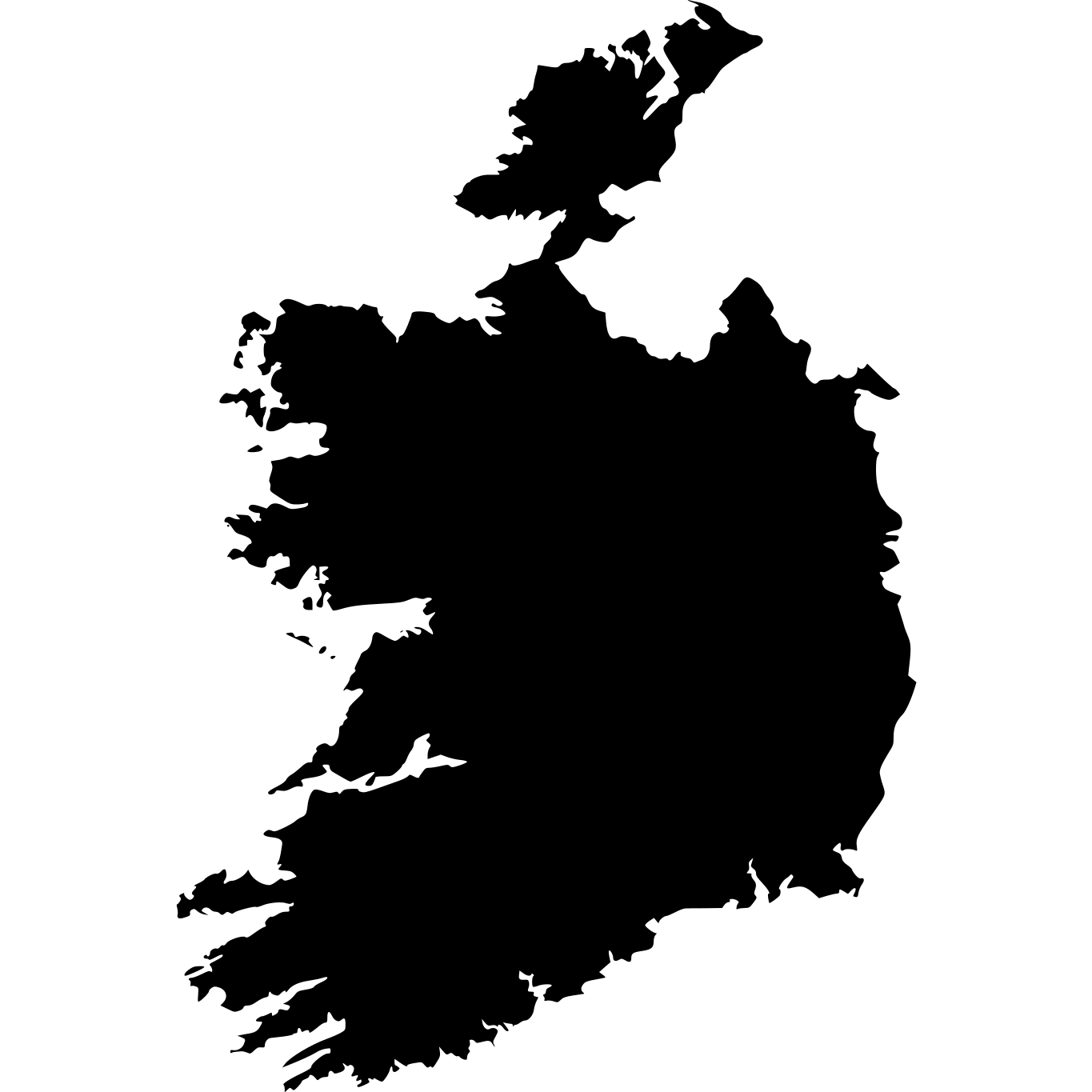
Pestle & Mortar is a Irish brand

We're dedicated to providing you with the most up-to-date and science-backed ingredient info out there.
The data we've presented on this page has been verified by a member of the SkinSort Team.
Read more about us· Updated July 22, 2026 • Added by KristinKlaus_512


