AHAVA Extreme Firming Eye Cream
A eye moisturizer with 33 ingredients.
Eye moisturizer with 33 ingredients
We independently verify ingredients, backed by peer-reviewed research. Suggest an update.
What's inside
Ingredients List
Water
Skin ConditioningSodium Caprooyl Hyaluronate
Skin ConditioningPEG/PPG-18/18 Dimethicone
Emulsifying
Hdi/Trimethylol Hexyllactone Crosspolymer
Dimethicone Crosspolymer
Emulsion Stabilising
Hydrogenated Soy Polyglycerides
Skin ConditioningCetyl Hydroxyethylcellulose
Emulsion StabilisingIsohexadecane
EmollientGlycerin
Humectant


Quaternium-18 Hectorite
Phenyl Trimethicone
Skin Conditioning
Hamamelis Virginiana Water
Astringent



Cetraria Islandica Extract
CleansingHydroxypropyl Cyclodextrin
MaskingCaprylic/Capric Triglyceride
Masking
Cyclopentasiloxane
Emollient
Butyrospermum Parkii Butter
Skin Conditioning


Squalene
Emollient
C30-45 Alkyldimethylsilyl Polypropylsilsesquioxane
CI 77891
Cosmetic ColorantEthylhexylglycerin
Skin ConditioningMaris Aqua
HumectantPentaerythrityl Stearate/Caprate/Caprylate/Adipate
EmollientLycium Barbarum Fruit Extract
Astringent
Cetyl PEG/PPG-10/1 Dimethicone
Emulsifying
Rubus Ellipticus Root Extract
HumectantOctyldodecyl PCA
EmollientAllantoin
Skin Conditioning

Dunaliella Salina Extract
Skin ConditioningPhoenix Dactylifera Fruit Extract
EmollientDisodium Lauriminodipropionate Tocopheryl Phosphates
CleansingPorphyridium Polysaccharide
Antioxidant
Polyglyceryl-4 Isostearate
Emulsifying
Water, Sodium Caprooyl Hyaluronate, PEG/PPG-18/18 Dimethicone, Hdi/Trimethylol Hexyllactone Crosspolymer, Dimethicone Crosspolymer, Hydrogenated Soy Polyglycerides, Cetyl Hydroxyethylcellulose, Isohexadecane, Glycerin, Quaternium-18 Hectorite, Phenyl Trimethicone, Hamamelis Virginiana Water, Cetraria Islandica Extract, Hydroxypropyl Cyclodextrin, Caprylic/Capric Triglyceride, Cyclopentasiloxane, Butyrospermum Parkii Butter, Squalene, C30-45 Alkyldimethylsilyl Polypropylsilsesquioxane, CI 77891, Ethylhexylglycerin, Maris Aqua, Pentaerythrityl Stearate/Caprate/Caprylate/Adipate, Lycium Barbarum Fruit Extract, Cetyl PEG/PPG-10/1 Dimethicone, Rubus Ellipticus Root Extract, Octyldodecyl PCA, Allantoin, Dunaliella Salina Extract, Phoenix Dactylifera Fruit Extract, Disodium Lauriminodipropionate Tocopheryl Phosphates, Porphyridium Polysaccharide, Polyglyceryl-4 Isostearate
Key Ingredients
Benefits
Concerns
Ingredients Explained
Water. It's the most common cosmetic ingredient of all. You'll usually see it at the top of ingredient lists, meaning that it makes up the largest part of the product.
So why is it so popular? Water most often acts as a solvent - this means that it helps dissolve other ingredients into the formulation.
You'll also recognize water as that liquid we all need to stay alive. If you see this, drink a glass of water. Remember to stay hydrated!
Learn more about WaterWe don't have a description for Sodium Caprooyl Hyaluronate yet.
PEG/PPG-18/18 Dimethicone is a modified version of dimethicone with emulsifying properties. It helps add a silky and lightweight feel to products like sunscreens and foundations.
Its unique structure allows it to bridge the gap between water-loving and oil-loving ingredients. This makes it especially good at creating stable, velvety, and elegant formulations.
This ingredient is a powder used to improve texture, slip, and give products a silky texture.
Dimethicone Crosspolymer is a silicone created by modifying dimethicone with hydrocarbon side chains. Due to its large size, it does not penetrate skin. It is considered non-occlusive.
Dimethicone Crosspolymer is used to stabilize and thicken products. It also helps give products a silky feel.
We don't have a description for Hydrogenated Soy Polyglycerides yet.
We don't have a description for Cetyl Hydroxyethylcellulose yet.
Isohexadecane is added to enhance texture, emulsify, and to help cleanse. It is an isoparrafin. It is a component of petrolatum.
Due to its large size, Isohexadecane is not absorbed by the skin. Instead, it sits on top and acts as an emollient. Emollients help keep your skin soft and smooth by trapping moisture within.
Isohexadecane is often used in products designed to help oily skin. It is lightweight and non-greasy while helping to moisturize. When mixed with silicones, it gives a product a silky feel.
Learn more about IsohexadecaneGlycerin (or glycerol) is a compound naturally found in your skin. It's a powerhouse humectant that pulls water into the stratum corneum.
Topically, glycerin does several things at once:
Your skin makes glycerin on its own (mostly from sebaceous oil breakdown) and shuttles it to your outermost layer of skin, or your epidermis, via aquaporin-3.
Aquaporin-3 is a transporter that is essential for normal skin hydration, elasticity, and repair. Interestingly, mice lacking in AQP3 have dry and less elastic skin that can be fully corrected with glycerin.
This ingredient is non-irritating, plays well with almost every ingredient, and works across all skin types. Typical use is anywhere between 3-10% but can go up to 79% in some leave-on products.
Just know very high concentrations (>40%) can feel tacky in low humidity.
Glycerin is the name for this ingredient in American English. British English uses Glycerol/Glycerine.
Learn more about GlycerinWe don't have a description for Quaternium-18 Hectorite yet.
Phenyl Trimethicone is a silicon-based polymer. It is derived from silica.
Phenyl Trimethicone is used as an emollient and prevents products from foaming.
As an emollient, it helps trap moisture in the skin. It is considered an occlusive.
Learn more about Phenyl TrimethiconeHamamelis Virginiana Water is made by distilling parts of the witch hazel plant. You can also call this ingredient "witch hazel water".
The name 'Hamamelis Virginiana Water' refers to the distillation product used in cosmetics. On the other hand, 'Witch Hazel' refers to the active drug ingredient.
Unless it is specified to be non-alcohol, many types of witch hazel ingredients are distilled in denatured alcohol.
Witch Hazel water is an astringent, anti-inflammatory antioxidant, and antibacterial ingredient.
It contains tannins. Tannins have a drying effect when used on skin by constricting proteins. The constriction also minimizes the appearance of pores.
Both the tannins and fragrance found in witch hazel may be skin-sensitizing.
Witch hazel water gets anti-inflammatory and antibacterial properties from its catechin and gallic acid content.
Indigenous groups have used witch hazel to help treat inflammation in North America for centuries.
Learn more about Hamamelis Virginiana WaterWe don't have a description for Cetraria Islandica Extract yet.
This ingredient is used in skincare as a delivery system.
It works by "encapsulating" active ingredients with its unique ring shape that is water-loving on the outside and oil-loving on the inside. This improves the stability and absorption of the product into the skin.
According to a manufacturer, it also offer some moisturizing effects.
Learn more about Hydroxypropyl CyclodextrinCaprylic/Capric Triglyceride (aka MCT Oil) is a lightweight emollient, solvent, and texture enhancer. It is considered a skin-softener by helping to prevent moisture loss.
Though it behaves like an oil, it is not technically one due to its chemical composition. One perk of this ingredient is that it is very stable, resistant to oxidation, and unlikely to go rancid.
In practice, that translates to a long shelf life and a consistently elegant skin feel.
While there is an assumption Caprylic Triglyceride can clog pores due to it being derived from coconut oil, there is no research supporting this. Just patch test if you have concerns.
Fractionated coconut oil and MCT Oil are both listed as Caprylic/Capric Triglyceride according to INCI. This is because INCI names are based on the ingredient’s final chemical composition and not its marketing name or source.
This ingredient is treated as the gold standard fungal acne safe oil. Even though it is coconut derived, the problematic lauric acid is stripped out.
This leaves just caprylic (C8) and capric (C10) acid. These chain lengths actually trend antifungal; a 2020 study found caprylic acid was enough to disrupt Malassezia furfur cell membrane, with a caprylic acid derivative damaging membrane structures at concentrations as low as 0.2%.
Learn more about Caprylic/Capric TriglycerideCyclopentasiloxane (D5) is a lightweight silicone that mostly acts as an emollient and solvent in cosmetics. Its the reason your products feel silky, fast-spreading, and non-greasy.
Since D5 is volatile, it does its thing and then evaporates off the skin quickly.
The safety profile of this ingredient is reassuring; the US CIR Expert Panel concluded D5 is safe as used in cosmetics and Health Canada concluded that D5 is not harmful to human health or the environment as currently used in cosmetics
There's a study that people mention about D5 in a rat study showing tumors. This study is related to long-term inhalation of high D5 levels.
Regulatory bodies have judged this study to be not applicable in topical skincare since skin absorption of D5 is very low and we're not really inhaling huge amounts of D5.
The only restriction for this ingredient is environmental. The European Chemicals Agency (ECHA) restricted D5 in wash-off cosmetics at or above 0.1% due to their persistence in water.
Learn more about CyclopentasiloxaneThis ingredient is also known as shea butter. It is a plant-derived extract from the nuts of the Africa shea tree and one of the most well-studied emollients.
Because it has a high concentration of fatty acids (primarily oleic, stearic, and linoleic) it is able to form a protective barrier on the skin's surface. This helps seal in moisture and prevents transepidermal water loss (TEWL).
In vitro research found an increase in skin hydration by 58% and a decrease in TEWL by 37.8% after 24 hours of applying this ingredient (pretty impressive for a single ingredient!).
Besides hydration, shea butter also contains triterpenes that have anti-inflammatory potential. In particule, lupeol cinnamate has shown the highest anti-inflammatory activity in vivo.
Shea butter also contains vitamins A and E which may contribute to antioxidant activity.
While Shea Butter has an SPF rating of about 3-4, it is not a sunscreen replacement.
This ingredient may not be fungal acne safe because its fatty acids fall within the C11-C24 range that the Malassezia yeast can metabolize.
This ingredient shows up on a lot of "pore-clogging" lists but there's no real evidence behind that. It doesn't even have a comedogenic rating from an actual study; the numbers you'll find online come from blogs citing other blogs.
Ratings for other ingredients mostly come from a 1980s rabbit ear test. This test doesn't translate well to human skin or to real products because the ingredient sits at a much lower percentage.
Some people still find it breaks them out. So if that's you, definitely trust your skin. Just know this one's based on experience and not evidence.
Learn more about Butyrospermum Parkii ButterSqualene is one of the main components of skin surface lipids. It is naturally found in our skin and makes up about 13% of sebum.
Topically, it is an emollient and skin conditioning agent.
Research highlights its role in antioxidant activity, anti-inflammatory effects, skin barrier protection, and wound healing support.
In vivo research has shown that transepidermal water loss (TEWL) caused by irritant exposure can be reverse with squalene supplementation (pointing to barrier recovery support).
Its antioxidant activity is backed by ex vivo and cell-based evidence showing it can scavenge free radicals but large-scale human clinical trials isolating this effect remain limited.
One study found squalene regulated proinflammatory behavior in ways relevant to wound healing, and in vitro fibroblast studies also shows it stimulates cell migration which is a key step in skin repair.
There's just one nuance to know about this ingredient:
Squalene is particularly vulnerable to oxidation; it breaks down from UV exposure 10x faster than the other lipids on your skin's surface. The byproducts of that breakdown can clog pores and trigger inflammation, potentially worsening acne.
This is why squalene is often hydrogenated into its stable counterpart: squalane (with an "a"). Most great formulations will have alreadu kept this in mind.
Squalene has shown no significant clinical evidence of sensitization and is a great hydrating ingredient.
Learn more about SqualeneC30-45 Alkyldimethylsilyl Polypropylsilsesquioxane is a type of silicone.
Ci 77891 is a white pigment from Titanium dioxide. It is naturally found in minerals such as rutile and ilmenite.
It's main function is to add a white color to cosmetics. It can also be mixed with other colors to create different shades.
Ci 77891 is commonly found in sunscreens due to its ability to block UV rays.
Learn more about CI 77891Ethylhexylglycerin is created from glycerin. It is a multitasker ingredient that:
The CIR Expert Panel found minimal skin absorption or sensitization of any kind in a safety assessment. Though this ingredient is considered well-tolerated, a small number of cases of allergic dermatitis have been published since 2002. Just be sure to patch test if you are unsure.
Industry-reported use ranges from 8% in rinse-off products and 2% in leave-on formulations.
Learn more about EthylhexylglycerinMaris Aqua is the INCI name for plain old sea water that is filtered and then dropped into a formula.
The name technically covers two slightly different things:
1) Actual sea water pulled from a particular depth and filtered down
2) "Marine spring water" which are fresh-water springs that resurface in the sea
Either way, you're getting water + a cocktail of minerals and trace elements (like magnesium, calcium, potassium sodium, etc).
Officially, COSIng recognizes this ingredient as a humectant that holds and retains moisture, and solvent that helps dissolve other ingredients.
The claims about this ingredient come from its minerals. A 2025 systematic review found that seawater-based therapy showed moderate effectiveness at reducing atopic dermatitis severity and improving skin barrier function.
It also showed favorable safety profile and very minimal adverse effects.
The underlying studies pointed to improvements in stratum corneum hydration, lower transepidermal water loss (TEWL), and a healthier microbial balance.
Much of this benefit is actually attributed to magnesium: a 2005 study found that bathing in a magnesium-rich Dead sea salt solution improved skin barrier function, boosted hydration, and reduced inflammation in atopic dry skin.
It's worth nothing most of this evidence comes from bathing/soaking protocols and mineral-rich waters like the Dead Sea (not necessarily a few drops on an ingredient list).
Overall, this is a gentle, well-tolerated, water-phase ingredient that can offer light hydration and a little mineral boost.
The only caveat is that very high salt concentrations can be drying for already-dry skin.
Learn more about Maris AquaWe don't have a description for Pentaerythrityl Stearate/Caprate/Caprylate/Adipate yet.
Lycium Barbarum Fruit Extract comes from the Goji Berry. Goji berries are native to China and can be found across Eurasia.
Goji berries contain polysaccharides, carotenoids and flavonoids. Antioxidants help your body fight off free-radical molecules. These molecules are unstable and may damage your skin. By making free-radicals more stable, antioxidants can help with anti-aging.
Polysaccharides help hydrate the top layer of skin due to its ability to mimic natural carbohydrates.
Learn more about Lycium Barbarum Fruit ExtractThis ingredient is a silicone-based emulsifer that helps the water and oil phases play nicely together.
It's pretty effective because one end of the molecule loves oil and the other one loves water.
Besides holding formulas together, it also leaves a silky and lightweight feel on skin without the greasiness. A manufacturer also claims it can help with the controlled release of active ingredients.
The CIR Expert Panel found this ingredient to not be sensitizing in concentrations up to 15% in human maximazation testing and dimethicone-based compounds were not comedogenic.
It has a high molecular weight well above 1,000 g/mol which means it limits meaningful skin penetration.
A 2019 study specifically tested this ingredient and found no observable Malassezia growth in its presence.
Learn more about Cetyl PEG/PPG-10/1 DimethiconeWe don't have a description for Rubus Ellipticus Root Extract yet.
We don't have a description for Octyldodecyl PCA yet.
Allantoin is a soothing ingredient known for its protective and moisturizing properties; it's basically a quiet workhorse ingredient you can find in a huge range of cosmetics.
Though it can be derived from the comfrey plant, allantoin is produced synthetically for cosmetic products to ensure purity.
Research shows it can encourage your skin cells to turn over and renew by stimulating keratinocyte and fibroblast proliferation.
It also has mild keratolytic properties to help loosen and shed dead skin cells without being harsh.
Studies also suggest allantoin can help calm inflammation by dialing down some of the chemical signals your skin sends out when it is irritated.
This ingredient is typically used in the 0.1-0.5% range, and the FDA recognizes it as a skin protectant in OTC products up to 2%.
Overall, allantoin is a wonderful addition to most routines; it is stable across a wide pH range (~4-8), works well with other ingredients, and is considered non-sensitizing/non-irritating.
Fun fact: Allantoin is naturally occurring in comfrey root, beets, chamomile, and wheat sprouts. Our bodies even produce it as a byproduct of uric acid metabolism.
Learn more about AllantoinThis is an extract from a tiny green algae that lives in super salty water. It survives the blazing sun by pumping out huge amounts of carotenoids, which is exactly why the cosmetics industry became interested in it.
The first thing to know: this one INCI name covers different materials; some versions are water or glycerin extracts, some are orange beta-carotene oleoresins, and some are purified CO2 extracts where the colored stuff is stripped out and only the colorless carotenoids (phytoene and phytofluene) are left.
All the research on is it the last kind and it's usually sold as "Simmondsia Chinensis Seed Oil + Dunaliella Salina Extract". So a product having this on the label doesn't guarantee it's the version that was studied.
In cosmetics, it's a skin conditioning agent sold as an anti-glycation and antioxidant active for sun care.
The main study behind it: 25 women used a cream with 1% of the extract on one side of the face and placebo on the other for 8 weeks during a Portuguese summer with daily beach-level sun.
The active side had fewer wrinkles, fewer red spots, lower glycation scores, and calmer reactions to a histamine challenge compared to the placebo side.
Lab tests on skin explants back this up with less inflammatory signals and less of the glycation marker.
Just know this is one small study done by the supplier, so take it as promising rather than proven for now.
Tolerance data looks good: a 50 person repeat insult patch test showed no sensitization at all and 48 hour patch tests came back with zero reactions. There are also no allergy case reports.
Typical use is ~1%.
No comedogenicity testing has been published for this ingredient so nobody can give you a real rating.
The extract itself is used at around 1% and carotenoids are not known comedogens. The variable is the carrier; the colorless-carotenoid version ships in jojoba seed oil or hydrogenated polydecene.
So the question of whether it will clog pores is really about the finished formula, not this ingredient.
Learn more about Dunaliella Salina ExtractWe don't have a description for Phoenix Dactylifera Fruit Extract yet.
We don't have a description for Disodium Lauriminodipropionate Tocopheryl Phosphates yet.
Porphyridium Polysaccharide is an antioxidant.
Polyglyceryl-4 Isostearate is a plant-derived, PEG-free emulsifier.
It's made by hooking isostearic acid onto a chain of glycerin units to give it a water-loving "head" and oil-loving "tail". This allows it to keep the oil and water mixed in a formula.
The highest reported concentration is about 24% in eye makeup but most suppliers recommend a level below 10%.
It has a clean track record for safety and found to be non-irritating.
Because it is an ester of a C18 fatty acid, Malassezia can potentially metabolize it (it sits in the C11-24 range that Malassezia likes). Therefore, this ingredient may not be fungal acne safe.
Learn more about Polyglyceryl-4 IsostearateReviews
No written reviews yet. Be the first to review this product.
Recent searches
Search reviews by skin type, ingredient, or keyword.
Where it's from
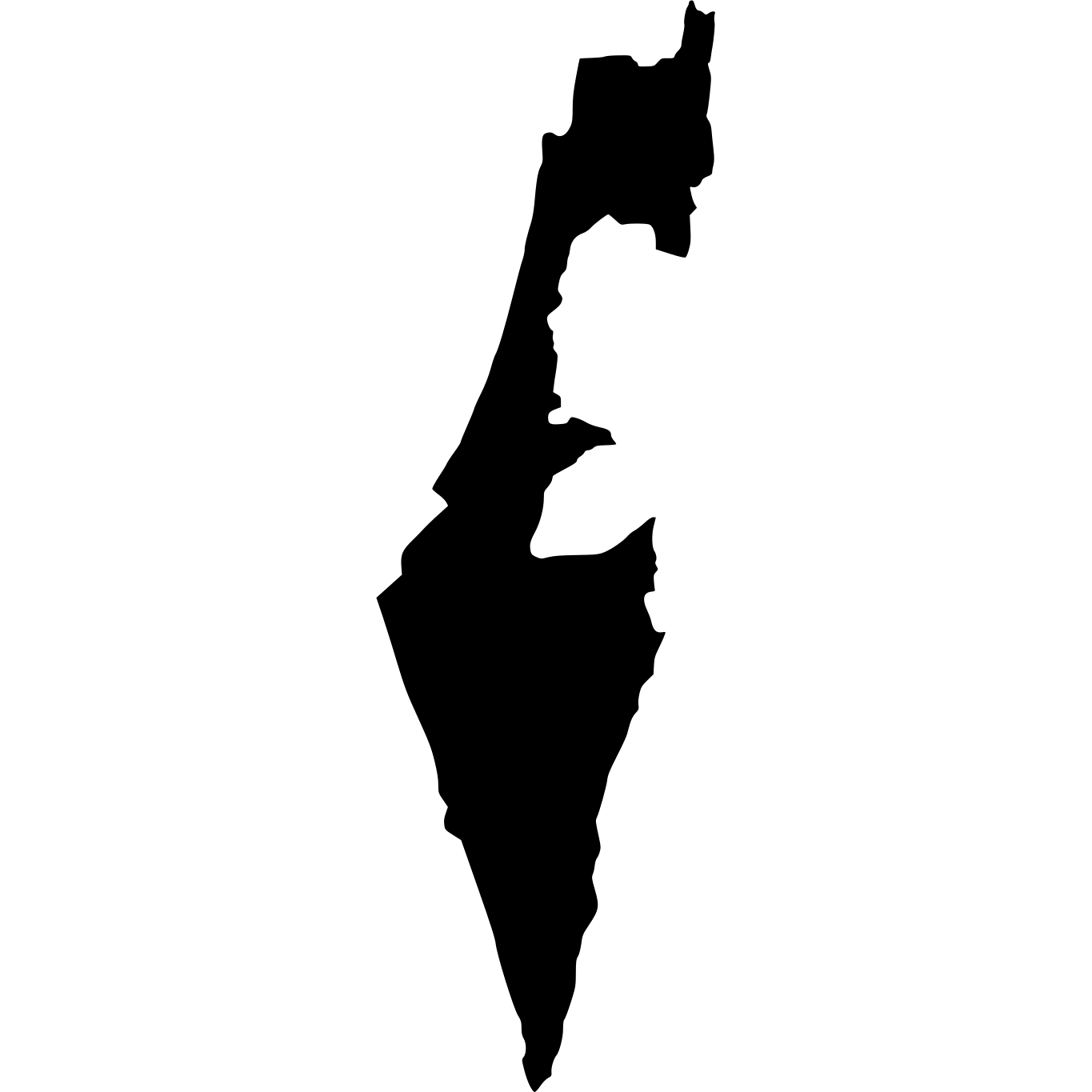
AHAVA is a Israeli brand
Often compared with

We're dedicated to providing you with the most up-to-date and science-backed ingredient info out there.
The data we've presented on this page has been verified by a member of the SkinSort Team.
Read more about us· Updated July 18, 2024


