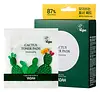
This calming toner pad uses a pre-saturated pad with Opuntia Ficus-Indica Stem Extract and Betaine Salicylate to calm redness and clear breakouts.
This hydrating toner is formulated around Oryza Sativa Extract and Panax Ginseng Root Extract to hydrate skin and strengthen the skin barrier.

What's inside
What's inside
 Key Ingredients
Benefits
Concerns
Ingredients Side-by-side






Water
Skin ConditioningBetaine
Humectant


Glycerin
Humectant
Sodium Phytate
ChelatingPropanediol
Solvent
Oryza Sativa Extract
Absorbent

Phyllostachys Pubescens Shoot Bark Extract
Skin ConditioningAspergillus Ferment
Skin ConditioningPanax Ginseng Root Extract
Emollient
Cyclodextrin
AbsorbentScutellaria Baicalensis Root Extract
Astringent
Hyaluronic Acid
Humectant
Beta-Glucan
Skin Conditioning
Cellulose Gum
Emulsion StabilisingXanthan Gum
EmulsifyingButylene Glycol
Humectant
Usnea Barbata Extract
Zanthoxylum Piperitum Fruit Extract
Skin ConditioningPulsatilla Koreana Extract
Skin ConditioningTamarindus Indica Seed Gum
Emulsion Stabilising
Polyglyceryl-10 Laurate
Skin Conditioning

Polyglyceryl-10 Myristate
Skin Conditioning
Glucose
Humectant
1,2-Hexanediol
Skin Conditioning
Alcohol
Antimicrobial



Lavandula Angustifolia Oil
Masking



Linalool
Perfuming
Water, Betaine, Glycerin, Sodium Phytate, Propanediol, Oryza Sativa Extract, Phyllostachys Pubescens Shoot Bark Extract, Aspergillus Ferment, Panax Ginseng Root Extract, Cyclodextrin, Scutellaria Baicalensis Root Extract, Hyaluronic Acid, Beta-Glucan, Cellulose Gum, Xanthan Gum, Butylene Glycol, Usnea Barbata Extract, Zanthoxylum Piperitum Fruit Extract, Pulsatilla Koreana Extract, Tamarindus Indica Seed Gum, Polyglyceryl-10 Laurate, Polyglyceryl-10 Myristate, Glucose, 1,2-Hexanediol, Alcohol, Lavandula Angustifolia Oil, Linalool
Reviews
Ingredients Explained
These ingredients are found in both products.
Ingredients higher up in an ingredient list are typically present in a larger amount.
1,2-Hexanediol is a synthetic liquid and another multi-functional powerhouse.
It is a:
- Humectant, drawing moisture into the skin
- Emollient, helping to soften skin
- Solvent, dispersing and stabilizing formulas
- Preservative booster, enhancing the antimicrobial activity of other preservatives
Butylene Glycol (or BG) is used within cosmetic products for a few different reasons:
Overall, Butylene Glycol is a safe and well-rounded ingredient that works well with other ingredients.
Though this ingredient works well with most skin types, some people with sensitive skin may experience a reaction such as allergic rashes, closed comedones, or itchiness.
Learn more about Butylene GlycolGlycerin (or glycerol) is a compound naturally found in your skin. It's a powerhouse humectant that pulls water into the stratum corneum.
Topically, glycerin does several things at once:
Your skin makes glycerin on its own (mostly from sebaceous oil breakdown) and shuttles it to your outermost layer of skin, or your epidermis, via aquaporin-3.
Aquaporin-3 is a transporter that is essential for normal skin hydration, elasticity, and repair. Interestingly, mice lacking in AQP3 have dry and less elastic skin that can be fully corrected with glycerin.
This ingredient is non-irritating, plays well with almost every ingredient, and works across all skin types. Typical use is anywhere between 3-10% but can go up to 79% in some leave-on products.
Just know very high concentrations (>40%) can feel tacky in low humidity.
Glycerin is the name for this ingredient in American English. British English uses Glycerol/Glycerine.
Learn more about Glycerin

