This mineral sunscreen covers the full UV range and blocks ~98% of UVB at SPF 40.


What's inside
What's inside
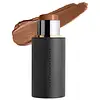 Key Ingredients
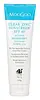
Benefits
Concerns
Ingredients Side-by-side
Caprylic/Capric Triglyceride
Masking


Kaolin
Abrasive



Caprylyl Caprylate/Caprate
Emollient
Simmondsia Chinensis Seed Oil
Emollient



Polyethylene
Abrasive
Mica
Cosmetic ColorantPolyhydroxystearic Acid
Emulsifying
Lecithin
Emollient
Triethoxycaprylylsilane

C20-24 Olefin
Skin ConditioningTocopherol
Antioxidant





Ascorbyl Palmitate
Antioxidant
Citric Acid
Buffering
Synthetic Wax
Abrasive
Rubus Idaeus Leaf Cell Culture
Skin ConditioningSilica
Abrasive
Tin Oxide
Abrasive
CI 77891
Cosmetic ColorantIron Oxides
CI 73360
Cosmetic ColorantCI 75470
Cosmetic ColorantCI 15850
Cosmetic ColorantCI 19140
Cosmetic ColorantCaprylic/Capric Triglyceride, Kaolin, Caprylyl Caprylate/Caprate, Simmondsia Chinensis Seed Oil, Polyethylene, Mica, Polyhydroxystearic Acid, Lecithin, Triethoxycaprylylsilane, C20-24 Olefin, Tocopherol, Ascorbyl Palmitate, Citric Acid, Synthetic Wax, Rubus Idaeus Leaf Cell Culture, Silica, Tin Oxide, CI 77891, Iron Oxides, CI 73360, CI 75470, CI 15850, CI 19140
Water
Skin ConditioningZinc Oxide
Cosmetic Colorant

Coco-Caprylate/Caprate
Emollient
Simmondsia Chinensis Seed Oil
Emollient
Sorbitan Olivate
Emulsifying
Glycerin
Humectant
Lecithin
Emollient
Cera Alba
Emollient
Polyglyceryl-2 Dipolyhydroxystearate
Skin Conditioning
Galactoarabinan
Polyglyceryl-3 Polyricinoleate
Emulsifying
Polyhydroxystearic Acid
Emulsifying
1,2-Hexanediol
Skin Conditioning
Caprylyl Glycol
Emollient
Tropolone
Skin ConditioningCetyl Phosphate
EmulsifyingSodium Chloride
MaskingOleic Acid
Emollient
Water, Zinc Oxide, Coco-Caprylate/Caprate, Simmondsia Chinensis Seed Oil, Sorbitan Olivate, Glycerin, Lecithin, Cera Alba, Polyglyceryl-2 Dipolyhydroxystearate, Galactoarabinan, Polyglyceryl-3 Polyricinoleate, Polyhydroxystearic Acid, 1,2-Hexanediol, Caprylyl Glycol, Tropolone, Cetyl Phosphate, Sodium Chloride, Oleic Acid
Reviews
Ingredients Explained
These ingredients are found in both products.
Ingredients higher up in an ingredient list are typically present in a larger amount.
Lecithin is a term for a group of substances found in the cell membranes of plants, animals, and humans. They are made up of phospholipids.
Thanks to its amphiphilic structure (water-loving head and oil-loving tail), it is a true multitasker:
It plays well with most ingredients and is typically used at 0.1-1%. However, concentrations up to 50% have been reported in moisturizers.
Learn more about LecithinPolyhydroxystearic Acid is a vegetable-derived soft wax made from castor oil. It's an emulsion stabilizer, thickener, and film former.
You'll likely see it in sunscreens because it helps disperse pigments and UV-reflecting minerals like titanium dioxide and zinc oxide evenly.
Depending on the concentration, it can drastically change the texture of a product from pasty solid (like lipstick) to sprayable liquid.
The CIR Expert Panel for Cosmetic Ingredient Safety has concluded this ingredient to be safe in cosmetics. The highest reported use concentration is 14.2% in lipsticks.
Learn more about Polyhydroxystearic AcidJojoba oil is one of the most well-studied plant-derived ingredients in cosmetics. It is an emollient with a special structure.
Because it is made up of 97-98% wax esters, it closely mirrors the linear monoesters found in human sebum. This makes it skin compatible, non-greasy, and lightweight.
Unlike other plant oils, jojoba wax doesn't easily penetrate skin. It mostly works in the uppermost layers as an emollient. This just means it forms a light barrier on the skin to help retain moisture.
Formulations with jojoba esters up to 90% reduced transepidermal water loss (TEWL) and increased barrier recovery by 81% (outperforming bisabolol at 47%).
Besides barrier support, the science also suggests jojoba to have anti-inflammatory effects and potential applications for skin infections, aging, and wound healing.
Fun fact: Indigenous cultures have used jojoba as a moisturizer and to help treat burns for centuries.
Fungal acne: The Malassezia yeast is known to metabolize fatty acids in the C11-24 range and jojoba's dominant fatty acid components fall into this range. This ingredient may not be fungal acne safe.
Learn more about Simmondsia Chinensis Seed Oil

