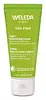
This barrier-repair day moisturizer is formulated around Helianthus Annuus Seed Oil and Butyrospermum Parkii Butter to strengthen the skin barrier and hydrate skin.


What's inside
What's inside
 Key Ingredients
No key ingredients
Benefits
Concerns
Ingredients Side-by-side
Water
Skin ConditioningHelianthus Annuus Seed Oil
Emollient



Glycerin
Humectant

Alcohol
Antimicrobial



Glyceryl Stearate Citrate
Emollient
Beeswax
Emulsion Stabilising

Theobroma Cacao Seed Butter
Emollient
Cetearyl Alcohol
Emollient

Butyrospermum Parkii Butter
Skin Conditioning
Limonene
Perfuming

Viola Tricolor Extract
EmollientRosmarinus Officinalis Leaf Extract
AntimicrobialChamomilla Recutita Flower Extract
Masking

Calendula Officinalis Flower Extract
Masking
Lanolin
Emollient
Carrageenan
Xanthan Gum
EmulsifyingLactic Acid
Buffering






Glyceryl Caprylate
EmollientParfum
Masking
Linalool
Perfuming
Geraniol
Perfuming
Citral
Perfuming
Water, Helianthus Annuus Seed Oil, Glycerin, Alcohol, Glyceryl Stearate Citrate, Beeswax, Theobroma Cacao Seed Butter, Cetearyl Alcohol, Butyrospermum Parkii Butter, Limonene, Viola Tricolor Extract, Rosmarinus Officinalis Leaf Extract, Chamomilla Recutita Flower Extract, Calendula Officinalis Flower Extract, Lanolin, Carrageenan, Xanthan Gum, Lactic Acid, Glyceryl Caprylate, Parfum, Linalool, Geraniol, Citral


Reviews
Ingredients Explained
These ingredients are found in both products.
Ingredients higher up in an ingredient list are typically present in a larger amount.
Cetearyl alcohol is a waxy mixture of two fatty alcohols: cetyl alcohol and stearyl alcohol. It is an emollient and emulsifier.
Despite having "alcohol" in its name, it has nothing to do with drying solvent alcohols; the FDA also allows "alcohol-free" products to contain fatty alcohols like this ingredient.
It plays several roles in a formula:
Typical use levels for this ingredient sit around 1-10% and the Cosmetic Ingredient Review Expert Panel has affirmed safety at concentrations up to 25% in leave-on products.
Multiple assessments have found it to be non-irritating and non-sensitizing to most people.
However, there have been some cases of allergic contact dermatitis in patients with chronically compromised skin barriers.
Cetearyl alcohol has a comedogenic rating of 2 and irritancy rating of 1. Both of these numbers come from the 1989 study that used rabbit ears; a "2" means mildly comedogenic and a "1" means low irritancy.
Here's the catch: rabbit skin is more sensitive than human skin and throws a lot of false positives. A 1996 reappraisal found that ingredients rated 1-2 in the rabbit ear tests are generally safe for humans.
Remember comedogenic ratings are unable to assess the entire formula of a product or how it will react on your skin. Just be sure to patch test if you are unsure about certain ingredients.
This ingredient is not fungal acne safe. Cetearyl alcohol is a fatty alcohol with chain lengths that fall within the range that Malassezia can metabolize.
A 2019 study has also observed Malassezia growth in the presence of this ingredient, confirming it to be not-fungal acne safe.
Learn more about Cetearyl AlcoholGeraniol is used to add fragrance/parfum to a product. It is the main component of citronellol. It is a monoterpenoid and an alcohol.
Monoterpenes are naturally found in many parts of different plants.
Geraniol can be found in many essential oils including Rose Oil and Citronella Oil. The scent of Geraniol is often described as "rose-like". Many foods also contain Geraniol for fruit flavoring.
Geraniol can irritate the skin when exposed to air. However, irritation depends on the ability of geraniol to penetrate into the skin. In general, geraniol is not able to penetrate skin easily.
Geraniol is colorless and has low water-solubility. However, it is soluble in common organic solvents.
Like citronellol, it is a natural insect repellent.
2,6-Octadien-1-ol, 3,7-dimethyl-, (2E)-
Learn more about GeraniolLanolin is a waxy substance secreted by the sebaceous glands of wool-bearing sheep. It is an effective moisturizer that works as both a humectant and emollient.
As a humectant, it is able to absorb up to 400% of its own weight in water; this also gives it emulsifying properties as it can help stabilize water-in-oil emulsions.
On the other hand, lanolin is able to reduce transepidermal water loss (TEWL) by about 20-30%. It can also incorporate into the lipid matrix to surround skin cells and reinforce the skin barrier.
This is why you'll see lanolin as an ingredient for heavy-duty moisturizers.
You might have seen an "allergy concern" that gives lanolin a bad reputation. The rate of lanolin contact allergy in the general population is estimated to be under 0.5%, and most of these are seen in people with compromised-skin dealing with eczema, atopic dermatitis, or leg ulcers.
Healthy, intact skin tolerates lanolin well. Even people who have previously reacted to it test negative on patch tests when the test is done on normal skin.
Because lanolin comes from an animal, it is not considered vegan. Sheep secrete lanolin through sebaceous glands to help protect their skin from the environment.
Lanolin has a reputation as pore clogging but that comes almost entirely from rabbit ear testing done decades ago (and that model has aged badly).
This ingredient does have a comedogenic rating of 0-1; the tests state this score means the ingredient has low or non-existent chance of clogging your pores.
Keep in mind that the authors of the rabbit ear test proposed that a material needs to score consistently above 3 in the rabbit assay before it means anything for real skin.
A separate review found the model has serious performance problems and no correlation with human experience. Concentration matters a lot too: in one study, Acetylated Lanolin Alcohol scored 4 to 5 at full strength but dropped to a 1 when diluted to 2.5%, and finished products containing "comedogenic" ingredients didn't raise microcomedone counts in people.
Lanolin contains esters exactly in the range that the Malassezia yeast can synthesize, making this ingredient not fungal acne safe.
Learn more about LanolinLimonene is the compound that gives citrus peel its smell.
In skincare, it shows up as a standalone fragrance ingredient or as a natural compound of citrus and other essential oils.
You'll typically see this ingredient used in very small amounts; anything above 0.001% in a leave-on product or 0.01% in a rinse-off has to be named on the label in the EU. The citrus oils that carry it sit around 0.5-1% in a finished formula.
Fresh limonene is a weak allergen; the real issue is that it slowly reacts with air and then breaks down from oxidation to create hydroperoxides (which are strong sensitizers). This is why suppliers are required to keep the peroxide value below 20 mmol.
Positive reactions in people being investigated for eczema vary:
It's worth skipping if you have a known fragrance allergy or a compromised barrier, but the risk is low for most people.
Older or long-opened products are also more likely to bother you than fresh ones due to oxidation.
Learn more about LimoneneLinalool is a small, naturally occurring scent molecule found in plants like lavender, coriander, bergamot, and more.
It is one of the two most-used fragrance ingredients in cosmetics and added purely for smell. Since it's not used for a skin benefit, there's no "effective dose". Concentration depends on the fragrance load of the product.
The EU requires it to be named on the label above 0.001% in leave-on and 0.01% in rinse-off products.
Fresh linalool is a weak sensitizer but air exposure turns some of it into hydroperoxides, which are strong sensitizers. Those oxidation products are the actual allergy concern.
Patch-test clinics see positive reactions to linalool hydroperoxides in about 4% to 12% of dermatitis patients depending on country and test concentration.
Resassuringly, one analytical study found hydroperoxide levels in real fragranced products to be orders of magnitude below what induced sensitization in animal studies with no evidence of oxidation building up during normal storage.
The practical takeaway is that linalool is fine for most people but worth avoiding if you have a confirmed fragrance contact allergy or a badly compromised barrier.
Products stored a long time after opening are also the high-risk scenario since that is when oxidation happens.
The scent of linalool is described as floral, spicy tropical, and citrus-like.
Learn more about LinaloolParfum is a catch-all term for an ingredient or more that is used to give a scent to products.
Also called "fragrance", this ingredient can be a blend of hundreds of chemicals or plant oils. This means every product with "fragrance" or "parfum" in the ingredients list is a different mixture.
For instance, Habanolide is a proprietary trade name for a specific aroma chemical. When used as a fragrance ingredient in cosmetics, most aroma chemicals fall under the broad labeling category of “FRAGRANCE” or “PARFUM” according to EU and US regulations.
The term 'parfum' or 'fragrance' is not regulated in many countries. In many cases, it is up to the brand to define this term.
For instance, many brands choose to label themselves as "fragrance-free" because they are not using synthetic fragrances. However, their products may still contain ingredients such as essential oils that are considered a fragrance by INCI standards.
One example is Calendula flower extract. Calendula is an essential oil that still imparts a scent or 'fragrance'.
Depending on the blend, the ingredients in the mixture can cause allergies and sensitivities on the skin. Some ingredients that are known EU allergens include linalool and citronellol.
Parfum can also be used to mask or cover an unpleasant scent.
The bottom line is: not all fragrances/parfum/ingredients are created equally. If you are worried about fragrances, we recommend taking a closer look at an ingredient. And of course, we always recommend speaking with a professional.
Learn more about ParfumWater. It's the most common cosmetic ingredient of all. You'll usually see it at the top of ingredient lists, meaning that it makes up the largest part of the product.
So why is it so popular? Water most often acts as a solvent - this means that it helps dissolve other ingredients into the formulation.
You'll also recognize water as that liquid we all need to stay alive. If you see this, drink a glass of water. Remember to stay hydrated!
Learn more about Water

