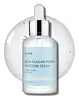
This brightening serum is formulated around 3-O-Ethyl Ascorbic Acid and Niacinamide to fade the look of dark spots and brighten dull-looking skin.
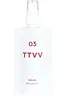
This hydrating serum is formulated around Beta-Glucan and Adenosine to hydrate skin and strengthen the skin barrier.

What's inside
What's inside
 Key Ingredients
No key ingredients
Benefits
Ingredients Side-by-side
Water
Skin Conditioning1,2-Hexanediol
Skin Conditioning
Glycerin
Humectant

3-O-Ethyl Ascorbic Acid
Skin Conditioning




Niacinamide
Smoothing





Arbutin
Antioxidant

Carbomer
Emulsion StabilisingTromethamine
BufferingTranexamic Acid
Astringent
Colloidal Diamond
Skin ProtectingXylitol
Humectant
Trehalose
Humectant
Panthenol
Skin Conditioning
Adenosine
Skin Conditioning
Disodium EDTA
Allantoin
Skin Conditioning
Glutathione
Propanediol
Solvent
Sodium Hyaluronate Crosspolymer
Humectant
Hydrolyzed Glycosaminoglycans
HumectantSodium Hyaluronate
Humectant
Benzyl Glycol
SolventHydrolyzed Hyaluronic Acid
Humectant
Ethylhexylglycerin
Skin ConditioningThioctic Acid
Antioxidant
Hyaluronic Acid
Humectant
Fullerenes
AntimicrobialRaspberry Ketone
Masking

Glucosyl Hesperidin
HumectantWater, 1,2-Hexanediol, Glycerin, 3-O-Ethyl Ascorbic Acid, Niacinamide, Arbutin, Carbomer, Tromethamine, Tranexamic Acid, Colloidal Diamond, Xylitol, Trehalose, Panthenol, Adenosine, Disodium EDTA, Allantoin, Glutathione, Propanediol, Sodium Hyaluronate Crosspolymer, Hydrolyzed Glycosaminoglycans, Sodium Hyaluronate, Benzyl Glycol, Hydrolyzed Hyaluronic Acid, Ethylhexylglycerin, Thioctic Acid, Hyaluronic Acid, Fullerenes, Raspberry Ketone, Glucosyl Hesperidin
Reviews
Ingredients Explained
These ingredients are found in both products.
Ingredients higher up in an ingredient list are typically present in a larger amount.
1,2-Hexanediol is a synthetic liquid and another multi-functional powerhouse.
It is a:
- Humectant, drawing moisture into the skin
- Emollient, helping to soften skin
- Solvent, dispersing and stabilizing formulas
- Preservative booster, enhancing the antimicrobial activity of other preservatives
Adenosine is a purine nucleoside that your body already makes in every cell. In skincare, it acts mainly as a skin conditioning and anti-aging agent.
The way it works is fairly well mapped out:
Your skin has cells called fibroblasts that build collagen (the stuff that keeps skin firm and smooth). Adenosine basically flips a switch on these cells that tells them to get to work making more collagen and other proteins. These cells slow down on their own as skin ages, so Adenosine helps give them a little nudge to keep going.
The clinical backing is pretty solid too.
A blind, randomized, placebo-controlled trial of 126 women aged 45-65 tested a 0.1% cream twice daily and found real improvements in crow's feet and frown lines using a precise 3D skin-mapping technique; these changes showed up by week 3 and held at 2 months.
A later study using Adenosine-loaded dissolving microneedle patches reported gains in wrinkle depth, dermal density, elasticity, and hydration.
On concentrations, South Korea's Ministry of Food and Drug Safety has set 0.04% as the approved functional anti-wrinkle level. You'll typically see this ingredient used somewhere in the 0.04-0.1% range since it works at low doses.
This ingredient has been found safe for cosmetics with the data showing no irritation or sensitization.
Overall, this is a great ingredient for any anti-aging routine and has no photosensitizing effect, so it suits both AM and PM use.
Learn more about AdenosineCarbomer is a synthetic thickening and gelling agent. It's basically the ingredient that gives a lot of serums, gels, creams, and sunscreens their smooth, non-sticky texture.
Although legally permitted at very high levels, carbomers are normally used at concentrations below 1%.
It also needs to be neutralized to actually thicken, and because it is a large molecule, it doesn't really penetrate the skin barrier.
Allergy-wise, the risk is very low. Clinical studies show carbomers have low potential for skin irritation/sensitization even at concentrations up to 100%.
A 2024 UK study patch-tested 1,302 patients and found true allergy to the parent group of carbomer to be rare with no confirmed relevant reactions.
Learn more about CarbomerGlycerin (or glycerol) is a compound naturally found in your skin. It's a powerhouse humectant that pulls water into the stratum corneum.
Topically, glycerin does several things at once:
Your skin makes glycerin on its own (mostly from sebaceous oil breakdown) and shuttles it to your outermost layer of skin, or your epidermis, via aquaporin-3.
Aquaporin-3 is a transporter that is essential for normal skin hydration, elasticity, and repair. Interestingly, mice lacking in AQP3 have dry and less elastic skin that can be fully corrected with glycerin.
This ingredient is non-irritating, plays well with almost every ingredient, and works across all skin types. Typical use is anywhere between 3-10% but can go up to 79% in some leave-on products.
Just know very high concentrations (>40%) can feel tacky in low humidity.
Glycerin is the name for this ingredient in American English. British English uses Glycerol/Glycerine.
Learn more about GlycerinTromethamine (aka THAM) is a synthetic amino acid that shows up in skincare as a helper ingredient.
It functions as a pH adjuster to help neutralize acidic ingredients and set a formula's pH to the right spot.
This matters a lot because a lot of actives (like vitamin C) needs a specific pH to work well and feel comfortable on skin.
Concentration use ranges from 0.1-1.0% depending on the formula.
Learn more about TromethamineWater. It's the most common cosmetic ingredient of all. You'll usually see it at the top of ingredient lists, meaning that it makes up the largest part of the product.
So why is it so popular? Water most often acts as a solvent - this means that it helps dissolve other ingredients into the formulation.
You'll also recognize water as that liquid we all need to stay alive. If you see this, drink a glass of water. Remember to stay hydrated!
Learn more about Water

