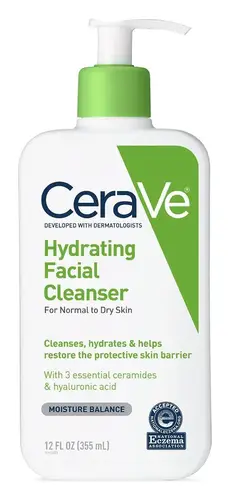
Shea Moisture African Black Soap Bamboo Charcoal Detoxifying Foaming Facial Wash Versus Palmer's Daily Skin Therapy Cream Soap
This mild foaming cleanser is mild enough to cleanse without leaving skin feeling tight or stripped.

What's inside
What's inside
 Key Ingredients
Benefits
Concerns
Ingredients Side-by-side
Water
Skin ConditioningDecyl Glucoside
Cleansing
Cocamidopropyl Betaine
Cleansing


Glycerin
Humectant


Dicaprylyl Ether
Emollient
Sodium PCA
Humectant
Glyceryl Oleate
Emollient


Panthenol
Skin Conditioning
Butyrospermum Parkii Butter
Skin Conditioning

Tamarindus Indica Fruit Extract
Skin ConditioningCharcoal Powder
Abrasive


Allantoin
Skin Conditioning
Menthol
Masking

Melaleuca Alternifolia Leaf Oil
Antioxidant


Guar Hydroxypropyltrimonium Chloride
Skin ConditioningTocopherol
Antioxidant



Parfum
Masking
Sodium Palm Kernelate
CleansingSodium Shea Butterate
Cleansing
Sodium Cocoate
Cleansing
Theobroma Cacao Husk
Abrasive
Caprylhydroxamic Acid
ChelatingTriethyl Citrate
Masking
Benzoic Acid
Masking
Water, Decyl Glucoside, Cocamidopropyl Betaine, Glycerin, Dicaprylyl Ether, Sodium PCA, Glyceryl Oleate, Panthenol, Butyrospermum Parkii Butter, Tamarindus Indica Fruit Extract, Charcoal Powder, Allantoin, Menthol, Melaleuca Alternifolia Leaf Oil, Guar Hydroxypropyltrimonium Chloride, Tocopherol, Parfum, Sodium Palm Kernelate, Sodium Shea Butterate, Sodium Cocoate, Theobroma Cacao Husk, Caprylhydroxamic Acid, Triethyl Citrate, Benzoic Acid
Sodium Tallowate
Cleansing
Sodium Cocoate
Cleansing
Sodium Palm Kernelate
CleansingWater
Skin ConditioningGlycerin
Humectant
Theobroma Cacao Seed Butter
Emollient
Tocopherol
Antioxidant
Helianthus Annuus Seed Oil
Emollient
Allantoin
Skin Conditioning
Sodium Chloride
MaskingPentasodium Pentetate
ChelatingTetrasodium Etidronate
ChelatingParfum
Masking
Iron Oxides
CI 77713
Cosmetic ColorantCI 77891
Cosmetic ColorantCI 77289
Cosmetic ColorantBenzyl Alcohol
Perfuming
Geraniol
Perfuming
Ingredients Explained
These ingredients are found in both products.
Ingredients higher up in an ingredient list are typically present in a larger amount.
Allantoin is a soothing ingredient known for its protective and moisturizing properties; it's basically a quiet workhorse ingredient you can find in a huge range of cosmetics.
Though it can be derived from the comfrey plant, allantoin is produced synthetically for cosmetic products to ensure purity.
Research shows it can encourage your skin cells to turn over and renew by stimulating keratinocyte and fibroblast proliferation.
It also has mild keratolytic properties to help loosen and shed dead skin cells without being harsh.
Studies also suggest allantoin can help calm inflammation by dialing down some of the chemical signals your skin sends out when it is irritated.
This ingredient is typically used in the 0.1-0.5% range, and the FDA recognizes it as a skin protectant in OTC products up to 2%.
Overall, allantoin is a wonderful addition to most routines; it is stable across a wide pH range (~4-8), works well with other ingredients, and is considered non-sensitizing/non-irritating.
Fun fact: Allantoin is naturally occurring in comfrey root, beets, chamomile, and wheat sprouts. Our bodies even produce it as a byproduct of uric acid metabolism.
Learn more about AllantoinGlycerin (or glycerol) is a compound naturally found in your skin. It's a powerhouse humectant that pulls water into the stratum corneum.
Topically, glycerin does several things at once:
Your skin makes glycerin on its own (mostly from sebaceous oil breakdown) and shuttles it to your outermost layer of skin, or your epidermis, via aquaporin-3.
Aquaporin-3 is a transporter that is essential for normal skin hydration, elasticity, and repair. Interestingly, mice lacking in AQP3 have dry and less elastic skin that can be fully corrected with glycerin.
This ingredient is non-irritating, plays well with almost every ingredient, and works across all skin types. Typical use is anywhere between 3-10% but can go up to 79% in some leave-on products.
Just know very high concentrations (>40%) can feel tacky in low humidity.
Glycerin is the name for this ingredient in American English. British English uses Glycerol/Glycerine.
Learn more about GlycerinParfum is a catch-all term for an ingredient or more that is used to give a scent to products.
Also called "fragrance", this ingredient can be a blend of hundreds of chemicals or plant oils. This means every product with "fragrance" or "parfum" in the ingredients list is a different mixture.
For instance, Habanolide is a proprietary trade name for a specific aroma chemical. When used as a fragrance ingredient in cosmetics, most aroma chemicals fall under the broad labeling category of “FRAGRANCE” or “PARFUM” according to EU and US regulations.
The term 'parfum' or 'fragrance' is not regulated in many countries. In many cases, it is up to the brand to define this term.
For instance, many brands choose to label themselves as "fragrance-free" because they are not using synthetic fragrances. However, their products may still contain ingredients such as essential oils that are considered a fragrance by INCI standards.
One example is Calendula flower extract. Calendula is an essential oil that still imparts a scent or 'fragrance'.
Depending on the blend, the ingredients in the mixture can cause allergies and sensitivities on the skin. Some ingredients that are known EU allergens include linalool and citronellol.
Parfum can also be used to mask or cover an unpleasant scent.
The bottom line is: not all fragrances/parfum/ingredients are created equally. If you are worried about fragrances, we recommend taking a closer look at an ingredient. And of course, we always recommend speaking with a professional.
Learn more about ParfumSodium cocoate is a salt created by saponifying coconut oil. It has cleansing and emulsifying properties.
As a cleansing agent, this ingredient helps reduce the surface tension of dirt, sebum, and other residue in skin and hair. This makes them easier to be rinsed away with water.
This ingredient is derived from the fatty acids of palm kernel oil and is considered a traditional soap.
It acts as a surfactant by making it easier for water to wash away dirt, oil, and other impurities.
Tocopherol is a fat-soluble antioxidant known as Vitamin E.
You'll find this ingredient in the vast majority of skincare (for good reason). It works to neutralize free radicals, or unstable molecules generated by UV exposure, pollution, and other environmental stressors, before they can cause oxidative damage to your skin cells.
Topically applied tocopherol has been shown to protect against UV damage by ramping up the skin's own natural defense enzymes.
It also acts as a skin conditioning agent; some studies show that regular topical use can improve the skin's water-binding capacity over 2-4 weeks.
This ingredient is especially loved for being a team player. When combined with Vitamin C, the photoprotective effect of both ingredients roughly doubles and the combo also helps reduce UV-induced DNA damage.
This ingredient has some brightening potential but it's more of a prevention ingredient than spot-fader. Cell studies show it can slow down melanin production but it's worth noting that it's not the most powerful brightener out there.
In formulations, it also serves as a stabilizer that helps protect other oxidation-prone ingredients from degrading.
Concentrations usually range from 0.1-1% in most leave-on products.
Learn more about TocopherolWater. It's the most common cosmetic ingredient of all. You'll usually see it at the top of ingredient lists, meaning that it makes up the largest part of the product.
So why is it so popular? Water most often acts as a solvent - this means that it helps dissolve other ingredients into the formulation.
You'll also recognize water as that liquid we all need to stay alive. If you see this, drink a glass of water. Remember to stay hydrated!
Learn more about Water