Secret Key Starting Treatment Rose Ampoule Versus Mecca Cosmetica Watercooler Calming Hydration Serum
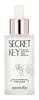
This hydrating ampoule is formulated around Galactomyces Ferment Filtrate and Adenosine to hydrate skin and fade the look of dark spots.
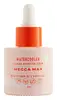
This hydrating serum is formulated around Panthenol and Saccharomyces Ferment to hydrate skin and calm redness.


What's inside
What's inside
 Key Ingredients
No key ingredients
Benefits
Concerns
Ingredients Side-by-side
Galactomyces Ferment Filtrate
Humectant







Water
Skin ConditioningGlycereth-26
Humectant
Rosa Centifolia Flower Water
Skin ConditioningMethyl Gluceth-20
Humectant
1,2-Hexanediol
Skin Conditioning
Glycerin
Humectant
Propanediol
Solvent
Glyceryl Polyacrylate
Arginine
Masking
Ammonium Acryloyldimethyltaurate/Vp Copolymer
PPG-26-Buteth-26
Skin ConditioningAdenosine
Skin Conditioning
Sodium Polyacrylate
Absorbent
PEG-40 Hydrogenated Castor Oil
Emulsifying
Carbomer
Emulsion StabilisingDisodium EDTA
Caprylyl Glycol
Emollient
Ethylhexylglycerin
Skin ConditioningParfum
Masking



Citral
Perfuming
Geraniol
Perfuming
Limonene
Perfuming
Linalool
Perfuming
Galactomyces Ferment Filtrate, Water, Glycereth-26, Rosa Centifolia Flower Water, Methyl Gluceth-20, 1,2-Hexanediol, Glycerin, Propanediol, Glyceryl Polyacrylate, Arginine, Ammonium Acryloyldimethyltaurate/Vp Copolymer, PPG-26-Buteth-26, Adenosine, Sodium Polyacrylate, PEG-40 Hydrogenated Castor Oil, Carbomer, Disodium EDTA, Caprylyl Glycol, Ethylhexylglycerin, Parfum, Citral, Geraniol, Limonene, Linalool
Betula Alba Juice
AstringentPanthenol
Skin Conditioning
Saccharomyces Ferment
Skin Conditioning
Methylpropanediol
SolventPEG-75
Humectant1,2-Hexanediol
Skin Conditioning
Betaine
Humectant
Xylitylglucoside
Humectant
Anhydroxylitol
Humectant
Water
Skin ConditioningHydroxyacetophenone
Antioxidant
Caprylyl Glycol
Emollient
Xylitol
Humectant
PPG-26-Buteth-26
Skin ConditioningAcrylates/C10-30 Alkyl Acrylate Crosspolymer
Emulsion StabilisingGlycerin
Humectant
Ethylhexylglycerin
Skin ConditioningPEG-40 Hydrogenated Castor Oil
Emulsifying
Sodium Polyacrylate
Absorbent
Arginine
Masking
Sodium Phytate
Dunaliella Salina Extract
Skin ConditioningBetula Alba Juice, Panthenol, Saccharomyces Ferment, Methylpropanediol, PEG-75, 1,2-Hexanediol, Betaine, Xylitylglucoside, Anhydroxylitol, Water, Hydroxyacetophenone, Caprylyl Glycol, Xylitol, PPG-26-Buteth-26, Acrylates/C10-30 Alkyl Acrylate Crosspolymer, Glycerin, Ethylhexylglycerin, PEG-40 Hydrogenated Castor Oil, Sodium Polyacrylate, Arginine, Sodium Phytate, Dunaliella Salina Extract
Reviews
Ingredients Explained
These ingredients are found in both products.
Ingredients higher up in an ingredient list are typically present in a larger amount.
1,2-Hexanediol is a synthetic liquid and another multi-functional powerhouse.
It is a:
- Humectant, drawing moisture into the skin
- Emollient, helping to soften skin
- Solvent, dispersing and stabilizing formulas
- Preservative booster, enhancing the antimicrobial activity of other preservatives
Arginine is a semi-essential amino acid. This just means our bodies can product a bit on its own, but sometimes needs a little boost from food sources.
It is a part of your skin's natural moisturizing factor (NMF), or the water-loving molecules in your outermost layer of skin (stratum corneum) that keeps everything hydrated and happy.
Here's an interesting thing about Arginine: your skin converts it into urea through the Krebs-Henseleit urea cycle. Urea is one of the most effective humectants your skin naturally produces.
A clinical study showed applying 2.5% arginine hydrochloride to atopic dermatitis skin showed significant urea levels in the stratum corneum and improved moisture in just four weeks.
Arginine is also a precursor to nitric oxide; nitric oxide improves microcirculation and supports wound healing and collagen synthesis.
One study found that an amino acid complex containing Arginine reduced skin irritation, improved hydration, and accelerated skin repair in clinical / in-vivo studies.
Arginine itself is an amino acid and not a fatty acid, oil, or ester. On its own, it's not a direct food source for Malassezia, or the yeast that causes fungal acne.
Learn more about ArginineCaprylyl Glycol is a humectant, skin conditioner, emollient, and preservative booster derived from either caprylic acid or synthetically created.
Typical use levels vary from 0.3-1% as a preservative booster and go up to 2% to condition skin.
Because it is not a free-fatty acid, this ingredient is fungal acne safe (there's nothing for Malassezia to feed on).
Learn more about Caprylyl GlycolEthylhexylglycerin is created from glycerin. It is a multitasker ingredient that:
The CIR Expert Panel found minimal skin absorption or sensitization of any kind in a safety assessment. Though this ingredient is considered well-tolerated, a small number of cases of allergic dermatitis have been published since 2002. Just be sure to patch test if you are unsure.
Industry-reported use ranges from 8% in rinse-off products and 2% in leave-on formulations.
Learn more about EthylhexylglycerinGlycerin (or glycerol) is a compound naturally found in your skin. It's a powerhouse humectant that pulls water into the stratum corneum.
Topically, glycerin does several things at once:
Your skin makes glycerin on its own (mostly from sebaceous oil breakdown) and shuttles it to your outermost layer of skin, or your epidermis, via aquaporin-3.
Aquaporin-3 is a transporter that is essential for normal skin hydration, elasticity, and repair. Interestingly, mice lacking in AQP3 have dry and less elastic skin that can be fully corrected with glycerin.
This ingredient is non-irritating, plays well with almost every ingredient, and works across all skin types. Typical use is anywhere between 3-10% but can go up to 79% in some leave-on products.
Just know very high concentrations (>40%) can feel tacky in low humidity.
Glycerin is the name for this ingredient in American English. British English uses Glycerol/Glycerine.
Learn more about GlycerinPEG-40 Hydrogenated Castor Oil is an emulsifier derived from castor oil.
As an emulsifying agent, it helps other ingredients like fragrances and fat-soluble vitamins dissolve cohesively.
Due to its large molecule size, it doesn't penetrate beyond the skin's surface.
This ingredient has a solid regulatory track record; the CIR Expert Panel first concluded it was safe for use in cosmetics at concentrations up to 100% in 1997. A 2012 reassessment reaffirmed that finding. Safety studies have also found no irritation or evidence of toxicity.
A 2019 study did find this ingredient to grow Malassezia, so this ingredient may not be fungal acne safe.
Learn more about PEG-40 Hydrogenated Castor OilWe don't have a description for PPG-26-Buteth-26 yet.
Sodium Polyacrylate is the sodium salt of polyacrylic acid. It is used as an absorber, emollient, and stabilizer.
This ingredient is a super-absorbent polymer - meaning it can absorb 100 to 1000 times its mass in water. As an emollient, Sodium Polyacrylate helps soften and soothe skin. Emollients work by creating a barrier to trap moisture in. This helps keep your skin hydrated.
Water. It's the most common cosmetic ingredient of all. You'll usually see it at the top of ingredient lists, meaning that it makes up the largest part of the product.
So why is it so popular? Water most often acts as a solvent - this means that it helps dissolve other ingredients into the formulation.
You'll also recognize water as that liquid we all need to stay alive. If you see this, drink a glass of water. Remember to stay hydrated!
Learn more about Water

