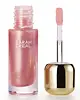
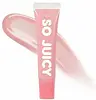
Sarah Creal No Further Questions High Glide Peptide Lip Gloss Versus Colourpop So Juicy Plumping Gloss

What's inside
What's inside
 Key Ingredients
Benefits
Concerns
Ingredients Side-by-side
Hydrogenated Polydecene
EmollientPolybutene
Diisostearyl Malate
EmollientHydrogenated Styrene/Isoprene Copolymer
Calcium Sodium Borosilicate
Palmitoyl Tripeptide-1
Skin Conditioning



Palmitoyl Hexapeptide-12
Skin Conditioning
Undaria Pinnatifida Extract
Skin ConditioningEthylhexyl Palmitate
Emollient




Silica
Abrasive


Phenoxyethanol
Preservative
Tribehenin
Emollient
Tocopheryl Acetate
Antioxidant


Caprylic/Capric Triglyceride
Masking


Synthetic Fluorphlogopite
Sorbitan Isostearate
Emulsifying
Tin Oxide
Abrasive
Pentaerythrityl Tetraisostearate
Emollient
Lactic Acid
Buffering


Pentaerythrityl Tetra-Di-T-Butyl Hydroxyhydrocinnamate
Antioxidant
Stearalkonium Hectorite
Gel FormingPropylene Carbonate
SolventHydrogenated Polydecene, Polybutene, Diisostearyl Malate, Hydrogenated Styrene/Isoprene Copolymer, Calcium Sodium Borosilicate, Palmitoyl Tripeptide-1, Palmitoyl Hexapeptide-12, Undaria Pinnatifida Extract, Ethylhexyl Palmitate, Silica, Phenoxyethanol, Tribehenin, Tocopheryl Acetate, Caprylic/Capric Triglyceride, Synthetic Fluorphlogopite, Sorbitan Isostearate, Tin Oxide, Pentaerythrityl Tetraisostearate, Lactic Acid, Pentaerythrityl Tetra-Di-T-Butyl Hydroxyhydrocinnamate, Stearalkonium Hectorite, Propylene Carbonate
Polybutene
Phenylpropyldimethylsiloxysilicate
EmollientSimmondsia Chinensis Seed Oil
Emollient
Synthetic Beeswax
Emulsion Stabilising
Aroma


Menthone Glycerin Acetal
Refreshing
Phenoxyethanol
Preservative
Silica Dimethyl Silylate
EmollientCalcium Sodium Borosilicate
Synthetic Fluorphlogopite
Ethylhexyl Palmitate
Emollient
Silica
Abrasive
Tocopherol
Antioxidant
Saccharin
MaskingTribehenin
Emollient
Triethoxycaprylylsilane

Tin Oxide
Abrasive
Sorbitan Isostearate
Emulsifying
Palmitoyl Tripeptide-1
Skin Conditioning
Iron Oxides
Mica
Cosmetic ColorantCI 15850
Cosmetic ColorantCI 45410
Cosmetic ColorantCI 77891
Cosmetic ColorantCI 19140
Cosmetic ColorantPolybutene, Phenylpropyldimethylsiloxysilicate, Simmondsia Chinensis Seed Oil, Synthetic Beeswax, Aroma, Menthone Glycerin Acetal, Phenoxyethanol, Silica Dimethyl Silylate, Calcium Sodium Borosilicate, Synthetic Fluorphlogopite, Ethylhexyl Palmitate, Silica, Tocopherol, Saccharin, Tribehenin, Triethoxycaprylylsilane, Tin Oxide, Sorbitan Isostearate, Palmitoyl Tripeptide-1, Iron Oxides, Mica, CI 15850, CI 45410, CI 77891, CI 19140
Reviews
Ingredients Explained
These ingredients are found in both products.
Ingredients higher up in an ingredient list are typically present in a larger amount.
Calcium Sodium Borosilicate is a bulking agent. It is considered a borosilicate glass; it is composed of powder or flakes of calcium and sodium borosilicates.
This ingredient is used to add volume, shine, and color to products. You'll most likely find this ingredient in makeup products.
According to in-vivo and ex-vivo studies done by a manufacturer, this ingredient works well with UV filters:
Learn more about Calcium Sodium BorosilicateEthylhexyl Palmitate, also known as octyl palmitate, is created from 2-ethylhexyl alcohol and palmitic acid.
In cosmetics, it plays many roles:
One thing worth noting: a controlled study found this ingredient applied under occlusion to acne-prone subjects increased microcomedones. Just keep in mind this was under occlusive conditions and don't reflect how most products are used day-to-day.
For most people, this is a well-tolerated and lightweight ingredient.
This ingredient may not be fungal acne safe because it is an ester of palmitic acid, a C16 fatty acid that falls within the C11-24 range that Malassezia can metabolize.
You'll see this one rated 4 comedogenic all over the internet. That number isn't from a single study, and the actual research is more interesting.
The original rating comes from 1980s rabbit ear tests (which are a shaky basis for anything). But Ethylhexyl Palmitate is one of the few ingredients with real human data behind it. A 2021 controlled trial found this ingredient increased microcomedones by an average of 365% over four weeks.
Just know that test used the pure ingredient under an occlusive pad on back skin; most products use it at much lower levels alongside other ingredients and plenty of people use those with no issue.
Learn more about Ethylhexyl PalmitatePalmitoyl Tripeptide-1 (aka Pal-GHK) is a synthetic signal peptide made of three amino acids attached to palmitic acid.
That fatty acid attachment is the key: it boosts the peptide's ability to penetrate the skin barrier. This puts it closer to the dermal cells where it can actually make a difference.
Once there, it acts as a matrikine, a signaling peptide that prompts fibroblasts to produce more collagen, fibronectin, and hyaluronic acid.
In vitro studies show it can boost collagen production in skin cells even when UV-damaged skin samples were treated with it at a tiny concentration (it almost fully restored dermal collagen at 5ppm). It achieved this at 100x lower concentration than retinoic acid, which needed 500 ppm to do the same thing.
Human clinical data is promising, but modest:
A study of 23 female volunteers found a small but statistically significant increase (~4%) in skin thickness after treatment at 4 ppm.
A separate small trial of 15 women showed statistically significant reductions in wrinkle length, depth, and skin roughness after applying it twice daily for four weeks.
You'll likely see Pal-GHK paired with Palmitoyl Tetrapeptide-7 as part of the Matrixyl 3000 complex.
Fungal acne note:
Usually a palmitic acid component can feed Malassezia in unbound form, but here is is covalently bonded to the peptide. This means it is very difficult for Malassezia to access, and therefore very unlikely to cause fungal acne.
Phenoxyethanol is one of the most widely used preservatives in skincare (and for good reason!).
It has a large spectrum of antimicrobial activity and especially effective bacteria, yeast, and mold while only having a weak effect on your skin's natural microbiome.
On a cellular level, it disrupts the cell membranes of microbes by poking holes that make the cell leak. This shuts down the chemical reactions the microbe needs to make energy so it can no longer survive.
Another perk of this ingredient is that it stays functional across a wide pH range (3-10).
You'll often see it paired with boosters like Ethylhexylglycerin; one study showed that a 1:9 ratio of Ethylhexylglycerin to Phenoxyethanol damages bacterial membranes as effectively as doubling the Phenoxyethanol concentration on its own.
Typical use concentrations range from 0.3-1% depending on the formula, and this ingredient is capped at 1% int the EU.
Safety-wise, the fear mongering does not hold up to the evidence. The EU's Scientific Committee on Consumer Safety and FDA consider it safe as a preservative at up to 1%, including for children of all ages.
Adverse systemic effects only showed up in animal studies at exposures roughly 200x higher than what people get from cosmetics. And despite its very widespread use, this ingredient is a rare sensitizer and allergic reactions are uncommon.
Learn more about PhenoxyethanolPolybutene is used to help control the viscosity of a product. This just means it helps adjusts the texture.
It is a polymer and does not get absorbed into the skin due to its large size.
Studies found this ingredient did not irritate skin in concentrations below 15%.
Learn more about PolybuteneSilica, also known as silicon dioxide, is a naturally occurring mineral. It is used as a fine, spherical, and porous powder in cosmetics.
Though it has exfoliant properties, the function of silica varies depending on the product.
The unique structure of silica enhances the spreadability and adds smoothness, making it a great texture enhancer.
It is also used as an active carrier, emulsifier, and mattifier due to its ability to absorb excess oil.
In some products, tiny microneedles called spicules are made from silica or hydrolyzed sponge. When you rub them in, they lightly polish away dead skin layers and enhance the penetration of active ingredients.
Learn more about SilicaSorbitan Isostearate is an emulsifer. It is created from isostearic acid and sorbitol.
As an emulsifier, it keeps the water and oil ingredients from separating. This keeps formulas stable and smooth.
In a 24 hour occlusive patch test on 56 subjects, 10% sorbitan isostearate was completely non-irritating. Most formulas use less than 10%.
Because it's a fatty acid ester, it may not be fungal acne safe since the Malassezia yeast can utilize it as a nutrient source.
Learn more about Sorbitan IsostearateSynthetic Fluorphlogopite is the synthethic version of mica. It consists of fluorine, aluminum and silicate.
Synthetic Fluorphlogopite is used to add volume to products.
It is considered non-irritating on the skin.
Learn more about Synthetic FluorphlogopiteTin Oxide is an inorganic oxide used to add opacity and volume to a product. In nature, it is already found in mineral form. The main ore of tin is an opaque and shiny mineral called casseterite.
Tin Oxide helps remove translucency in a product, or make it more opaque. Besides adding opacity, tin oxide is used for bulking to add volume.
Tribehenin is the triglyceride of glycerin and behenic acid. It is an emollient that helps soften and condition skin.
Safety-wise, this is a well-vetted ingredient. Repeated-insult patch tests of 0.38% tribehenin did not trigger sensitization.
This ingredient may not be fungal acne safe because behenic acid falls into the chain-length range that Malassezia yeasts can feed on.
Learn more about Tribehenin

