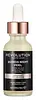
This brightening exfoliator is formulated around Ascorbyl Glucoside and Chenopodium Quinoa Seed Extract to brighten dull-looking skin.
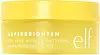
This smoothing exfoliating pad uses a pre-saturated pad with Sodium PCA and Zinc Gluconate to refine skin texture and brighten dull-looking skin.


What's inside
What's inside
 Key Ingredients
Benefits
Concerns
Ingredients Side-by-side
Water
Skin ConditioningAlcohol Denat.
Antimicrobial




Glycerin
Humectant


Propanediol
Solvent
Ascorbyl Glucoside
Antioxidant



Sodium Benzoate
Masking
Hydroxyethylcellulose
Emulsion StabilisingVaccinium Myrtillus Fruit Extract
Skin ConditioningPotassium Sorbate
Preservative
Saccharum Officinarum Extract
MoisturisingDisodium EDTA
ChelatingCitrus Aurantium Dulcis Fruit Extract
MaskingCitrus Limon Fruit Extract
Masking
Hydrolyzed Opuntia Ficus-Indica Flower Extract
Abrasive
Chenopodium Quinoa Seed Extract
Skin Conditioning
Acer Saccharum Extract
Skin ConditioningAloe Barbadensis Leaf Juice
Skin Conditioning

Phenoxyethanol
Preservative
Ethylhexylglycerin
Skin ConditioningWater, Alcohol Denat., Glycerin, Propanediol, Ascorbyl Glucoside, Sodium Benzoate, Hydroxyethylcellulose, Vaccinium Myrtillus Fruit Extract, Potassium Sorbate, Saccharum Officinarum Extract, Disodium EDTA, Citrus Aurantium Dulcis Fruit Extract, Citrus Limon Fruit Extract, Hydrolyzed Opuntia Ficus-Indica Flower Extract, Chenopodium Quinoa Seed Extract, Acer Saccharum Extract, Aloe Barbadensis Leaf Juice, Phenoxyethanol, Ethylhexylglycerin
Water
Skin ConditioningButylene Glycol
Humectant
Pentylene Glycol
Skin Conditioning
Sodium PCA
Humectant
Citrus Limon Peel Oil
Masking



Hamamelis Virginiana Extract
Antiseborrhoeic
Carica Papaya Leaf Extract
TonicAcer Saccharum Extract
Skin ConditioningCitrus Aurantium Dulcis Fruit Extract
MaskingCitrus Medica Limonum Fruit Extract
Skin ConditioningSaccharum Officinarum Extract
MoisturisingVaccinium Myrtillus Fruit/Leaf Extract
AstringentZinc Gluconate
Skin Conditioning



Bisabolol
Antioxidant
Glycolic Acid
Buffering


1,2-Hexanediol
Skin Conditioning
Ethylhexylglycerin
Skin ConditioningPEG-40 Hydrogenated Castor Oil
Emulsifying
PPG-26-Buteth-26
Skin ConditioningPhenoxyethanol
Preservative
Sodium Benzoate
Masking
Disodium EDTA
ChelatingSodium Hydroxide
BufferingWater, Butylene Glycol, Pentylene Glycol, Sodium PCA, Citrus Limon Peel Oil, Hamamelis Virginiana Extract, Carica Papaya Leaf Extract, Acer Saccharum Extract, Citrus Aurantium Dulcis Fruit Extract, Citrus Medica Limonum Fruit Extract, Saccharum Officinarum Extract, Vaccinium Myrtillus Fruit/Leaf Extract, Zinc Gluconate, Bisabolol, Glycolic Acid, 1,2-Hexanediol, Ethylhexylglycerin, PEG-40 Hydrogenated Castor Oil, PPG-26-Buteth-26, Phenoxyethanol, Sodium Benzoate, Disodium EDTA, Sodium Hydroxide
Ingredients Explained
These ingredients are found in both products.
Ingredients higher up in an ingredient list are typically present in a larger amount.
We don't have a description for Acer Saccharum Extract yet.
Citrus Aurantium Dulcis Fruit Extract is more commonly known as the bitter orange. Native to Southeast Asia, this extract is commonly found in both cosmetics and foods.
The bitter orange possesses antibacterial and antioxidant properties.
It can also be mildly exfoliating due to the citric acid, an AHA.
Citrus fruits are rich in flavonoids, alkaloids, and vitamin C.
Learn more about Citrus Aurantium Dulcis Fruit ExtractDisodium EDTA is a chelating agent. It grabs onto and deactivates metal ions that sneak into your products from water, packaging, or air.
This ingredient mainly works behind the scenes and helps with:
On top of that, this ingredient can counteract the effects of hard water by binding to the minerals in it.
One thing worth knowing is that Disodium EDTA has been shown to be a mild penetration enhancer. It can help other ingredients absorb into skin more effectively which can be a double-edged sword (great for actives, but can also make the active too strong if you have sensitive skin).
Clinical patch testing showed no significant skin irritation at typical use concentrations and minimal dermal absorption.
You'll most likely see this ingredient near the end of an ingredient list. It's typically found in concentrations less than 1%.
Learn more about Disodium EDTAEthylhexylglycerin is created from glycerin. It is a multitasker ingredient that:
The CIR Expert Panel found minimal skin absorption or sensitization of any kind in a safety assessment. Though this ingredient is considered well-tolerated, a small number of cases of allergic dermatitis have been published since 2002. Just be sure to patch test if you are unsure.
Industry-reported use ranges from 8% in rinse-off products and 2% in leave-on formulations.
Learn more about EthylhexylglycerinPhenoxyethanol is one of the most widely used preservatives in skincare (and for good reason!).
It has a large spectrum of antimicrobial activity and especially effective bacteria, yeast, and mold while only having a weak effect on your skin's natural microbiome.
On a cellular level, it disrupts the cell membranes of microbes by poking holes that make the cell leak. This shuts down the chemical reactions the microbe needs to make energy so it can no longer survive.
Another perk of this ingredient is that it stays functional across a wide pH range (3-10).
You'll often see it paired with boosters like Ethylhexylglycerin; one study showed that a 1:9 ratio of Ethylhexylglycerin to Phenoxyethanol damages bacterial membranes as effectively as doubling the Phenoxyethanol concentration on its own.
Typical use concentrations range from 0.3-1% depending on the formula, and this ingredient is capped at 1% int the EU.
Safety-wise, the fear mongering does not hold up to the evidence. The EU's Scientific Committee on Consumer Safety and FDA consider it safe as a preservative at up to 1%, including for children of all ages.
Adverse systemic effects only showed up in animal studies at exposures roughly 200x higher than what people get from cosmetics. And despite its very widespread use, this ingredient is a rare sensitizer and allergic reactions are uncommon.
Learn more about PhenoxyethanolThis ingredient is also called sugarcane extract. It is a moisturizing humectant and has skin soothing properties.
Similar to hyaluronic acid, sugarcane can attract moisture to your skin.
Glycolic acid is a derivative of sugarcane. While glycolic acid is an AHA with exfoliating properties, sugarcane is not an AHA.
A study from 2021 found the compounds in sugarcane extract to have antioxidant, antimicrobial, and anti-inflammatory activity. The study also suggests these compounds can inhibit skin ageing enzymes and promote collagen synthesis.
Learn more about Saccharum Officinarum ExtractSodium Benzoate is a preservative. It's used in both cosmetic and food products to inhibit the growth of mold and bacteria. It is typically produced synthetically.
Both the US FDA and EU Health Committee have approved the use of sodium benzoate. In the US, levels of 0.1% (of the total product) are allowed.
Sodium benzoate works as a preservative by inhibiting the growth of bacteria inside of cells. It prevents the cell from fermenting a type of sugar using an enzyme called phosphofructokinase.
It is the salt of benzoic acid. Foods containing sodium benzoate include soda, salad dressings, condiments, fruit juices, wines, and snack foods.
Studies for using ascorbic acid and sodium benzoate in cosmetics are lacking, especially in skincare routines with multiple steps.
We always recommend speaking with a professional, such as a dermatologist, if you have any concerns.
Learn more about Sodium BenzoateWater. It's the most common cosmetic ingredient of all. You'll usually see it at the top of ingredient lists, meaning that it makes up the largest part of the product.
So why is it so popular? Water most often acts as a solvent - this means that it helps dissolve other ingredients into the formulation.
You'll also recognize water as that liquid we all need to stay alive. If you see this, drink a glass of water. Remember to stay hydrated!
Learn more about Water

