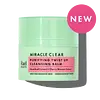
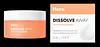
Rael Miracle Clear Purifying Twist Up Cleansing Balm Versus Hero Cosmetics Dissolve Away Daily Cleansing Balm
This oil-based makeup remover is made to dissolve makeup, sunscreen, and daily buildup.
This oil-based makeup remover is made to dissolve makeup, sunscreen, and daily buildup.

What's inside
What's inside
 Key Ingredients
Benefits
Concerns
Ingredients Side-by-side
Cetyl Ethylhexanoate
EmollientEthylhexyl Palmitate
Emollient




Polyglyceryl-6 Dicaprate
EmulsifyingSynthetic Wax
Abrasive
Polyglyceryl-10 Dioleate
Emulsifying
Butylene Glycol
Humectant

Sorbitan Sesquioleate
Emulsifying
Eclipta Prostrata Extract
Skin Conditioning
Coccinia Indica Fruit Extract
Skin Conditioning
Tocopherol
Antioxidant




Water
Skin ConditioningOryza Sativa Bran Oil
Emollient
Calophyllum Inophyllum Seed Oil
Antimicrobial
Simmondsia Chinensis Seed Oil
Emollient
Squalane
Emollient
Houttuynia Cordata Extract
Skin Conditioning
Prunus Serrulata Flower Extract
Skin ConditioningGlycerin
Humectant
1,2-Hexanediol
Skin Conditioning
Ethylhexylglycerin
Skin ConditioningCetyl Ethylhexanoate, Ethylhexyl Palmitate, Polyglyceryl-6 Dicaprate, Synthetic Wax, Polyglyceryl-10 Dioleate, Butylene Glycol, Sorbitan Sesquioleate, Eclipta Prostrata Extract, Coccinia Indica Fruit Extract, Tocopherol, Water, Oryza Sativa Bran Oil, Calophyllum Inophyllum Seed Oil, Simmondsia Chinensis Seed Oil, Squalane, Houttuynia Cordata Extract, Prunus Serrulata Flower Extract, Glycerin, 1,2-Hexanediol, Ethylhexylglycerin
Cetyl Ethylhexanoate
EmollientPolyglyceryl-6 Dicaprate
EmulsifyingSynthetic Wax
Abrasive
Helianthus Annuus Seed Oil
Emollient
Caprylic/Capric Triglyceride
Masking
Polyglyceryl-10 Dioleate
Emulsifying
Rosa Moschata Seed Oil
Emollient
Sorbitan Sesquioleate
Emulsifying
Ethylhexylglycerin
Skin ConditioningGlyceryl Laurate
Emollient
Butylene Glycol
Humectant
Water
Skin ConditioningTocopherol
Antioxidant
Citrus Junos Fruit Extract
Skin ConditioningIngredients Explained
These ingredients are found in both products.
Ingredients higher up in an ingredient list are typically present in a larger amount.
Butylene Glycol (or BG) is used within cosmetic products for a few different reasons:
Overall, Butylene Glycol is a safe and well-rounded ingredient that works well with other ingredients.
Though this ingredient works well with most skin types, some people with sensitive skin may experience a reaction such as allergic rashes, closed comedones, or itchiness.
Learn more about Butylene GlycolCetyl Ethylhexanoate is an emollient ester. It comes from cetearyl alcohol and 2-ethylhexanoic acid.
Cetyl Ethylhexanoate is an emollient that adds a velvety feel to skin without being greasy or oily. Emollients help trap moisture into your skin, keeping your skin soft and hydrated.
Ethylhexylglycerin is created from glycerin. It is a multitasker ingredient that:
The CIR Expert Panel found minimal skin absorption or sensitization of any kind in a safety assessment. Though this ingredient is considered well-tolerated, a small number of cases of allergic dermatitis have been published since 2002. Just be sure to patch test if you are unsure.
Industry-reported use ranges from 8% in rinse-off products and 2% in leave-on formulations.
Learn more about EthylhexylglycerinPolyglyceryl-10 Dioleate isn't fungal acne safe.
We don't have a description for Polyglyceryl-6 Dicaprate yet.
Sorbitan Sesquioleate is derived from sorbitol and oleic acid. It is an emulsifier and prevents ingredients from separating.
Specifically, this ingredient is a water-in-oil emulsifier, meaning it helps water dissolve into oil.
Some studies suggest this ingredient may cause irritation in some people. If you are unsure, it is best to patch test.
This ingredient may not be Malassezia folliculitis, or fungal-acne safe due to the oleic acid. In vitro studies have shown that Oleic Acid is one of the fatty acids that induce rapid Malassezia growth in lab settings.
This ingredient does have a comedogenic rating of 0-1. The original test stated 0-1 meant an ingredient is unlikely to cause comedones.
Just remember human testing has proved that any finished product with a comedogenic ingredient won't automatically make you break out; it really comes down to concentration, formula, and your skin.
Learn more about Sorbitan SesquioleateSynthetic Wax is a manufactured hydrocarbon wax. In formulas, it works as an occlusive emollient that helps reduce water loss and improves the spreadability of products.
Research comparing synthetic wax to traditional mineral-derived products found that formulas containing it perform as well for skin hydration.
It is considered non-comedogenic and vegan-friendly.
This ingredient has a well-established safety record by the CIR Expert Panel for Cosmetic Ingredient Safety.
Synthetic Waxes are straight/branched-chain hydrocarbons with no ester bond or fatty acids. That means there is nothing for the Malassezia yeast to feed on.
Learn more about Synthetic WaxTocopherol is a fat-soluble antioxidant known as Vitamin E.
You'll find this ingredient in the vast majority of skincare (for good reason). It works to neutralize free radicals, or unstable molecules generated by UV exposure, pollution, and other environmental stressors, before they can cause oxidative damage to your skin cells.
Topically applied tocopherol has been shown to protect against UV damage by ramping up the skin's own natural defense enzymes.
It also acts as a skin conditioning agent; some studies show that regular topical use can improve the skin's water-binding capacity over 2-4 weeks.
This ingredient is especially loved for being a team player. When combined with Vitamin C, the photoprotective effect of both ingredients roughly doubles and the combo also helps reduce UV-induced DNA damage.
This ingredient has some brightening potential but it's more of a prevention ingredient than spot-fader. Cell studies show it can slow down melanin production but it's worth noting that it's not the most powerful brightener out there.
In formulations, it also serves as a stabilizer that helps protect other oxidation-prone ingredients from degrading.
Concentrations usually range from 0.1-1% in most leave-on products.
Learn more about TocopherolWater. It's the most common cosmetic ingredient of all. You'll usually see it at the top of ingredient lists, meaning that it makes up the largest part of the product.
So why is it so popular? Water most often acts as a solvent - this means that it helps dissolve other ingredients into the formulation.
You'll also recognize water as that liquid we all need to stay alive. If you see this, drink a glass of water. Remember to stay hydrated!
Learn more about Water

