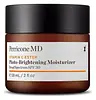
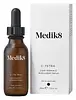
Perricone MD Vitamin C Ester Photo-Brightening Moisturiser Broad Spectrum SPF 30 Versus Medik8 C-Tetra Lipid Vitamin C Serum
This brightening day moisturizer is formulated around Tetrahexyldecyl Ascorbate and Thioctic Acid to brighten dull-looking skin and soften the look of wrinkles.
This brightening serum is formulated around Tetrahexyldecyl Ascorbate and Simmondsia Chinensis Seed Oil to brighten dull-looking skin and fade the look of dark spots.


What's inside
What's inside
 Key Ingredients
Benefits
Concerns
Ingredients Side-by-side
Water
Skin ConditioningGlycerin
Humectant


Cyclopentasiloxane
Emollient
Dimethicone
Emollient
Pentylene Glycol
Skin Conditioning
Ethylhexyl Methoxycrylene
Skin Conditioning
Polyester-8
Skin Conditioning
Polyglyceryl-3 Polydimethylsiloxyethyl Dimethicone
Skin Conditioning
Hydroxyethyl Acrylate/Sodium Acryloyldimethyl Taurate Copolymer
Emulsion StabilisingBenzyl Alcohol
Perfuming






Aluminum Hydroxide
EmollientStearic Acid
Cleansing


Diethylhexyl Syringylidenemalonate
Skin Protecting
Hydrogenated Lecithin
Emulsifying
Isohexadecane
EmollientBisabolol
Antioxidant


Tetrahexyldecyl Ascorbate
Antioxidant



Phenoxyethanol
Preservative
Polysilicone-11

Polysorbate 60
Emulsifying
Caprylic/Capric Triglyceride
Masking
Sodium Benzoate
Masking
Potassium Sorbate
Preservative
Xanthan Gum
EmulsifyingHydrogenated Phosphatidylcholine
Emulsifying
Thioctic Acid
Antioxidant
Astaxanthin
Skin Conditioning
Water, Glycerin, Cyclopentasiloxane, Dimethicone, Pentylene Glycol, Ethylhexyl Methoxycrylene, Polyester-8, Polyglyceryl-3 Polydimethylsiloxyethyl Dimethicone, Hydroxyethyl Acrylate/Sodium Acryloyldimethyl Taurate Copolymer, Benzyl Alcohol, Aluminum Hydroxide, Stearic Acid, Diethylhexyl Syringylidenemalonate, Hydrogenated Lecithin, Isohexadecane, Bisabolol, Tetrahexyldecyl Ascorbate, Phenoxyethanol, Polysilicone-11, Polysorbate 60, Caprylic/Capric Triglyceride, Sodium Benzoate, Potassium Sorbate, Xanthan Gum, Hydrogenated Phosphatidylcholine, Thioctic Acid, Astaxanthin




Reviews
Ingredients Explained
These ingredients are found in both products.
Ingredients higher up in an ingredient list are typically present in a larger amount.
Cyclopentasiloxane (D5) is a lightweight silicone that mostly acts as an emollient and solvent in cosmetics. Its the reason your products feel silky, fast-spreading, and non-greasy.
Since D5 is volatile, it does its thing and then evaporates off the skin quickly.
The safety profile of this ingredient is reassuring; the US CIR Expert Panel concluded D5 is safe as used in cosmetics and Health Canada concluded that D5 is not harmful to human health or the environment as currently used in cosmetics
There's a study that people mention about D5 in a rat study showing tumors. This study is related to long-term inhalation of high D5 levels.
Regulatory bodies have judged this study to be not applicable in topical skincare since skin absorption of D5 is very low and we're not really inhaling huge amounts of D5.
The only restriction for this ingredient is environmental. The European Chemicals Agency (ECHA) restricted D5 in wash-off cosmetics at or above 0.1% due to their persistence in water.
Learn more about CyclopentasiloxaneTetrahexyldecyl Ascorbate (THD) is a stable and oil-soluble form of Vitamin C.
THD is special in that it has the ability to travel deeper into skin than traditional ascorbic acid while maintaining the same skin benefits (double win!).
Because it’s oil-soluble, THD dives deep into your skin’s fatty layers (think ceramides and cholesterol) to fight off the kind of free radicals that mess with your skin barrier. This makes it a great pair with water-based vitamin C (ascorbic acid) that mainly works on the surface.
Even at just 0.1%, THD is already showing great antioxidant activity. When used up to 2%, it helps keep your skin happy and calm, especially when it’s stressed from pollution or sun.
Want to fade dark spots or tackle hyperpigmentation? You’ll want 5% or more. Pairing it with brightening buddies like niacinamide or licorice root gives even better results. One study even used 30% THD with other brighteners and saw real results on stubborn discoloration, even in melasma-prone skin.
A note on THD: It’s has a slightly silky, oily texture and usually shows up colorless or pale yellow (though the exact shade can vary by supplier).
While you can sneak it into water-based formulas, it really shines when paired with silicones or oils, which help your skin soak it up better.
THD is pretty stable, but it’s still vulnerable to degradation like ascorbic acid. Too much light or heat (above 113°F / 45°C) can break it down over time. Go for dark and opaque packaging that keeps it safe and shady!
Read more about other types of Vitamin C:
Learn more about Tetrahexyldecyl Ascorbate

