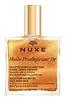
This hydrating oil is formulated around Macadamia Integrifolia Seed Oil and Prunus Amygdalus Dulcis Oil to hydrate skin and strengthen the skin barrier.

What's inside
What's inside
 Key Ingredients
No key ingredients
Benefits
Concerns
Ingredients Side-by-side
Coco-Caprylate/Caprate
Emollient
Macadamia Integrifolia Seed Oil
Skin Conditioning



Dicaprylyl Ether
Emollient
Caprylic/Capric Triglyceride
Masking
Prunus Amygdalus Dulcis Oil
Skin Conditioning

Corylus Avellana Seed Oil
Emollient
Mica
Cosmetic ColorantCamellia Oleifera Seed Oil
Skin Conditioning
Parfum
Masking


Camellia Japonica Seed Oil
Emollient
Castor Oil/Ipdi Copolymer
CI 77891
Cosmetic ColorantArgania Spinosa Kernel Oil
Emollient


Borago Officinalis Seed Oil
Emollient
Tocopherol
Antioxidant



CI 77491
Cosmetic ColorantHelianthus Annuus Seed Oil
Emollient
Tocopheryl Acetate
Antioxidant
Rosmarinus Officinalis Leaf Extract
AntimicrobialPolyglyceryl-3 Diisostearate
Emulsifying
Water
Skin ConditioningAscorbic Acid
Antioxidant


Solanum Lycopersicum Fruit Extract
Antioxidant
Linalool
Perfuming
Limonene
Perfuming
Citronellol
Perfuming
Geraniol
Perfuming
Coco-Caprylate/Caprate, Macadamia Integrifolia Seed Oil, Dicaprylyl Ether, Caprylic/Capric Triglyceride, Prunus Amygdalus Dulcis Oil, Corylus Avellana Seed Oil, Mica, Camellia Oleifera Seed Oil, Parfum, Camellia Japonica Seed Oil, Castor Oil/Ipdi Copolymer, CI 77891, Argania Spinosa Kernel Oil, Borago Officinalis Seed Oil, Tocopherol, CI 77491, Helianthus Annuus Seed Oil, Tocopheryl Acetate, Rosmarinus Officinalis Leaf Extract, Polyglyceryl-3 Diisostearate, Water, Ascorbic Acid, Solanum Lycopersicum Fruit Extract, Linalool, Limonene, Citronellol, Geraniol
Sesamum Indicum Seed Oil
Emollient
Oryza Sativa Bran Oil
Emollient
Gossypium Herbaceum Seed Oil
Skin Conditioning
Limonene
Perfuming
Citrus Paradisi Peel Oil
Masking

Prunus Amygdalus Dulcis Oil
Skin Conditioning
Citrus Limon Peel Oil
Masking
Juniperus Virginiana Wood Oil
Perfuming
Pelargonium Graveolens Oil
Masking
Juniperus Communis Fruit Oil
Masking
Crithmum Maritimum Oil
Origanum Majorana Flower/Leaf/Stem Oil
Masking
Citronellol
Perfuming
Citral
Perfuming
Geraniol
Perfuming
Linalool
Perfuming
Sesamum Indicum Seed Oil, Oryza Sativa Bran Oil, Gossypium Herbaceum Seed Oil, Limonene, Citrus Paradisi Peel Oil, Prunus Amygdalus Dulcis Oil, Citrus Limon Peel Oil, Juniperus Virginiana Wood Oil, Pelargonium Graveolens Oil, Juniperus Communis Fruit Oil, Crithmum Maritimum Oil, Origanum Majorana Flower/Leaf/Stem Oil, Citronellol, Citral, Geraniol, Linalool
Ingredients Explained
These ingredients are found in both products.
Ingredients higher up in an ingredient list are typically present in a larger amount.
Citronellol is used to add fragrance/parfum to a product. It is often derived from plants such as roses. In fact, it can be found in many essential oils including geranium, lavender, neroli, and more. The scent of Citronellol is often described as "fresh, grassy, and citrus-like".
Since the Citronellol molecule is already unstable, Citronellol becomes irritating on the skin when exposed to air.
Citronellol is a modified terpene. Terpenes are unsaturated hydrocarbons found in plants. They make up the primary part of essential oils.
Citronellol is not able to be absorbed into deeper layers of the skin. It has low permeability,
Citronellol is also a natural insect repellent.
Learn more about CitronellolGeraniol is used to add fragrance/parfum to a product. It is the main component of citronellol. It is a monoterpenoid and an alcohol.
Monoterpenes are naturally found in many parts of different plants.
Geraniol can be found in many essential oils including Rose Oil and Citronella Oil. The scent of Geraniol is often described as "rose-like". Many foods also contain Geraniol for fruit flavoring.
Geraniol can irritate the skin when exposed to air. However, irritation depends on the ability of geraniol to penetrate into the skin. In general, geraniol is not able to penetrate skin easily.
Geraniol is colorless and has low water-solubility. However, it is soluble in common organic solvents.
Like citronellol, it is a natural insect repellent.
2,6-Octadien-1-ol, 3,7-dimethyl-, (2E)-
Learn more about GeraniolLimonene is the compound that gives citrus peel its smell.
In skincare, it shows up as a standalone fragrance ingredient or as a natural compound of citrus and other essential oils.
You'll typically see this ingredient used in very small amounts; anything above 0.001% in a leave-on product or 0.01% in a rinse-off has to be named on the label in the EU. The citrus oils that carry it sit around 0.5-1% in a finished formula.
Fresh limonene is a weak allergen; the real issue is that it slowly reacts with air and then breaks down from oxidation to create hydroperoxides (which are strong sensitizers). This is why suppliers are required to keep the peroxide value below 20 mmol.
Positive reactions in people being investigated for eczema vary:
It's worth skipping if you have a known fragrance allergy or a compromised barrier, but the risk is low for most people.
Older or long-opened products are also more likely to bother you than fresh ones due to oxidation.
Learn more about LimoneneLinalool is a small, naturally occurring scent molecule found in plants like lavender, coriander, bergamot, and more.
It is one of the two most-used fragrance ingredients in cosmetics and added purely for smell. Since it's not used for a skin benefit, there's no "effective dose". Concentration depends on the fragrance load of the product.
The EU requires it to be named on the label above 0.001% in leave-on and 0.01% in rinse-off products.
Fresh linalool is a weak sensitizer but air exposure turns some of it into hydroperoxides, which are strong sensitizers. Those oxidation products are the actual allergy concern.
Patch-test clinics see positive reactions to linalool hydroperoxides in about 4% to 12% of dermatitis patients depending on country and test concentration.
Resassuringly, one analytical study found hydroperoxide levels in real fragranced products to be orders of magnitude below what induced sensitization in animal studies with no evidence of oxidation building up during normal storage.
The practical takeaway is that linalool is fine for most people but worth avoiding if you have a confirmed fragrance contact allergy or a badly compromised barrier.
Products stored a long time after opening are also the high-risk scenario since that is when oxidation happens.
The scent of linalool is described as floral, spicy tropical, and citrus-like.
Learn more about LinaloolThis ingredient is also known as sweet almond oil. It is a lightweight, cold-pressed oil from the ripe seeds of the sweet almond tree.
Sweet almond oil is rich in skin-nourishing fatty acids such as oleic acid (55-86%) and linolenic acid (7-35%).
As an emollient, it softens and hydrates skin by forming a thin barrier that locks in moisture.
Clinical studies have found it to be non-irritating and non-sensitizing. The CIR Expert Panel has evaluated the available safety data and concluded it is safe for topical use.
Because of the oleic acid content, this ingredient may not be fungal acne safe.
This ingredient does have a comedogenic rating of 3, but this doesn't mean a formula with this ingredient will clog pores.
Human testing has proved that any finished product with a comedogenic ingredient won't automatically make you break out; it really comes down to concentration, formula, and your skin.
Learn more about Prunus Amygdalus Dulcis Oil

