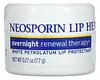
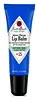
Neosporin Lip Health Overnight Healthy Lips Renewal Therapy Versus Jack Black Intense Therapy Lip Balm SPF 25
This lip moisturizer is formulated around Petrolatum and Palmitoyl Oligopeptide to hydrate lips.
This barrier-repair lip moisturizer is formulated around Butyrospermum Parkii Butter and Camellia Sinensis Leaf Extract to strengthen the lip barrier and hydrate lips.

What's inside
What's inside
 Key Ingredients
Benefits
Concerns
Ingredients Side-by-side
Petrolatum
Emollient



Lanolin
Emollient


Paraffin
Skin Conditioning
Theobroma Cacao Seed Butter
Emollient
Paraffinum Liquidum
Emollient
Aroma


Vp/Eicosene Copolymer
Ethylhexyl Palmitate
Emollient
Titanium Dioxide
Cosmetic Colorant

Tribehenin
Emollient
Tocopherol
Antioxidant






Sorbitan Isostearate
Emulsifying
Sodium Pyruvate
Skin ConditioningRetinyl Palmitate
Skin Conditioning

Zea Mays Oil
Emulsifying
Cholecalciferol
Palmitoyl Oligopeptide
Cleansing




Reviews
Ingredients Explained
These ingredients are found in both products.
Ingredients higher up in an ingredient list are typically present in a larger amount.
Aroma refers to an ingredient, or mixture of ingredients, that impart or mask a flavor.
The name is slightly confusing. This is because INCI associates aroma with flavor instead of smell.
Here is the official definition from the The International Cosmetic Ingredient Dictionary and Handbook:
“Aroma is a term for ingredient labeling used to identify that a product contains a material or combination of materials normally added to a cosmetic to produce or to mask a particular flavor.”
INCI shows the only purpose of aroma to be "flavouring".
However, due to regulation differences, some companies may use aroma in place of parfum.
In Canada, this ingredient only has to be listed in concentrations above 1%.
Learn more about AromaLanolin is a waxy substance secreted by the sebaceous glands of wool-bearing sheep. It is an effective moisturizer that works as both a humectant and emollient.
As a humectant, it is able to absorb up to 400% of its own weight in water; this also gives it emulsifying properties as it can help stabilize water-in-oil emulsions.
On the other hand, lanolin is able to reduce transepidermal water loss (TEWL) by about 20-30%. It can also incorporate into the lipid matrix to surround skin cells and reinforce the skin barrier.
This is why you'll see lanolin as an ingredient for heavy-duty moisturizers.
You might have seen an "allergy concern" that gives lanolin a bad reputation. The rate of lanolin contact allergy in the general population is estimated to be under 0.5%, and most of these are seen in people with compromised-skin dealing with eczema, atopic dermatitis, or leg ulcers.
Healthy, intact skin tolerates lanolin well. Even people who have previously reacted to it test negative on patch tests when the test is done on normal skin.
Because lanolin comes from an animal, it is not considered vegan. Sheep secrete lanolin through sebaceous glands to help protect their skin from the environment.
Lanolin has a reputation as pore clogging but that comes almost entirely from rabbit ear testing done decades ago (and that model has aged badly).
This ingredient does have a comedogenic rating of 0-1; the tests state this score means the ingredient has low or non-existent chance of clogging your pores.
Keep in mind that the authors of the rabbit ear test proposed that a material needs to score consistently above 3 in the rabbit assay before it means anything for real skin.
A separate review found the model has serious performance problems and no correlation with human experience. Concentration matters a lot too: in one study, Acetylated Lanolin Alcohol scored 4 to 5 at full strength but dropped to a 1 when diluted to 2.5%, and finished products containing "comedogenic" ingredients didn't raise microcomedone counts in people.
Lanolin contains esters exactly in the range that the Malassezia yeast can synthesize, making this ingredient not fungal acne safe.
Learn more about LanolinThis ingredient is also known as Cocoa butter; it's the fat pressed out of roasted cocoa beans.
Cocoa butter is solid at room temperature and melts right around body temperature, which is why it feels waxy in the jar and slippery on skin.
It has a very saturated profile (stearic acid ~34 to 36%, oleic acid ~30 to 40%, and palmitic acid ~24 to 29%) that makes it a strong occlusive: it sits on top and slows water escaping from skin.
Concentration data shows that it can show up anywhere from a few percent in lotions up to 100% in balms, and the FDA lists cocoa butter as an OTC skin protectant active at 50-100%.
The CIR has reviewed it and concluded it to be safe as used in cosmetics.
This is one of the ingredients with a comedogenic score of 4/5 from the rabbit ear test. Just know that a later human study did find that finished products containing high-comedogenic ingredients like cocoa butter did not increase microcomedone formation.
The fair call here is that this ingredient is most likely fine on body or low-percentage formulas, but can potentially be riskier as a heavy leave-on facial product if you break out easily.
Cocoa butter may not be fungal acne safe; it is a triglyceride of C16-18 fatty acids that the Malassezia yeast can metabolize.
Allergies to cocoa butter are rare and uncommon, but a few cases have been documented (mostly in cases where the person ate chocolate). So if you have a tree nut allergy, be sure to patch test or avoid.
Learn more about Theobroma Cacao Seed Butter

