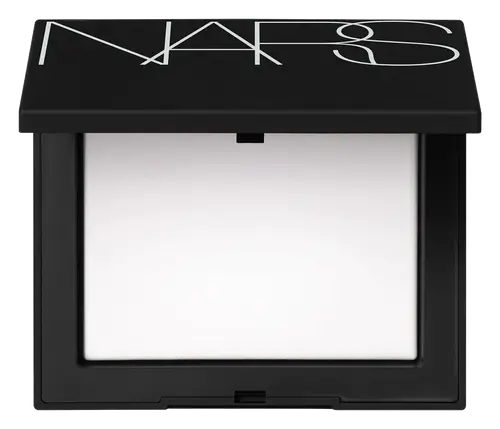
NARS Cosmetics Light Reflecting Pressed Setting Powder Versus Carslan Oil Control Face Pressed Powder


What's inside
What's inside
 Key Ingredients
Benefits
Concerns
Ingredients Side-by-side
Synthetic Fluorphlogopite
Silica
Abrasive


Cetearyl Ethylhexanoate
Emollient

Glycerin
Humectant


Squalane
Emollient
Octyldodecyl Stearoyl Stearate
Emollient
Polysorbate 80
Emulsifying
Caprylyl Glycol
Emollient
Ethylhexylglycerin
Skin ConditioningChondrus Crispus Extract
Skin Conditioning
Xanthan Gum
Emulsifying1,2-Hexanediol
Skin Conditioning
Pentaerythrityl Tetra-Di-T-Butyl Hydroxyhydrocinnamate
Antioxidant
Maris Aqua
HumectantAscophyllum Nodosum Extract
Skin Conditioning

Magnesium Silicate
AbsorbentTocopheryl Acetate
Antioxidant

Phenoxyethanol
Preservative
Potassium Sorbate
Preservative
Tin Oxide
Abrasive
Mica
Cosmetic ColorantCI 77891
Cosmetic ColorantCI 77491
Cosmetic ColorantCI 77492
Cosmetic ColorantCI 77499
Cosmetic ColorantSynthetic Fluorphlogopite, Silica, Cetearyl Ethylhexanoate, Glycerin, Squalane, Octyldodecyl Stearoyl Stearate, Polysorbate 80, Caprylyl Glycol, Ethylhexylglycerin, Chondrus Crispus Extract, Xanthan Gum, 1,2-Hexanediol, Pentaerythrityl Tetra-Di-T-Butyl Hydroxyhydrocinnamate, Maris Aqua, Ascophyllum Nodosum Extract, Magnesium Silicate, Tocopheryl Acetate, Phenoxyethanol, Potassium Sorbate, Tin Oxide, Mica, CI 77891, CI 77491, CI 77492, CI 77499
Water
Skin ConditioningSynthetic Fluorphlogopite
Silica
Abrasive
Vinyl Dimethicone/Methicone Silsesquioxane Crosspolymer

Propylene Glycol Diheptanoate
EmollientOctyldodecyl Stearoyl Stearate
Emollient
Hdi/Trimethylol Hexyllactone Crosspolymer
Polysorbate 80
Emulsifying
Phenoxyethanol
Preservative
Pentylene Glycol
Skin Conditioning
Xanthan Gum
EmulsifyingDimethicone
Emollient
Zinc Oxide
Cosmetic Colorant

Isododecane
EmollientDimethicone Crosspolymer
Emulsion Stabilising
Cocos Nucifera Oil
Masking



Isohexadecane
EmollientEthylhexylglycerin
Skin ConditioningChondrus Crispus Extract
Skin Conditioning
Sodium Citrate
BufferingHydrogenated Polyisobutene
EmollientSnail Secretion Filtrate
Skin Conditioning

Pentane
SolventWater, Synthetic Fluorphlogopite, Silica, Vinyl Dimethicone/Methicone Silsesquioxane Crosspolymer, Propylene Glycol Diheptanoate, Octyldodecyl Stearoyl Stearate, Hdi/Trimethylol Hexyllactone Crosspolymer, Polysorbate 80, Phenoxyethanol, Pentylene Glycol, Xanthan Gum, Dimethicone, Zinc Oxide, Isododecane, Dimethicone Crosspolymer, Cocos Nucifera Oil, Isohexadecane, Ethylhexylglycerin, Chondrus Crispus Extract, Sodium Citrate, Hydrogenated Polyisobutene, Snail Secretion Filtrate, Pentane
Reviews
Ingredients Explained
These ingredients are found in both products.
Ingredients higher up in an ingredient list are typically present in a larger amount.
Chondrus Crispus Extract comes from a red algae native to the northern Atlantic coasts of Europe and North America. It helps hydrate the skin and is rich in antioxidants.
The antioxidants in chondrus crispus include lutein and zeaxanthin. Lutein has the ability to filter blue light from screens.
Other contents of chondrus crispus include polysaccharides, peptides, and amino acids. These help hydrate the skin.
What's the difference between algae and seaweed?
Algae is a broad term that includes seaweed. Not all algae is seaweed.
Ethylhexylglycerin is created from glycerin. It is a multitasker ingredient that:
The CIR Expert Panel found minimal skin absorption or sensitization of any kind in a safety assessment. Though this ingredient is considered well-tolerated, a small number of cases of allergic dermatitis have been published since 2002. Just be sure to patch test if you are unsure.
Industry-reported use ranges from 8% in rinse-off products and 2% in leave-on formulations.
Learn more about EthylhexylglycerinOctyldodecyl Stearoyl Stearate is an emollient ester that mostly shows up in color cosmetics.
Functionally, it works as a skin-conditioning agent and a viscosity-increasing agent. This just means it helps soften skin while also thickening water-free formulas (like powders).
Despite being a "stearate", it has a lightweight, cushiony, and non-greasy slip.
This ingredient has shown no adverse effects in testing and is deemed safe in cosmetics at current use levels.
Typical concentrations range from 0.7-23%.
Because it is made of C-18 fatty acids (like stearic acid), this ingredient may not be fungal acne safe.
Learn more about Octyldodecyl Stearoyl StearatePhenoxyethanol is one of the most widely used preservatives in skincare (and for good reason!).
It has a large spectrum of antimicrobial activity and especially effective bacteria, yeast, and mold while only having a weak effect on your skin's natural microbiome.
On a cellular level, it disrupts the cell membranes of microbes by poking holes that make the cell leak. This shuts down the chemical reactions the microbe needs to make energy so it can no longer survive.
Another perk of this ingredient is that it stays functional across a wide pH range (3-10).
You'll often see it paired with boosters like Ethylhexylglycerin; one study showed that a 1:9 ratio of Ethylhexylglycerin to Phenoxyethanol damages bacterial membranes as effectively as doubling the Phenoxyethanol concentration on its own.
Typical use concentrations range from 0.3-1% depending on the formula, and this ingredient is capped at 1% int the EU.
Safety-wise, the fear mongering does not hold up to the evidence. The EU's Scientific Committee on Consumer Safety and FDA consider it safe as a preservative at up to 1%, including for children of all ages.
Adverse systemic effects only showed up in animal studies at exposures roughly 200x higher than what people get from cosmetics. And despite its very widespread use, this ingredient is a rare sensitizer and allergic reactions are uncommon.
Learn more about PhenoxyethanolPolysorbate 80 is a synthetic surfactant and emulsifier derived from sorbitol and oleic acid.
It reduces the surface tension between oil and water phases to help them stay mixed and stable in a formulation. In other words, it prevents your formulas from separating into an oily mess.
The CIR Expert Panel has evaluated the scientific data and found this ingredient to be safe, non-irritating, and non-sensitizing at concentrations up to 5% (it's even approved by the FDA as an OTC eye drop ingredient).
Learn more about Polysorbate 80Silica, also known as silicon dioxide, is a naturally occurring mineral. It is used as a fine, spherical, and porous powder in cosmetics.
Though it has exfoliant properties, the function of silica varies depending on the product.
The unique structure of silica enhances the spreadability and adds smoothness, making it a great texture enhancer.
It is also used as an active carrier, emulsifier, and mattifier due to its ability to absorb excess oil.
In some products, tiny microneedles called spicules are made from silica or hydrolyzed sponge. When you rub them in, they lightly polish away dead skin layers and enhance the penetration of active ingredients.
Learn more about SilicaSynthetic Fluorphlogopite is the synthethic version of mica. It consists of fluorine, aluminum and silicate.
Synthetic Fluorphlogopite is used to add volume to products.
It is considered non-irritating on the skin.
Learn more about Synthetic FluorphlogopiteXanthan gum is used as a stabilizer and thickener within cosmetic products. It helps give products a sticky, thick feeling - preventing them from being too runny.
On the technical side of things, xanthan gum is a polysaccharide - a combination consisting of multiple sugar molecules bonded together.
Xanthan gum is a pretty common and great ingredient. It is a natural, non-toxic, non-irritating ingredient that is also commonly used in food products.
Learn more about Xanthan Gum