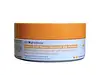
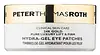
My iN.gredients Gold +Snail Mucin Hydrogel Eye Patches Versus Peter Thomas Roth 24K Gold Pure Luxury Lift & Firm Hydra-Gel Eye Patches
This hydrating eye mask is formulated around Snail Secretion Filtrate and Adenosine to hydrate skin and calm redness.
This anti-aging eye mask is formulated around Caffeine to soften the look of wrinkles.


What's inside
What's inside
 Key Ingredients
Benefits
Concerns
Ingredients Side-by-side
Water
Skin ConditioningGlycerin
Humectant


Methylpropanediol
SolventChondrus Crispus Extract
Skin Conditioning


Snail Secretion Filtrate
Skin Conditioning

Ceratonia Siliqua Gum
EmollientCucumis Sativus Fruit Extract
Emollient
Hamamelis Virginiana Extract
Antiseborrhoeic


Portulaca Oleracea Extract
Skin Conditioning
Adenosine
Skin Conditioning
Colloidal Gold
AntimicrobialCellulose Gum
Emulsion StabilisingXanthan Gum
EmulsifyingAllantoin
Skin Conditioning
Butylene Glycol
Humectant
Sucrose
Humectant
PEG-60 Hydrogenated Castor Oil
Emulsifying

Glyceryl Caprylate
EmollientBeta-Glucan
Skin Conditioning
Hydroxyacetophenone
Antioxidant
Potassium Chloride
Disodium EDTA
Chelating1,2-Hexanediol
Skin Conditioning
Mica
Cosmetic ColorantCI 77891
Cosmetic ColorantCI 77491
Cosmetic ColorantParfum
Masking

Water, Glycerin, Methylpropanediol, Chondrus Crispus Extract, Snail Secretion Filtrate, Ceratonia Siliqua Gum, Cucumis Sativus Fruit Extract, Hamamelis Virginiana Extract, Portulaca Oleracea Extract, Adenosine, Colloidal Gold, Cellulose Gum, Xanthan Gum, Allantoin, Butylene Glycol, Sucrose, PEG-60 Hydrogenated Castor Oil, Glyceryl Caprylate, Beta-Glucan, Hydroxyacetophenone, Potassium Chloride, Disodium EDTA, 1,2-Hexanediol, Mica, CI 77891, CI 77491, Parfum
Water
Skin ConditioningGlycerin
Humectant
Carrageenan

Butylene Glycol
Humectant
Ceratonia Siliqua Gum
EmollientColloidal Gold
AntimicrobialSodium Hyaluronate
Humectant
Hydrolyzed Collagen
Emollient
Caffeine
Skin Conditioning
Niacinamide
Smoothing






Aloe Barbadensis Leaf Juice Powder
Skin Conditioning
Tocopheryl Acetate
Antioxidant
Allantoin
Skin Conditioning
Jania Rubens Extract
Skin Conditioning
Adenosine
Skin Conditioning
Lavandula Angustifolia Oil
Masking

Ricinus Communis Seed Oil
Masking
Calcium Lactate
AstringentXanthan Gum
EmulsifyingDisodium EDTA
ChelatingPEG-60 Hydrogenated Castor Oil
Emulsifying
Synthetic Fluorphlogopite
Mica
Cosmetic ColorantTin Oxide
Abrasive
Chlorphenesin
Antimicrobial
Phenoxyethanol
Preservative
CI 77480
Cosmetic ColorantCI 77491
Cosmetic ColorantCI 77891
Cosmetic ColorantWater, Glycerin, Carrageenan, Butylene Glycol, Ceratonia Siliqua Gum, Colloidal Gold, Sodium Hyaluronate, Hydrolyzed Collagen, Caffeine, Niacinamide, Aloe Barbadensis Leaf Juice Powder, Tocopheryl Acetate, Allantoin, Jania Rubens Extract, Adenosine, Lavandula Angustifolia Oil, Ricinus Communis Seed Oil, Calcium Lactate, Xanthan Gum, Disodium EDTA, PEG-60 Hydrogenated Castor Oil, Synthetic Fluorphlogopite, Mica, Tin Oxide, Chlorphenesin, Phenoxyethanol, CI 77480, CI 77491, CI 77891
Reviews
Ingredients Explained
These ingredients are found in both products.
Ingredients higher up in an ingredient list are typically present in a larger amount.
Adenosine is a purine nucleoside that your body already makes in every cell. In skincare, it acts mainly as a skin conditioning and anti-aging agent.
The way it works is fairly well mapped out:
Your skin has cells called fibroblasts that build collagen (the stuff that keeps skin firm and smooth). Adenosine basically flips a switch on these cells that tells them to get to work making more collagen and other proteins. These cells slow down on their own as skin ages, so Adenosine helps give them a little nudge to keep going.
The clinical backing is pretty solid too.
A blind, randomized, placebo-controlled trial of 126 women aged 45-65 tested a 0.1% cream twice daily and found real improvements in crow's feet and frown lines using a precise 3D skin-mapping technique; these changes showed up by week 3 and held at 2 months.
A later study using Adenosine-loaded dissolving microneedle patches reported gains in wrinkle depth, dermal density, elasticity, and hydration.
On concentrations, South Korea's Ministry of Food and Drug Safety has set 0.04% as the approved functional anti-wrinkle level. You'll typically see this ingredient used somewhere in the 0.04-0.1% range since it works at low doses.
This ingredient has been found safe for cosmetics with the data showing no irritation or sensitization.
Overall, this is a great ingredient for any anti-aging routine and has no photosensitizing effect, so it suits both AM and PM use.
Learn more about AdenosineAllantoin is a soothing ingredient known for its protective and moisturizing properties; it's basically a quiet workhorse ingredient you can find in a huge range of cosmetics.
Though it can be derived from the comfrey plant, allantoin is produced synthetically for cosmetic products to ensure purity.
Research shows it can encourage your skin cells to turn over and renew by stimulating keratinocyte and fibroblast proliferation.
It also has mild keratolytic properties to help loosen and shed dead skin cells without being harsh.
Studies also suggest allantoin can help calm inflammation by dialing down some of the chemical signals your skin sends out when it is irritated.
This ingredient is typically used in the 0.1-0.5% range, and the FDA recognizes it as a skin protectant in OTC products up to 2%.
Overall, allantoin is a wonderful addition to most routines; it is stable across a wide pH range (~4-8), works well with other ingredients, and is considered non-sensitizing/non-irritating.
Fun fact: Allantoin is naturally occurring in comfrey root, beets, chamomile, and wheat sprouts. Our bodies even produce it as a byproduct of uric acid metabolism.
Learn more about AllantoinButylene Glycol (or BG) is used within cosmetic products for a few different reasons:
Overall, Butylene Glycol is a safe and well-rounded ingredient that works well with other ingredients.
Though this ingredient works well with most skin types, some people with sensitive skin may experience a reaction such as allergic rashes, closed comedones, or itchiness.
Learn more about Butylene GlycolCeratonia Siliqua Gum is extracted from the seeds of the carob tree. You might know this ingredient as Carob Gum or Locust Bean Gum. It is used to stabilize other ingredients and improve the texture of products.
Carob gum is made up of long-chain polysaccharides. This makes it a natural thickener.
Yes! This ingredient comes from the seeds of a tree. The name 'Locust Bean Gum' can be misleading.
Learn more about Ceratonia Siliqua GumCi 77491 is also hydrated iron III oxide. It's sole purpose is to give a red/pink hue to products.
Iron III oxides are classified as inorganic chemicals for coloring.
Synthetically created Ci 77491 is considered safer than those naturally found. This is because the synthetically created version may contain less impurities. Iron oxides are generally non-toxic and non-allergenic.
Learn more about CI 77491Ci 77891 is a white pigment from Titanium dioxide. It is naturally found in minerals such as rutile and ilmenite.
It's main function is to add a white color to cosmetics. It can also be mixed with other colors to create different shades.
Ci 77891 is commonly found in sunscreens due to its ability to block UV rays.
Learn more about CI 77891We don't have a description for Colloidal Gold yet.
Disodium EDTA is a chelating agent. It grabs onto and deactivates metal ions that sneak into your products from water, packaging, or air.
This ingredient mainly works behind the scenes and helps with:
On top of that, this ingredient can counteract the effects of hard water by binding to the minerals in it.
One thing worth knowing is that Disodium EDTA has been shown to be a mild penetration enhancer. It can help other ingredients absorb into skin more effectively which can be a double-edged sword (great for actives, but can also make the active too strong if you have sensitive skin).
Clinical patch testing showed no significant skin irritation at typical use concentrations and minimal dermal absorption.
You'll most likely see this ingredient near the end of an ingredient list. It's typically found in concentrations less than 1%.
Learn more about Disodium EDTAGlycerin (or glycerol) is a compound naturally found in your skin. It's a powerhouse humectant that pulls water into the stratum corneum.
Topically, glycerin does several things at once:
Your skin makes glycerin on its own (mostly from sebaceous oil breakdown) and shuttles it to your outermost layer of skin, or your epidermis, via aquaporin-3.
Aquaporin-3 is a transporter that is essential for normal skin hydration, elasticity, and repair. Interestingly, mice lacking in AQP3 have dry and less elastic skin that can be fully corrected with glycerin.
This ingredient is non-irritating, plays well with almost every ingredient, and works across all skin types. Typical use is anywhere between 3-10% but can go up to 79% in some leave-on products.
Just know very high concentrations (>40%) can feel tacky in low humidity.
Glycerin is the name for this ingredient in American English. British English uses Glycerol/Glycerine.
Learn more about GlycerinMica is a naturally occurring mineral used to add shimmer and color in cosmetics. It can also help improve the texture of a product or give it an opaque, white/silver color.
Serecite is the name for very fine but ragged grains of mica.
This ingredient is often coated with metal oxides like titanium dioxide. Trace amounts of heavy metals may be found in mica, but these metals are not harmful in our personal products.
Mica has been used since prehistoric times throughout the world. Ancient Egyptian, Indian, Greek, Roman, Aztec, and Chinese civilizations have used mica.
Learn more about MicaPeg-60 Hydrogenated Castor Oil comes from hydrogenated castor oil. It is a solubilizer and emulsifier.
As a solubilizer, it helps dissolve ingredients into a water-based version. It is also an emulsifer. Emulsifier help prevent oils and water from separating. Both these properties help create evenly-spread and uniform products.
Basically, Peg-60 Hydrogenated Castor Oil helps hold ingredients together.
Learn more about PEG-60 Hydrogenated Castor OilWater. It's the most common cosmetic ingredient of all. You'll usually see it at the top of ingredient lists, meaning that it makes up the largest part of the product.
So why is it so popular? Water most often acts as a solvent - this means that it helps dissolve other ingredients into the formulation.
You'll also recognize water as that liquid we all need to stay alive. If you see this, drink a glass of water. Remember to stay hydrated!
Learn more about WaterXanthan gum is used as a stabilizer and thickener within cosmetic products. It helps give products a sticky, thick feeling - preventing them from being too runny.
On the technical side of things, xanthan gum is a polysaccharide - a combination consisting of multiple sugar molecules bonded together.
Xanthan gum is a pretty common and great ingredient. It is a natural, non-toxic, non-irritating ingredient that is also commonly used in food products.
Learn more about Xanthan Gum

