This brightening treatment is formulated around Ascorbic Acid and Asiaticoside to fade the look of dark spots and refine skin texture.
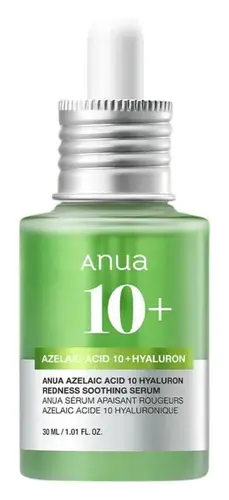
This calming serum is formulated around Azelaic Acid to calm redness and refine skin texture.


What's inside
What's inside
 Key Ingredients
Benefits
Concerns
Ingredients Side-by-side
Dimethicone
Emollient

Polysilicone-11

Ascorbic Acid
Antioxidant





Silica
Abrasive

Dimethicone/Divinyldimethicone/Silsesquioxane Crosspolymer
Humectant
Dimethyl Isosorbide
SolventAsiaticoside
Antioxidant


Madecassic Acid
Skin Conditioning
Asiatic Acid
Skin Conditioning
Hexylresorcinol
Antimicrobial
Salicylic Acid
Masking






Acetyl Glucosamine
Skin Conditioning
Hydroxytyrosol
Bleaching
Tocopheryl Acetate
Antioxidant
Polymethylsilsesquioxane
Trimethylsiloxysilicate
Emollient
Parfum
Masking

Limonene
Perfuming
Linalool
Perfuming
CI 77891
Cosmetic ColorantDimethicone, Polysilicone-11, Ascorbic Acid, Silica, Dimethicone/Divinyldimethicone/Silsesquioxane Crosspolymer, Dimethyl Isosorbide, Asiaticoside, Madecassic Acid, Asiatic Acid, Hexylresorcinol, Salicylic Acid, Acetyl Glucosamine, Hydroxytyrosol, Tocopheryl Acetate, Polymethylsilsesquioxane, Trimethylsiloxysilicate, Parfum, Limonene, Linalool, CI 77891
Water
Skin ConditioningIsodecyl Neopentanoate
EmollientDimethicone
Emollient
Azelaic Acid
Buffering
Dimethicone/Bis-Isobutyl PPG-20 Crosspolymer
Emollient
Dimethyl Isosorbide
SolventHydroxyethyl Acrylate/Sodium Acryloyldimethyl Taurate Copolymer
Emulsion StabilisingPolysilicone-11
Isohexadecane
EmollientTocopherol
Antioxidant
Trisodium Ethylenediamine Disuccinate
ChelatingIsoceteth-20
EmulsifyingPolysorbate 60
Emulsifying
Triethanolamine
BufferingEthoxydiglycol
HumectantPhenoxyethanol
Preservative
Chlorphenesin
Antimicrobial
Water, Isodecyl Neopentanoate, Dimethicone, Azelaic Acid, Dimethicone/Bis-Isobutyl PPG-20 Crosspolymer, Dimethyl Isosorbide, Hydroxyethyl Acrylate/Sodium Acryloyldimethyl Taurate Copolymer, Polysilicone-11, Isohexadecane, Tocopherol, Trisodium Ethylenediamine Disuccinate, Isoceteth-20, Polysorbate 60, Triethanolamine, Ethoxydiglycol, Phenoxyethanol, Chlorphenesin
Reviews
Ingredients Explained
These ingredients are found in both products.
Ingredients higher up in an ingredient list are typically present in a larger amount.
Dimethicone is a type of synthetic silicone created from natural materials such as quartz. It is also known as polydimethylsiloxane.
What it does:
Dimethicone comes in different viscosities:
Depending on the viscosity, dimethicone has different properties.
Ingredients lists don't always show which type is used, so we recommend reaching out to the brand if you have questions about the viscosity.
This ingredient is unlikely to cause irritation because it does not get absorbed into skin. However, people with silicone allergies should be careful about using this ingredient.
Note: Dimethicone may contribute to pilling. This is because it is not oil or water soluble, so pilling may occur when layered with products. When mixed with heavy oils in a formula, the outcome is also quite greasy.
Learn more about DimethiconeDimethyl Isosorbide (often shortened to DMI) is a sugar-derived solvent made from sorbitol. It's used to dissolve tricky ingredients and help them mix smoothly into a formula.
Many actives sit as gritty crystals when undissolved, so DMI swoops in to full dissolve them. This helps improve texture, stability, and how evenly an active is distributed.
It does have a penetration-enhancing reputation that is a bit more nuanced than marketing suggests; a cell study on human skin found that 10% DMI didn't significantly boost the permeation of Hydroquinone, Salicylic Acid, or Octadecenedioic Acid compared to controls (though it did improve their solubility in the formula itself).
Typical usage concentrations usually range from 1-10% depending on the formula's needs; this ingredient is also well tolerated at these levels.
Learn more about Dimethyl IsosorbidePolysilicone-11 is a film-forming silicone that creates a non-tacky and matte finish on the skin. It's commonly used to improve texture, absorb excess oil, and help active ingredients spread evenly.
Due to its "rubber-like" structure, it stays on the skin's surface instead of being absorbed. On the skin, it creates a flexible layer that enhances wearability and stability.