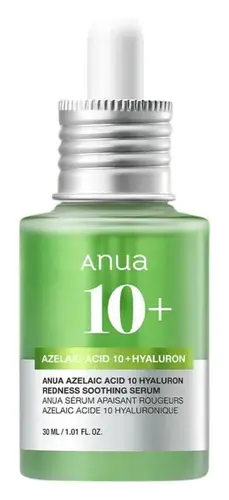
This brightening serum is formulated around Niacinamide and Panthenol to fade the look of dark spots and refine skin texture.
This acne moisturizer is formulated around Azelaic Acid and Niacinamide to clear breakouts and calm redness.

What's inside
What's inside
 Key Ingredients
Benefits
Concerns
Ingredients Side-by-side
Citrus Aurantium Dulcis Flower Water
Skin ConditioningWater
Skin ConditioningGlycerin
Humectant


Vaccinium Macrocarpon Fruit Extract
AstringentNiacinamide
Smoothing









Panthenol
Skin Conditioning
Pantolactone
Humectant
Citric Acid
Buffering

Collagen Amino Acids
Moisturising
Leuconostoc/Radish Root Ferment Lysate Filtrate
Skin Conditioning
Glyceryl Glucoside
Humectant
Sr-Spider Polypeptide-1
Skin Protecting
1,2-Hexanediol
Skin Conditioning
Caprylyl Glycol
Emollient
Gluconolactone
Chelating
Sodium Benzoate
Masking
Benzyl Alcohol
Perfuming





Dehydroacetic Acid
Preservative
Sodium Hyaluronate
Humectant
Dehydroxanthan Gum
Emulsion StabilisingArginine
Masking
Citrus Aurantium Dulcis Flower Water, Water, Glycerin, Vaccinium Macrocarpon Fruit Extract, Niacinamide, Panthenol, Pantolactone, Citric Acid, Collagen Amino Acids, Leuconostoc/Radish Root Ferment Lysate Filtrate, Glyceryl Glucoside, Sr-Spider Polypeptide-1, 1,2-Hexanediol, Caprylyl Glycol, Gluconolactone, Sodium Benzoate, Benzyl Alcohol, Dehydroacetic Acid, Sodium Hyaluronate, Dehydroxanthan Gum, Arginine
Water
Skin ConditioningPropylene Glycol
Humectant
Caprylic/Capric Triglyceride
Masking
Azelaic Acid
Buffering
C12-15 Alkyl Benzoate
AntimicrobialGlycerin
Humectant
Niacinamide
Smoothing
Panthenol
Skin Conditioning
Hydroxyethyl Acrylate/Sodium Acryloyldimethyl Taurate Copolymer
Emulsion StabilisingCentella Asiatica Extract
Cleansing
Tocopherol
Antioxidant

Avena Sativa Kernel Extract
Abrasive
Hydrolyzed Oat Protein
Skin ConditioningPotassium Palmitoyl Hydrolyzed Oat Protein
Skin ConditioningCeramide NP
Skin Conditioning
Phenoxyethanol
Preservative
Dehydroacetic Acid
Preservative
Benzyl Alcohol
Perfuming
Sodium Hydroxide
BufferingWater, Propylene Glycol, Caprylic/Capric Triglyceride, Azelaic Acid, C12-15 Alkyl Benzoate, Glycerin, Niacinamide, Panthenol, Hydroxyethyl Acrylate/Sodium Acryloyldimethyl Taurate Copolymer, Centella Asiatica Extract, Tocopherol, Avena Sativa Kernel Extract, Hydrolyzed Oat Protein, Potassium Palmitoyl Hydrolyzed Oat Protein, Ceramide NP, Phenoxyethanol, Dehydroacetic Acid, Benzyl Alcohol, Sodium Hydroxide
Ingredients Explained
These ingredients are found in both products.
Ingredients higher up in an ingredient list are typically present in a larger amount.
Benzyl Alcohol is an aromatic alcohol with several roles: it's a preservative, solvent, and mild fragrance component with a floral scent.
This ingredient has been deemed safe for use in cosmetic formulations at concentrations up to 5%, and up to 10% in hair dyes. You'll typically see 0.5-2% in most rinse-off or leave-on products.
As a preservative, it works by disrupting the membrane of microbial proteins. This helps keep bacteria and fungi from growing in your products.
The sensitization picture is actually quite assuring as well:of nearly 71,000 patients patch tested with benzyl alcohol, only 0.21% showed a positive reaction with most of them being weakly positive.
This led researchers to conclude that benzyl alcohol cannot be regarded as a significant contact allergen.
It is worth noting this ingredient is classified as one of the EU's regulated fragrance allergens and restricted to 1% in finished products.
Labels must also declare it in concentrations above 0.001% in leave-on products and 0.01% in rinse-off products.
At concentrations around 5%, localized redness and itching can appear as a direct irritant response and not as a true allergic reaction.
Learn more about Benzyl AlcoholDehydroacetic Acid is a synthetic preservative that keeps your products safe from microbes.
As an organic acid, it penetrates microbial cell walls and disrupts cellular metabolism. This makes it effective against bacteria, yeast, and mold.
It is effective at low concentrations (<0.6%). Clinical studies have found it to be non-irritating, non-sensitizing, and non-photosensitizing.
Learn more about Dehydroacetic AcidGlycerin (or glycerol) is a compound naturally found in your skin. It's a powerhouse humectant that pulls water into the stratum corneum.
Topically, glycerin does several things at once:
Your skin makes glycerin on its own (mostly from sebaceous oil breakdown) and shuttles it to your outermost layer of skin, or your epidermis, via aquaporin-3.
Aquaporin-3 is a transporter that is essential for normal skin hydration, elasticity, and repair. Interestingly, mice lacking in AQP3 have dry and less elastic skin that can be fully corrected with glycerin.
This ingredient is non-irritating, plays well with almost every ingredient, and works across all skin types. Typical use is anywhere between 3-10% but can go up to 79% in some leave-on products.
Just know very high concentrations (>40%) can feel tacky in low humidity.
Glycerin is the name for this ingredient in American English. British English uses Glycerol/Glycerine.
Learn more about GlycerinNiacinamide is a multitasking form of vitamin B3 that strengthens the skin barrier, reduces pores and dark spots, regulates oil, and improves signs of aging.
And the best part? It's gentle and well-tolerated by most skin types, including sensitive and reactive skin.
You might have heard of "niacin flush", or the reddening of skin that causes itchiness. Niacinamide has not been found to cause this.
In very rare cases, some individuals may not be able to tolerate niacinamide at all or experience an allergic reaction to it.
If you are experiencing flaking, irritation, and dryness with this ingredient, be sure to double check all your products as this ingredient can be found in all categories of skincare.
When incorporating niacinamide into your routine, look out for concentration amounts. Typically, 5% niacinamide provides benefits such as fading dark spots. However, if you have sensitive skin, it is better to begin with a smaller concentration.
When you apply niacinamide to your skin, your body converts it into nicotinamide adenine dinucleotide (NAD). NAD is an essential coenzyme that is already found in your cells as "fuel" and powers countless biological processes.
In your skin, NAD helps repair cell damage, produce new healthy cells, support collagen production, strengthen the skin barrier, and fight environmental stressors (like UV and pollution).
Our natural NAD levels start to decline with age, leading to slower skin repair, visible aging, and a weaker skin barrier. By providing your skin niacinamide, you're recharging your skin's NAD levels. This leads to stronger, healthier, and younger looking skin.
Another name for vitamin B3 is nicotinamide. This vitamin is water-soluble and our bodies don't store it. We obtain Vitamin B3 from either food or skincare. Meat, fish, wheat, yeast, and leafy greens contain vitamin B3.
The type of niacinamide used in skincare is synthetically created.
Learn more about NiacinamidePanthenol is a common ingredient that helps hydrate and soothe the skin. It is found naturally in our skin and hair.
There are two forms of panthenol: D and L.
D-panthenol is also known as dexpanthenol. Most cosmetics use dexpanthenol or a mixture of D and L-panthenol.
Panthenol is famous due to its ability to go deeper into the skin's layers. Using this ingredient has numerous pros (and no cons):
Like hyaluronic acid, panthenol is a humectant. Humectants are able to bind and hold large amounts of water to keep skin hydrated.
This ingredient works well for wound healing. It works by increasing tissue in the wound and helps close open wounds.
Once oxidized, panthenol converts to pantothenic acid. Panthothenic acid is found in all living cells.
This ingredient is also referred to as pro-vitamin B5.
Learn more about PanthenolWater. It's the most common cosmetic ingredient of all. You'll usually see it at the top of ingredient lists, meaning that it makes up the largest part of the product.
So why is it so popular? Water most often acts as a solvent - this means that it helps dissolve other ingredients into the formulation.
You'll also recognize water as that liquid we all need to stay alive. If you see this, drink a glass of water. Remember to stay hydrated!
Learn more about Water