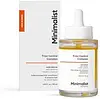
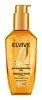
Minimalist Frizz Control Complex SPF 30 Hair Serum Versus L'Oreal Extraordinary Oil Miracle Hair Serum


What's inside
What's inside
 Key Ingredients
Benefits
Concerns
Ingredients Side-by-side
Cyclopentasiloxane
Emollient
C12-15 Alkyl Benzoate
AntimicrobialIsododecane
EmollientCaprylyl Methicone
Skin Conditioning
Ethylhexyl Methoxycinnamate
UV Absorber


Dimethicone
Emollient
Phenyl Trimethicone
Skin Conditioning
Bis-Hydroxy/Methoxy Amodimethicone
Diethylamino Hydroxybenzoyl Hexyl Benzoate
UV Filter
Dimethiconol
Emollient
Argania Spinosa Kernel Oil
Emollient







Isostearoyl Hydrolyzed Keratin
CleansingOlea Europaea Fruit Oil
Masking


Dimethicone Crosspolymer
Emulsion Stabilising
Ceramide Ng
Skin Conditioning

Isononyl Isononanoate
EmollientRicinus Communis Seed Oil
Masking
Helianthus Annuus Seed Oil
Emollient
Beta-Carotene
Skin ConditioningCyclopentasiloxane, C12-15 Alkyl Benzoate, Isododecane, Caprylyl Methicone, Ethylhexyl Methoxycinnamate, Dimethicone, Phenyl Trimethicone, Bis-Hydroxy/Methoxy Amodimethicone, Diethylamino Hydroxybenzoyl Hexyl Benzoate, Dimethiconol, Argania Spinosa Kernel Oil, Isostearoyl Hydrolyzed Keratin, Olea Europaea Fruit Oil, Dimethicone Crosspolymer, Ceramide Ng, Isononyl Isononanoate, Ricinus Communis Seed Oil, Helianthus Annuus Seed Oil, Beta-Carotene
Cyclopentasiloxane
Emollient
Alcohol Denat.
Antimicrobial

Phenyl Trimethicone
Skin Conditioning
Dimethiconol
Emollient
C12-15 Alkyl Benzoate
AntimicrobialChamomilla Recutita Extract
Skin Conditioning
Cocos Nucifera Oil
Masking

Ethylhexyl Methoxycinnamate
UV Absorber
Helianthus Annuus Seed Oil
Emollient
Nelumbium Speciosum Flower Extract
Skin ConditioningBenzyl Alcohol
Perfuming


Cinnamal
Perfuming
Linalool
Perfuming
Linum Usitatissimum Flower Extract
Skin ConditioningCaprylic/Capric Triglyceride
Masking
Gardenia Taitensis Flower Extract
Skin ConditioningRosa Canina Flower Extract
AstringentBisabolol
Antioxidant
Glycine Soja Oil
Emollient
Parfum
Masking
Cyclopentasiloxane, Alcohol Denat., Phenyl Trimethicone, Dimethiconol, C12-15 Alkyl Benzoate, Chamomilla Recutita Extract, Cocos Nucifera Oil, Ethylhexyl Methoxycinnamate, Helianthus Annuus Seed Oil, Nelumbium Speciosum Flower Extract, Benzyl Alcohol, Cinnamal, Linalool, Linum Usitatissimum Flower Extract, Caprylic/Capric Triglyceride, Gardenia Taitensis Flower Extract, Rosa Canina Flower Extract, Bisabolol, Glycine Soja Oil, Parfum
Reviews
Ingredients Explained
These ingredients are found in both products.
Ingredients higher up in an ingredient list are typically present in a larger amount.
C12-15 Alkyl Benzoate is a lightweight emollient made by combinig benzoic acid with fatty alcohols that are 12-15 carbons long.
In cosmetics, it plays several roles:
The Cosmetic Review Expert Panel has concluded the alkyl benzoate group to be safe as used in cosmetics; it wasn't found to be a skin irritant and unlikely to be absorbed due to its low water solubility.
This report recorded almost 1000 reported uses with concentrations up to 59% in leave-on products but your cosmetics will typically use 0.5-15% depending on the product.
It's often called a "SPF booster": this is because it keeps UV filters properly dissolved and evenly distributed to support a sunscreen's performance. It doesn't actually raise SPF on its own.
Overall, this ingredient is well tolerated.
This ingredient is fungal acne safe because it is an ester of benzoic acid.
Think of this ingredient as two parts stuck together: an oily part and an acid part. Malassezia only gets a meal when it can snip off a fatty acid to eat. With C12-15 Alkyl Benzoate, the acid part is benzoic acid, which isn't a fatty acid and which the yeast can't use as food.
Benzoic acid is actually used as a preservative to stop yeast from growing.
The oily part is a blend of C12-15 fatty alcohols but fatty alcohols in this size range can support only a little Malassezia growth (mostly for one species of Malassezia as well).
In the ingredient, those alcohols stay locked inside the molecule. The yeast can only reach them by snipping the benzoate bond, and that type of bond is harder for it to cut than a normal fatty bond.
So not much gets released. And whatever does get snipped comes packaged with benzoic acid, which discourages yeast growth.
Learn more about C12-15 Alkyl BenzoateCyclopentasiloxane (D5) is a lightweight silicone that mostly acts as an emollient and solvent in cosmetics. Its the reason your products feel silky, fast-spreading, and non-greasy.
Since D5 is volatile, it does its thing and then evaporates off the skin quickly.
The safety profile of this ingredient is reassuring; the US CIR Expert Panel concluded D5 is safe as used in cosmetics and Health Canada concluded that D5 is not harmful to human health or the environment as currently used in cosmetics
There's a study that people mention about D5 in a rat study showing tumors. This study is related to long-term inhalation of high D5 levels.
Regulatory bodies have judged this study to be not applicable in topical skincare since skin absorption of D5 is very low and we're not really inhaling huge amounts of D5.
The only restriction for this ingredient is environmental. The European Chemicals Agency (ECHA) restricted D5 in wash-off cosmetics at or above 0.1% due to their persistence in water.
Learn more about CyclopentasiloxaneDimethiconol is a silicone that resembles the popular dimethicone. Like other silicones, it is an emollient. Emollients create a thin film on skin to prevent moisture from escaping.
This ingredient helps to create a silky texture and improve spreadability. Due to its high molecular weight and thickness, it is often combined with cyclopentasiloxane.
This ingredient is also known as Octinoxate and is one of the oldest and most widely used chemical UV filters in skincare.
It has a simple job: soap up UVB radiation (290-320 nm), the wavelengths responsible for sunburn and a big chunk of long-term sun damage.
In formulas, it's always paired with a separate UVA filter because octinoxate solely protects skin from UVB.
Because it's an oil-soluble liquid, it's easy to blend into the oil phase of lotions/creams and gives a cosmetically elegant feel.
The one quirk about formulating this ingredient is photostability; the molecule slowly changes shape into a less effective version when sunlight hits it. So the longer you're in the sun, the weaker its protection gets. The drop can be more than 30% in some formulas.
It also doesn't play nice with Avobenzone (the common UVA filter) since avobenzone destabilizes octinoxate and the two degrade each other. But don't worry: brands have solved this issue by adding photostabilizers like Tinosorb S to prevent degradation and keep SPF stable under heavy UV exposure.
The maximum allowed level is 10% in the EU and Australia, 7.5% in the US and Canada, and 20% in Japan.
The Cosmetic Ingredient Review Panel has concluded this ingredient to be safe in cosmetics up to 10%.
One last thing worth knowing for context:
Octinoxate has been the subject of ongoing review in Europe where the Scientific Committee on Consumer Safety's (SCCS) 2025 final opinion is that this ingredient is an endocrine-active substance.
Lab and animal studies suggest it can act a bit like a hormone in the body (mildly mimicking estrogen and slightly blocking male hormones). It's important to know this hasn't really been shown to happen in everyday human use.
This ingredient is also banned in Hawaii over coral reef concerns.
Learn more about Ethylhexyl MethoxycinnamateHelianthus Annuus Seed Oil is a plant oil derived from the seeds of a sunflower.
It is rich in fatty acids, primarily linoleic acid and oleic acid. This gives it emollient and skin conditioning properties.
The reason this ingredient is so effective is because it forms a thin film on the skin that reduces transepidermal water loss (TEWL) while supplying linoleic acid to the stratum corneum to improve barrier strength.
The high linoleic acid content is particularly noteworthy for acne-prone skin.
Research suggests that acne-prone skin tends to be deficient in linoleic acid in sebum. Topical application may help replenish this to support a healthier follicular environment and less comedone-promoting sebum.
One randomized study found sunflower seed oil preserved skin barrier integrity in adult volunteers with and without atopic dermatitis (outperforming olive oil).
This ingredient is well-studied, gentle, and an effective emollient suitable for most skin types.
On fungal acne: This ingredient may not be Fungal acne (Malassezia folliculitis) safe. This is because it contains fatty acids with carbon chain lengths in the C11-C24 range.
Learn more about Helianthus Annuus Seed OilPhenyl Trimethicone is a silicon-based polymer. It is derived from silica.
Phenyl Trimethicone is used as an emollient and prevents products from foaming.
As an emollient, it helps trap moisture in the skin. It is considered an occlusive.
Learn more about Phenyl Trimethicone

