
What's inside
What's inside
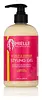 Benefits
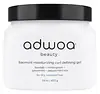
Concerns
Ingredients Side-by-side
Water
Skin ConditioningGlycerin
Humectant


Honey
Humectant
Aloe Barbadensis Leaf Juice
Skin Conditioning

Acrylates Copolymer
Cocos Nucifera Oil
Masking







Orbignya Oleifera Seed Oil
Emollient
Butyrospermum Parkii Butter
Skin Conditioning
Maltodextrin/Vp Copolymer
Althaea Officinalis Root Extract
Skin Conditioning
Pectin
Emulsion StabilisingParfum
Masking

Zingiber Officinale Root Oil
Masking
Carbomer
Emulsion StabilisingXanthan Gum
EmulsifyingDehydroacetic Acid
Preservative
Benzyl Alcohol
Perfuming

Water, Glycerin, Honey, Aloe Barbadensis Leaf Juice, Acrylates Copolymer, Cocos Nucifera Oil, Orbignya Oleifera Seed Oil, Butyrospermum Parkii Butter, Maltodextrin/Vp Copolymer, Althaea Officinalis Root Extract, Pectin, Parfum, Zingiber Officinale Root Oil, Carbomer, Xanthan Gum, Dehydroacetic Acid, Benzyl Alcohol
Water
Skin ConditioningGlycerin
Humectant
Prunus Amygdalus Dulcis Oil
Skin Conditioning
Adansonia Digitata Oil
Emollient
Caprylic/Capric Triglyceride
Masking
Butyrospermum Parkii Butter
Skin Conditioning
Opuntia Ficus-Indica Seed Oil
Emollient
Cucurbita Pepo Seed Oil
Emollient
Acrylates Copolymer
Polyquaternium-11
Xanthan Gum
EmulsifyingDehydroacetic Acid
Preservative
Benzyl Alcohol
Perfuming
Carbomer
Emulsion StabilisingAminomethyl Propanol
BufferingLavandula Spica Flower Oil
Masking
Gaultheria Procumbens Leaf Oil
Masking
Mentha Viridis Leaf Oil
Astringent
Mentha Piperita Oil
Masking
Rosmarinus Officinalis Leaf Oil
Masking
Urtica Dioica Extract
AstringentWater, Glycerin, Prunus Amygdalus Dulcis Oil, Adansonia Digitata Oil, Caprylic/Capric Triglyceride, Butyrospermum Parkii Butter, Opuntia Ficus-Indica Seed Oil, Cucurbita Pepo Seed Oil, Acrylates Copolymer, Polyquaternium-11, Xanthan Gum, Dehydroacetic Acid, Benzyl Alcohol, Carbomer, Aminomethyl Propanol, Lavandula Spica Flower Oil, Gaultheria Procumbens Leaf Oil, Mentha Viridis Leaf Oil, Mentha Piperita Oil, Rosmarinus Officinalis Leaf Oil, Urtica Dioica Extract
Ingredients Explained
These ingredients are found in both products.
Ingredients higher up in an ingredient list are typically present in a larger amount.
Acrylates Copolymer is used as a film-forming agent and texture enhancer.
After applied, Acrylates Copolymer forms a thin film cover that helps skin feel more soft. It can help sunscreens become more water-resistant.
It is also used to make a product more thick.
Learn more about Acrylates CopolymerBenzyl Alcohol is an aromatic alcohol with several roles: it's a preservative, solvent, and mild fragrance component with a floral scent.
This ingredient has been deemed safe for use in cosmetic formulations at concentrations up to 5%, and up to 10% in hair dyes. You'll typically see 0.5-2% in most rinse-off or leave-on products.
As a preservative, it works by disrupting the membrane of microbial proteins. This helps keep bacteria and fungi from growing in your products.
The sensitization picture is actually quite assuring as well:of nearly 71,000 patients patch tested with benzyl alcohol, only 0.21% showed a positive reaction with most of them being weakly positive.
This led researchers to conclude that benzyl alcohol cannot be regarded as a significant contact allergen.
It is worth noting this ingredient is classified as one of the EU's regulated fragrance allergens and restricted to 1% in finished products.
Labels must also declare it in concentrations above 0.001% in leave-on products and 0.01% in rinse-off products.
At concentrations around 5%, localized redness and itching can appear as a direct irritant response and not as a true allergic reaction.
Learn more about Benzyl AlcoholThis ingredient is also known as shea butter. It is a plant-derived extract from the nuts of the Africa shea tree and one of the most well-studied emollients.
Because it has a high concentration of fatty acids (primarily oleic, stearic, and linoleic) it is able to form a protective barrier on the skin's surface. This helps seal in moisture and prevents transepidermal water loss (TEWL).
In vitro research found an increase in skin hydration by 58% and a decrease in TEWL by 37.8% after 24 hours of applying this ingredient (pretty impressive for a single ingredient!).
Besides hydration, shea butter also contains triterpenes that have anti-inflammatory potential. In particule, lupeol cinnamate has shown the highest anti-inflammatory activity in vivo.
Shea butter also contains vitamins A and E which may contribute to antioxidant activity.
While Shea Butter has an SPF rating of about 3-4, it is not a sunscreen replacement.
This ingredient may not be fungal acne safe because its fatty acids fall within the C11-C24 range that the Malassezia yeast can metabolize.
This ingredient shows up on a lot of "pore-clogging" lists but there's no real evidence behind that. It doesn't even have a comedogenic rating from an actual study; the numbers you'll find online come from blogs citing other blogs.
Ratings for other ingredients mostly come from a 1980s rabbit ear test. This test doesn't translate well to human skin or to real products because the ingredient sits at a much lower percentage.
Some people still find it breaks them out. So if that's you, definitely trust your skin. Just know this one's based on experience and not evidence.
Learn more about Butyrospermum Parkii ButterCarbomer is a synthetic thickening and gelling agent. It's basically the ingredient that gives a lot of serums, gels, creams, and sunscreens their smooth, non-sticky texture.
Although legally permitted at very high levels, carbomers are normally used at concentrations below 1%.
It also needs to be neutralized to actually thicken, and because it is a large molecule, it doesn't really penetrate the skin barrier.
Allergy-wise, the risk is very low. Clinical studies show carbomers have low potential for skin irritation/sensitization even at concentrations up to 100%.
A 2024 UK study patch-tested 1,302 patients and found true allergy to the parent group of carbomer to be rare with no confirmed relevant reactions.
Learn more about CarbomerDehydroacetic Acid is a synthetic preservative that keeps your products safe from microbes.
As an organic acid, it penetrates microbial cell walls and disrupts cellular metabolism. This makes it effective against bacteria, yeast, and mold.
It is effective at low concentrations (<0.6%). Clinical studies have found it to be non-irritating, non-sensitizing, and non-photosensitizing.
Learn more about Dehydroacetic AcidGlycerin (or glycerol) is a compound naturally found in your skin. It's a powerhouse humectant that pulls water into the stratum corneum.
Topically, glycerin does several things at once:
Your skin makes glycerin on its own (mostly from sebaceous oil breakdown) and shuttles it to your outermost layer of skin, or your epidermis, via aquaporin-3.
Aquaporin-3 is a transporter that is essential for normal skin hydration, elasticity, and repair. Interestingly, mice lacking in AQP3 have dry and less elastic skin that can be fully corrected with glycerin.
This ingredient is non-irritating, plays well with almost every ingredient, and works across all skin types. Typical use is anywhere between 3-10% but can go up to 79% in some leave-on products.
Just know very high concentrations (>40%) can feel tacky in low humidity.
Glycerin is the name for this ingredient in American English. British English uses Glycerol/Glycerine.
Learn more about GlycerinWater. It's the most common cosmetic ingredient of all. You'll usually see it at the top of ingredient lists, meaning that it makes up the largest part of the product.
So why is it so popular? Water most often acts as a solvent - this means that it helps dissolve other ingredients into the formulation.
You'll also recognize water as that liquid we all need to stay alive. If you see this, drink a glass of water. Remember to stay hydrated!
Learn more about WaterXanthan gum is used as a stabilizer and thickener within cosmetic products. It helps give products a sticky, thick feeling - preventing them from being too runny.
On the technical side of things, xanthan gum is a polysaccharide - a combination consisting of multiple sugar molecules bonded together.
Xanthan gum is a pretty common and great ingredient. It is a natural, non-toxic, non-irritating ingredient that is also commonly used in food products.
Learn more about Xanthan Gum

