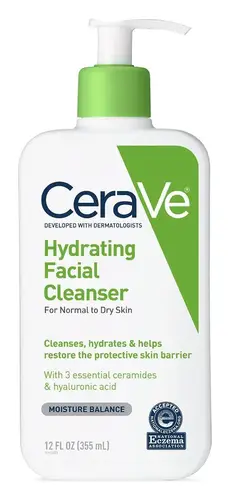
This salicylic acid gel cleanser is formulated around Salicylic Acid to clear breakouts and unclog pores.
This calming toner is formulated around Aloe Barbadensis Leaf Juice and Calendula Officinalis Flower Extract to calm redness and hydrate skin.


What's inside
What's inside
 Key Ingredients
No key ingredients
Benefits
Concerns
Ingredients Side-by-side
Water
Skin ConditioningGlycerin
Humectant


Cocamidopropyl Betaine
Cleansing



Lauryl Glucoside
CleansingSodium Lauryl Glucose Carboxylate
CleansingCocamide Mipa
Emulsifying
Salicylic Acid
Masking







Panthenol
Skin Conditioning

Coco-Glucoside
Cleansing
Sodium Benzoate
Masking
Potassium Sorbate
Preservative
Chamomilla Recutita Flower Extract
Masking
Aloe Barbadensis Leaf Extract
Emollient
Hydrolyzed Wheat Protein
Skin ConditioningHydrolyzed Soy Protein
Humectant
Hydrolyzed Corn Protein
Skin ConditioningSodium PCA
Humectant
C12-15 Alkyl Benzoate
AntimicrobialTetrasodium EDTA
ChelatingWater, Glycerin, Cocamidopropyl Betaine, Lauryl Glucoside, Sodium Lauryl Glucose Carboxylate, Cocamide Mipa, Salicylic Acid, Panthenol, Coco-Glucoside, Sodium Benzoate, Potassium Sorbate, Chamomilla Recutita Flower Extract, Aloe Barbadensis Leaf Extract, Hydrolyzed Wheat Protein, Hydrolyzed Soy Protein, Hydrolyzed Corn Protein, Sodium PCA, C12-15 Alkyl Benzoate, Tetrasodium EDTA




Reviews
Ingredients Explained
These ingredients are found in both products.
Ingredients higher up in an ingredient list are typically present in a larger amount.
Chamomilla Recutita Flower Extract comes from the Chamomile flower.
Chamomile is rich in antioxidants and has anti-inflammatory properties. Several compounds found in chamomile help with soothing, such as bisbolol.
Antioxidant components in chamomile make it an effective ingredient to help slow the signs of aging. Antioxidants help fight free-radical molecules, or molecules that may damage your skin.
Essential oils from chamomile have been found to improve wound healing due to its antimicrobial properties.
Ancient Greeks and Egyptians used Chamomile to treat skin redness and dryness. Chamomile has also been used to help treat stomach issues.
Learn more about Chamomilla Recutita Flower ExtractGlycerin (or glycerol) is a compound naturally found in your skin. It's a powerhouse humectant that pulls water into the stratum corneum.
Topically, glycerin does several things at once:
Your skin makes glycerin on its own (mostly from sebaceous oil breakdown) and shuttles it to your outermost layer of skin, or your epidermis, via aquaporin-3.
Aquaporin-3 is a transporter that is essential for normal skin hydration, elasticity, and repair. Interestingly, mice lacking in AQP3 have dry and less elastic skin that can be fully corrected with glycerin.
This ingredient is non-irritating, plays well with almost every ingredient, and works across all skin types. Typical use is anywhere between 3-10% but can go up to 79% in some leave-on products.
Just know very high concentrations (>40%) can feel tacky in low humidity.
Glycerin is the name for this ingredient in American English. British English uses Glycerol/Glycerine.
Learn more about GlycerinPotassium Sorbate is a preservative used to prevent yeast and mold in products. It is commonly found in both cosmetic and food products.
This ingredient comes from potassium salt derived from sorbic acid. Sorbic acid is a natural antibiotic and effective against fungus.
Both potassium sorbate and sorbic acid can be found in baked goods, cheeses, dried meats, dried fruit, ice cream, pickles, wine, yogurt, and more.
You'll often find this ingredient used with other preservatives.
Learn more about Potassium SorbateSodium Benzoate is a preservative. It's used in both cosmetic and food products to inhibit the growth of mold and bacteria. It is typically produced synthetically.
Both the US FDA and EU Health Committee have approved the use of sodium benzoate. In the US, levels of 0.1% (of the total product) are allowed.
Sodium benzoate works as a preservative by inhibiting the growth of bacteria inside of cells. It prevents the cell from fermenting a type of sugar using an enzyme called phosphofructokinase.
It is the salt of benzoic acid. Foods containing sodium benzoate include soda, salad dressings, condiments, fruit juices, wines, and snack foods.
Studies for using ascorbic acid and sodium benzoate in cosmetics are lacking, especially in skincare routines with multiple steps.
We always recommend speaking with a professional, such as a dermatologist, if you have any concerns.
Learn more about Sodium BenzoateWater. It's the most common cosmetic ingredient of all. You'll usually see it at the top of ingredient lists, meaning that it makes up the largest part of the product.
So why is it so popular? Water most often acts as a solvent - this means that it helps dissolve other ingredients into the formulation.
You'll also recognize water as that liquid we all need to stay alive. If you see this, drink a glass of water. Remember to stay hydrated!
Learn more about Water