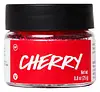
This hydrating lip mask is formulated around Sucrose and Ricinus Communis Seed Oil to hydrate lips.


What's inside
What's inside
 Key Ingredients
Benefits
Concerns
Ingredients Side-by-side
Ricinus Communis Seed Oil
Masking




Sucrose
Humectant
Simmondsia Chinensis Seed Oil
Emollient

Prunus Armeniaca Kernel Oil
Masking

Butyrospermum Parkii Butter
Skin Conditioning
Citric Acid
Buffering

Artemisia Pallens Herb Oil
Perfuming

Citrus Aurantifolia Peel
Skin ConditioningTheobroma Cacao Husk
Abrasive
Prunus Amygdalus Dulcis Oil
Skin Conditioning
Titanium Dioxide
Cosmetic Colorant

Synthetic Fluorphlogopite
Tin Oxide
Abrasive
Eugenol
Perfuming
Limonene
Perfuming
Aroma

Iron Oxides
CI 15850
Cosmetic ColorantRicinus Communis Seed Oil, Sucrose, Simmondsia Chinensis Seed Oil, Prunus Armeniaca Kernel Oil, Butyrospermum Parkii Butter, Citric Acid, Artemisia Pallens Herb Oil, Citrus Aurantifolia Peel, Theobroma Cacao Husk, Prunus Amygdalus Dulcis Oil, Titanium Dioxide, Synthetic Fluorphlogopite, Tin Oxide, Eugenol, Limonene, Aroma, Iron Oxides, CI 15850
Hydrogenated Canola Oil
Skin Conditioning
Squalane
Emollient
Pentaerythrityl Tetraisostearate
Emollient
Bis-Behenyl/Isostearyl/Phytosteryl Dimer Dilinoleyl Dimer Dilinoleate
EmollientHelianthus Annuus Seed Cera
Emollient
Caprylic/Capric Triglyceride
Masking
Euphorbia Cerifera Cera
Astringent
Tocopherol
Antioxidant



Pentaerythrityl Tetra-Di-T-Butyl Hydroxyhydrocinnamate
Antioxidant
Synthetic Fluorphlogopite
Glycine Soja Oil
Emollient
Calcium Aluminum Borosilicate
Aluminum Hydroxide
EmollientCitronellol
Perfuming
Silica
Abrasive

Magnesium Silicate
AbsorbentCalcium Sodium Borosilicate
Punica Granatum Fruit Extract
Antioxidant
Limonene
Perfuming
Alumina
Abrasive
Geraniol
Perfuming
Benzyl Alcohol
Perfuming

Tin Oxide
Abrasive
Kaolin
Abrasive
Parfum
Masking
Mica
Cosmetic ColorantCI 77891
Cosmetic ColorantCI 77491
Cosmetic ColorantCI 77492
Cosmetic ColorantCI 77499
Cosmetic ColorantCI 15985
Cosmetic ColorantCI 15850
Cosmetic ColorantCI 45410
Cosmetic ColorantCI 19140
Cosmetic ColorantCI 42090
Cosmetic ColorantCI 45380
Cosmetic ColorantCI 17200
Cosmetic ColorantCI 77742
Cosmetic ColorantHydrogenated Canola Oil, Squalane, Pentaerythrityl Tetraisostearate, Bis-Behenyl/Isostearyl/Phytosteryl Dimer Dilinoleyl Dimer Dilinoleate, Helianthus Annuus Seed Cera, Caprylic/Capric Triglyceride, Euphorbia Cerifera Cera, Tocopherol, Pentaerythrityl Tetra-Di-T-Butyl Hydroxyhydrocinnamate, Synthetic Fluorphlogopite, Glycine Soja Oil, Calcium Aluminum Borosilicate, Aluminum Hydroxide, Citronellol, Silica, Magnesium Silicate, Calcium Sodium Borosilicate, Punica Granatum Fruit Extract, Limonene, Alumina, Geraniol, Benzyl Alcohol, Tin Oxide, Kaolin, Parfum, Mica, CI 77891, CI 77491, CI 77492, CI 77499, CI 15985, CI 15850, CI 45410, CI 19140, CI 42090, CI 45380, CI 17200, CI 77742
Reviews
Alternatives
Ingredients Explained
These ingredients are found in both products.
Ingredients higher up in an ingredient list are typically present in a larger amount.
Ci 15850 is the pigment color red. It is an azo dye and created synthetically.
Azo dyes need to be thoroughly purified before use. This allows them to be more stable and longer-lasting.
This ingredient is common in foundations, lipsticks, and blushes. This color is described as brown/orangey red.
It has many secondary names such as Red 6 and Red 7. According to a manufacturer, Red 6 usually contains aluminum.
Learn more about CI 15850Limonene is the compound that gives citrus peel its smell.
In skincare, it shows up as a standalone fragrance ingredient or as a natural compound of citrus and other essential oils.
You'll typically see this ingredient used in very small amounts; anything above 0.001% in a leave-on product or 0.01% in a rinse-off has to be named on the label in the EU. The citrus oils that carry it sit around 0.5-1% in a finished formula.
Fresh limonene is a weak allergen; the real issue is that it slowly reacts with air and then breaks down from oxidation to create hydroperoxides (which are strong sensitizers). This is why suppliers are required to keep the peroxide value below 20 mmol.
Positive reactions in people being investigated for eczema vary:
It's worth skipping if you have a known fragrance allergy or a compromised barrier, but the risk is low for most people.
Older or long-opened products are also more likely to bother you than fresh ones due to oxidation.
Learn more about LimoneneSynthetic Fluorphlogopite is the synthethic version of mica. It consists of fluorine, aluminum and silicate.
Synthetic Fluorphlogopite is used to add volume to products.
It is considered non-irritating on the skin.
Learn more about Synthetic FluorphlogopiteTin Oxide is an inorganic oxide used to add opacity and volume to a product. In nature, it is already found in mineral form. The main ore of tin is an opaque and shiny mineral called casseterite.
Tin Oxide helps remove translucency in a product, or make it more opaque. Besides adding opacity, tin oxide is used for bulking to add volume.


