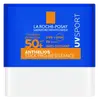
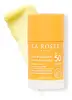
La Roche-Posay Anthelios UVSport Pro-Resistance Stick SPF50+ PA+++ Versus La Rosée Paris Stick Solaire SPF 50
This chemical sunscreen covers the full UV range and blocks ~98% of UVB at SPF 50.
This chemical sunscreen covers the full UV range and blocks ~98% of UVB at SPF 50.

What's inside
What's inside
 Key Ingredients
Benefits
Concerns
Ingredients Side-by-side
Ricinus Communis Seed Oil
Masking




Isopropyl Palmitate
Emollient


Polyethylene
Abrasive
Isohexadecane
EmollientBehenyl Behenate
EmollientBis-Ethylhexyloxyphenol Methoxyphenyl Triazine
UV Absorber
Ethylhexyl Triazone
UV Absorber
Theobroma Cacao Seed Butter
Emollient
Diethylamino Hydroxybenzoyl Hexyl Benzoate
UV Filter
Butyrospermum Parkii Butter
Skin Conditioning
Paraffin
Skin Conditioning
Microcrystalline Wax
Emulsion StabilisingMethoxypropylamino Cyclohexenylidene Ethoxyethylcyanoacetate
Stabilising
Silica Silylate
Emollient
Drometrizole Trisiloxane
UV Absorber
Citric Acid
Buffering

Glycine Soja Oil
Emollient

Synthetic Wax
Abrasive
Tocopherol
Antioxidant



Ricinus Communis Seed Oil, Isopropyl Palmitate, Polyethylene, Isohexadecane, Behenyl Behenate, Bis-Ethylhexyloxyphenol Methoxyphenyl Triazine, Ethylhexyl Triazone, Theobroma Cacao Seed Butter, Diethylamino Hydroxybenzoyl Hexyl Benzoate, Butyrospermum Parkii Butter, Paraffin, Microcrystalline Wax, Methoxypropylamino Cyclohexenylidene Ethoxyethylcyanoacetate, Silica Silylate, Drometrizole Trisiloxane, Citric Acid, Glycine Soja Oil, Synthetic Wax, Tocopherol
Coco-Caprylate/Caprate
Emollient
Euphorbia Cerifera Wax
Diethylamino Hydroxybenzoyl Hexyl Benzoate
UV Filter
C15-19 Alkane
SolventBis-Ethylhexyloxyphenol Methoxyphenyl Triazine
UV Absorber
Copernicia Cerifera Wax
Caprylic/Capric Triglyceride
Masking
Ethylhexyl Triazone
UV Absorber
Theobroma Cacao Seed Butter
Emollient
Calcium Starch Octenylsuccinate
AbsorbentParfum
Masking
Prunus Armeniaca Kernel Oil
Masking
Helianthus Annuus Seed Oil
Emollient
Tocopherol
Antioxidant
Vanillin
Masking
Coco-Caprylate/Caprate, Euphorbia Cerifera Wax, Diethylamino Hydroxybenzoyl Hexyl Benzoate, C15-19 Alkane, Bis-Ethylhexyloxyphenol Methoxyphenyl Triazine, Copernicia Cerifera Wax, Caprylic/Capric Triglyceride, Ethylhexyl Triazone, Theobroma Cacao Seed Butter, Calcium Starch Octenylsuccinate, Parfum, Prunus Armeniaca Kernel Oil, Helianthus Annuus Seed Oil, Tocopherol, Vanillin
Reviews
Ingredients Explained
These ingredients are found in both products.
Ingredients higher up in an ingredient list are typically present in a larger amount.
This ingredient is better known as bemotrizinol or Tinosorb S and is one of the best broad-spectrum UV filters in modern sunscreen.
It works by absorbing UV light across a whole range (280-400 nm) with peaks around 310 nm (UVB) and 340-345 nm (UVA). This means it covers UVB plus the deeper UVA wavelengths that drive photoaging and pigmentation.
Another pro?
It's exceptionally photostable, barely degrades in sunlight, and acts as a "bodyguard" for less stable filters.
That's why you'll see it paired with avobenzone or octinoxate; this team up ensures they keep working through sun exposure.
Safety reviews have been reassuring across the board. This ingredient shows low absorption through the skin, rarely irritates, and lab studies found it doesn't act like a hormone in the body (a concern that's been raised about some older sunscreen filters).
On maximum concentrations:
In 2026, the US F.D.A finally added it as an OTC sunscreen ingredient at concentrations up to 6% for adults / children 6 months and older
Learn more about Bis-Ethylhexyloxyphenol Methoxyphenyl TriazineDiethylamino Hydroxybenzoyl Hexyl Benzoate (DHHB) is a chemical UV-A absorber. It is formulated for high UVA protection (320-400 nm).
DHHB is well-liked for:
DHHB has been approved by the EU, Japan, Taiwan, and South America for use up to 10%. Unfortunately, it has not been approved for use in the US or Canada due to slow regulatory processes.
This ingredient is soluble in oils, fats, and lipids.
Learn more about Diethylamino Hydroxybenzoyl Hexyl BenzoateEthylhexyl Triazone (aka Octyl Triazone) is an oil-soluble organic UVB filter. It has peak absorption around 314 nm, right in the middle of the UVB range.
This ingredient is described as one of the most effective UVB filters available and small concentrations are enough to deliver a high SPF thanks to its strong UV absorbing power.
Formulators love it for its stability; its ability to filter UV stays practically unchanged even under intense radiation and it can also help boost the photostability of less stable filters like avobenzone.
It's also a great pick for water resistant products because it's insoluble in water and has a good affinity for keratin.
Because it's a big, heavy molecule, the European Scientific Committee has found to to have very low dermal penetration and negative results for allergenicity.
In vitro testing also showed a low absorption rate and clean results on irritation.
Typical use levels are 1-5% with 5% being the maximum in the EU, Japan, and other markets that allow it. However, this ingredient is not approved yet in the US or Canada.
Learn more about Ethylhexyl TriazoneThis ingredient is also known as Cocoa butter; it's the fat pressed out of roasted cocoa beans.
Cocoa butter is solid at room temperature and melts right around body temperature, which is why it feels waxy in the jar and slippery on skin.
It has a very saturated profile (stearic acid ~34 to 36%, oleic acid ~30 to 40%, and palmitic acid ~24 to 29%) that makes it a strong occlusive: it sits on top and slows water escaping from skin.
Concentration data shows that it can show up anywhere from a few percent in lotions up to 100% in balms, and the FDA lists cocoa butter as an OTC skin protectant active at 50-100%.
The CIR has reviewed it and concluded it to be safe as used in cosmetics.
This is one of the ingredients with a comedogenic score of 4/5 from the rabbit ear test. Just know that a later human study did find that finished products containing high-comedogenic ingredients like cocoa butter did not increase microcomedone formation.
The fair call here is that this ingredient is most likely fine on body or low-percentage formulas, but can potentially be riskier as a heavy leave-on facial product if you break out easily.
Cocoa butter may not be fungal acne safe; it is a triglyceride of C16-18 fatty acids that the Malassezia yeast can metabolize.
Allergies to cocoa butter are rare and uncommon, but a few cases have been documented (mostly in cases where the person ate chocolate). So if you have a tree nut allergy, be sure to patch test or avoid.
Learn more about Theobroma Cacao Seed ButterTocopherol is a fat-soluble antioxidant known as Vitamin E.
You'll find this ingredient in the vast majority of skincare (for good reason). It works to neutralize free radicals, or unstable molecules generated by UV exposure, pollution, and other environmental stressors, before they can cause oxidative damage to your skin cells.
Topically applied tocopherol has been shown to protect against UV damage by ramping up the skin's own natural defense enzymes.
It also acts as a skin conditioning agent; some studies show that regular topical use can improve the skin's water-binding capacity over 2-4 weeks.
This ingredient is especially loved for being a team player. When combined with Vitamin C, the photoprotective effect of both ingredients roughly doubles and the combo also helps reduce UV-induced DNA damage.
This ingredient has some brightening potential but it's more of a prevention ingredient than spot-fader. Cell studies show it can slow down melanin production but it's worth noting that it's not the most powerful brightener out there.
In formulations, it also serves as a stabilizer that helps protect other oxidation-prone ingredients from degrading.
Concentrations usually range from 0.1-1% in most leave-on products.
Learn more about Tocopherol

