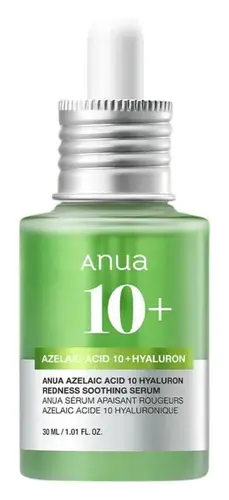
This anti-aging serum is formulated around Saccharomyces/Snail Secretion Filtrate Ferment Filtrate and Niacinamide to soften the look of wrinkles and calm redness.
This calming serum is formulated around Aloe Barbadensis Leaf Juice and Niacinamide to calm redness and hydrate skin.


What's inside
What's inside
 Key Ingredients
Benefits
Concerns
Ingredients Side-by-side
Water
Skin ConditioningSaccharomyces/Snail Secretion Filtrate Ferment Filtrate
Skin Conditioning


Melaleuca Alternifolia Leaf Water
Antimicrobial


Camellia Sinensis Leaf Water
Masking
Butylene Glycol
Humectant
Niacinamide
Smoothing







1,2-Hexanediol
Skin Conditioning
Snail Secretion Filtrate
Skin Conditioning
Glycerin
Humectant
Pentylene Glycol
Skin Conditioning
Bee Venom
Astringent
Leontopodium Alpinum Callus Culture Extract
Antioxidant
Hydrolyzed Collagen
Emollient
Hydrolyzed Sodium Hyaluronate
Skin Conditioning
Sodium Hyaluronate
Humectant
Soluble Collagen
Humectant
Arctium Lappa Root Extract
Skin Conditioning
Artemisia Princeps Leaf Extract
Skin ConditioningAloe Barbadensis Leaf Juice
Skin Conditioning
Trehalose
Humectant
Adenosine
Skin Conditioning
Panthenol
Skin Conditioning
Allantoin
Skin Conditioning
Beta-Glucan
Skin Conditioning
Collagen Amino Acids
Moisturising
Hyaluronic Acid
Humectant
Hydrolyzed Hyaluronic Acid
Humectant
Hydroxypropyltrimonium Hyaluronate
Morinda Citrifolia Extract
AstringentPotassium Hyaluronate
Skin ConditioningSodium Acetylated Hyaluronate
Humectant
Sodium Hyaluronate Crosspolymer
Humectant
Caprylyl Glycol
Emollient
Xanthan Gum
EmulsifyingSoluble Proteoglycan
Skin ConditioningCitric Acid
Buffering
Water, Saccharomyces/Snail Secretion Filtrate Ferment Filtrate, Melaleuca Alternifolia Leaf Water, Camellia Sinensis Leaf Water, Butylene Glycol, Niacinamide, 1,2-Hexanediol, Snail Secretion Filtrate, Glycerin, Pentylene Glycol, Bee Venom, Leontopodium Alpinum Callus Culture Extract, Hydrolyzed Collagen, Hydrolyzed Sodium Hyaluronate, Sodium Hyaluronate, Soluble Collagen, Arctium Lappa Root Extract, Artemisia Princeps Leaf Extract, Aloe Barbadensis Leaf Juice, Trehalose, Adenosine, Panthenol, Allantoin, Beta-Glucan, Collagen Amino Acids, Hyaluronic Acid, Hydrolyzed Hyaluronic Acid, Hydroxypropyltrimonium Hyaluronate, Morinda Citrifolia Extract, Potassium Hyaluronate, Sodium Acetylated Hyaluronate, Sodium Hyaluronate Crosspolymer, Caprylyl Glycol, Xanthan Gum, Soluble Proteoglycan, Citric Acid
Aloe Barbadensis Leaf Juice
Skin Conditioning
Rosa Damascena Flower Water
Masking
Pantothenic Acid
Skin ConditioningNiacinamide
Smoothing
Glycerin
Humectant
Cannabis Sativa Seed Oil
Emollient
Hyaluronic Acid
Humectant
Allantoin
Skin Conditioning
Terminalia Ferdinandiana Fruit Extract
Antioxidant
Punica Granatum Extract
AstringentRosa Canina Fruit Extract
Astringent
Citrullus Lanatus Fruit Extract
Skin Conditioning
Camellia Sinensis Leaf Extract
Antimicrobial
Phenoxyethanol
Preservative
Sodium Dehydroacetate
Preservative
Aloe Barbadensis Leaf Juice, Rosa Damascena Flower Water, Pantothenic Acid, Niacinamide, Glycerin, Cannabis Sativa Seed Oil, Hyaluronic Acid, Allantoin, Terminalia Ferdinandiana Fruit Extract, Punica Granatum Extract, Rosa Canina Fruit Extract, Citrullus Lanatus Fruit Extract, Camellia Sinensis Leaf Extract, Phenoxyethanol, Sodium Dehydroacetate
Ingredients Explained
These ingredients are found in both products.
Ingredients higher up in an ingredient list are typically present in a larger amount.
Allantoin is a soothing ingredient known for its protective and moisturizing properties; it's basically a quiet workhorse ingredient you can find in a huge range of cosmetics.
Though it can be derived from the comfrey plant, allantoin is produced synthetically for cosmetic products to ensure purity.
Research shows it can encourage your skin cells to turn over and renew by stimulating keratinocyte and fibroblast proliferation.
It also has mild keratolytic properties to help loosen and shed dead skin cells without being harsh.
Studies also suggest allantoin can help calm inflammation by dialing down some of the chemical signals your skin sends out when it is irritated.
This ingredient is typically used in the 0.1-0.5% range, and the FDA recognizes it as a skin protectant in OTC products up to 2%.
Overall, allantoin is a wonderful addition to most routines; it is stable across a wide pH range (~4-8), works well with other ingredients, and is considered non-sensitizing/non-irritating.
Fun fact: Allantoin is naturally occurring in comfrey root, beets, chamomile, and wheat sprouts. Our bodies even produce it as a byproduct of uric acid metabolism.
Learn more about AllantoinAloe Barbadensis Leaf Juice is the filtered, stabilized liquid pressed from the inner gel of the aloe vera leaf.
In cosmetics, it shows up as either soothing active or a water-replacement base. It is roughly 98-99% water and the last 1-2% is an interesting mix of polysaccharides, amino acids, vitamins, minerals, and enzymes.
The polysaccharides do most of the work: they bind water at the skin surface for a light, non-greasy hydration boost. And one of the polysaccharides, glycomannan, is linked to fibroblast stimulation + collagen synthesis. This is also why aloe has such a long track record in wound and burn healing.
This ingredient is also calming with anti-inflammatory and mild antimicrobial activity, making it a great pick for sensitive, irritated, or post-sun skin.
Realistic expectations matter though; the solid evidence is mostly limited to hydration, soothing, and wound support. Deeper claims about anti-aging or sun protection are not well backed, and science reviews note it does not prevent radiation-induced skin injury.
Because it plays well with almost everything, it's commonly used as a base alongside other actives like niacinamide or vitamin C.
Typical usage concentrations range from 0.5% (where hydration benefits already show up) all the way to 90%+ (where it replaces water as the main base).
The safety for this ingredient is well-establish as well. Overall, this is a great supporting ingredient for those who want a boost in hydration.
Learn more about Aloe Barbadensis Leaf JuiceGlycerin (or glycerol) is a compound naturally found in your skin. It's a powerhouse humectant that pulls water into the stratum corneum.
Topically, glycerin does several things at once:
Your skin makes glycerin on its own (mostly from sebaceous oil breakdown) and shuttles it to your outermost layer of skin, or your epidermis, via aquaporin-3.
Aquaporin-3 is a transporter that is essential for normal skin hydration, elasticity, and repair. Interestingly, mice lacking in AQP3 have dry and less elastic skin that can be fully corrected with glycerin.
This ingredient is non-irritating, plays well with almost every ingredient, and works across all skin types. Typical use is anywhere between 3-10% but can go up to 79% in some leave-on products.
Just know very high concentrations (>40%) can feel tacky in low humidity.
Glycerin is the name for this ingredient in American English. British English uses Glycerol/Glycerine.
Learn more about GlycerinHyaluronic acid (HA) is a glycosaminoglycan (basically a long sugar chain) that your skin already makes on its own. In your skin, HA lives in the extracellular matrix and acts as the body's moisture reservoir.
Topically, HA is a humectant that binds water and helps skin look more plump, smooth, and hydrated.
The only catch is that HA isn't a single thing; it actually comes in a wide range of molecular weights (~50 - 2,000+ kDA) and size matters.
Some clinical evidence links low molecular weight versions to improved wrinkle depth, elasticity, anti-inflammatory effects, and barrier repair.
This is why the best HA serums blend the two sizes together so you get the best of both worlds.
The majority of cosmetic HA is produced by bacterial fermentation, typically using Streptococcus or Bacillus strains. Typical use levels in skincare sit around 0.1-2%.
A clinical study using a 0.2% low-molecular weight HA gel showed improvement in facial seborrheic dermatitis with excellent tolerance.
These are some other common types of Hyaluronic Acid:
Learn more about Hyaluronic AcidNiacinamide is a multitasking form of vitamin B3 that strengthens the skin barrier, reduces pores and dark spots, regulates oil, and improves signs of aging.
And the best part? It's gentle and well-tolerated by most skin types, including sensitive and reactive skin.
You might have heard of "niacin flush", or the reddening of skin that causes itchiness. Niacinamide has not been found to cause this.
In very rare cases, some individuals may not be able to tolerate niacinamide at all or experience an allergic reaction to it.
If you are experiencing flaking, irritation, and dryness with this ingredient, be sure to double check all your products as this ingredient can be found in all categories of skincare.
When incorporating niacinamide into your routine, look out for concentration amounts. Typically, 5% niacinamide provides benefits such as fading dark spots. However, if you have sensitive skin, it is better to begin with a smaller concentration.
When you apply niacinamide to your skin, your body converts it into nicotinamide adenine dinucleotide (NAD). NAD is an essential coenzyme that is already found in your cells as "fuel" and powers countless biological processes.
In your skin, NAD helps repair cell damage, produce new healthy cells, support collagen production, strengthen the skin barrier, and fight environmental stressors (like UV and pollution).
Our natural NAD levels start to decline with age, leading to slower skin repair, visible aging, and a weaker skin barrier. By providing your skin niacinamide, you're recharging your skin's NAD levels. This leads to stronger, healthier, and younger looking skin.
Another name for vitamin B3 is nicotinamide. This vitamin is water-soluble and our bodies don't store it. We obtain Vitamin B3 from either food or skincare. Meat, fish, wheat, yeast, and leafy greens contain vitamin B3.
The type of niacinamide used in skincare is synthetically created.
Learn more about Niacinamide