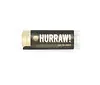
This calming lip moisturizer is formulated around Carthamus Tinctorius Seed Oil and Cocos Nucifera Oil to calm redness and hydrate lips.
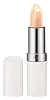
This lip moisturizer is formulated around Petrolatum and Ricinus Communis Seed Oil to hydrate lips.


What's inside
What's inside
 Key Ingredients
Benefits
Concerns
Ingredients Side-by-side
Zinc Oxide 11%
Cosmetic Colorant


Carthamus Tinctorius Seed Oil
Masking



Euphorbia Cerifera Cera
Astringent
Cocos Nucifera Oil
Masking




Olea Europaea Fruit Oil
Masking
Ricinus Communis Seed Oil
Masking
Theobroma Cacao Seed Butter
Emollient
Aroma

Rubus Idaeus Seed Oil
Emollient
Hippophae Rhamnoides Seed Oil
Skin Protecting
Punica Granatum Seed Oil
Emollient
Tocopherol
Antioxidant






Citrus Reticulata Peel Oil
Masking

Anthemis Nobilis Flower Oil
Masking
Helianthus Annuus Seed Oil
Emollient
Vanilla Planifolia Seed
Skin ConditioningBenzyl Benzoate
Antimicrobial
Limonene
Perfuming
Linalool
Perfuming
Anise Alcohol
Perfuming
Geraniol
Perfuming
Zinc Oxide 11%, Carthamus Tinctorius Seed Oil, Euphorbia Cerifera Cera, Cocos Nucifera Oil, Olea Europaea Fruit Oil, Ricinus Communis Seed Oil, Theobroma Cacao Seed Butter, Aroma, Rubus Idaeus Seed Oil, Hippophae Rhamnoides Seed Oil, Punica Granatum Seed Oil, Tocopherol, Citrus Reticulata Peel Oil, Anthemis Nobilis Flower Oil, Helianthus Annuus Seed Oil, Vanilla Planifolia Seed, Benzyl Benzoate, Limonene, Linalool, Anise Alcohol, Geraniol
Petrolatum
Emollient
Myristyl Lactate
Emollient
Ethylhexyl Palmitate
Emollient
Ricinus Communis Seed Oil
Masking
Octyldodecanol
Emollient
Euphorbia Cerifera Cera
Astringent
Castor Oil/Ipdi Copolymer
Polybutene
Triisostearyl Citrate
EmollientPolyethylene
Abrasive
Cera Alba
Emollient
Copernicia Cerifera Cera
Emollient
Parfum
Masking
Phenoxyethanol
Preservative
Polypropylene
Water
Skin ConditioningLinalool
Perfuming
Tocopherol
Antioxidant
Mica
Cosmetic ColorantCI 77491
Cosmetic ColorantCI 77492
Cosmetic ColorantCI 77499
Cosmetic ColorantPetrolatum, Myristyl Lactate, Ethylhexyl Palmitate, Ricinus Communis Seed Oil, Octyldodecanol, Euphorbia Cerifera Cera, Castor Oil/Ipdi Copolymer, Polybutene, Triisostearyl Citrate, Polyethylene, Cera Alba, Copernicia Cerifera Cera, Parfum, Phenoxyethanol, Polypropylene, Water, Linalool, Tocopherol, Mica, CI 77491, CI 77492, CI 77499
Ingredients Explained
These ingredients are found in both products.
Ingredients higher up in an ingredient list are typically present in a larger amount.
Euphorbia Cerifera Cera (aka candelilla wax) is a vegan stand-in for beeswax. It is a plant-derived wax that functions as an astringent, emulsion stabilizer, film-former, and skin conditioner.
On skin, it forms a protective barrier that helps lock in moisture while it enhances product stability, prevents separation, and helps color last longer in makeup.
This ingredient is generally safe for use in cosmetics with one nuance: some grades of candelilla wax can naturally contain benzyl alcohol at concentrations high enough to require declaration under EU labeling rules. This isn't a concern for most people but relevant for those with fragrance sensitivities.
Candelilla wax contains fatty acids (mainly C31) and wax esters that can be used by the Malassezia yeast, so this ingredient may not be fungal acne safe.
You might see Euphorbia Cerifera "Wax" instead of "cera". This is because some brands, databases, or labels use it interchangeably; they're the same ingredient.
Learn more about Euphorbia Cerifera CeraLinalool is a small, naturally occurring scent molecule found in plants like lavender, coriander, bergamot, and more.
It is one of the two most-used fragrance ingredients in cosmetics and added purely for smell. Since it's not used for a skin benefit, there's no "effective dose". Concentration depends on the fragrance load of the product.
The EU requires it to be named on the label above 0.001% in leave-on and 0.01% in rinse-off products.
Fresh linalool is a weak sensitizer but air exposure turns some of it into hydroperoxides, which are strong sensitizers. Those oxidation products are the actual allergy concern.
Patch-test clinics see positive reactions to linalool hydroperoxides in about 4% to 12% of dermatitis patients depending on country and test concentration.
Resassuringly, one analytical study found hydroperoxide levels in real fragranced products to be orders of magnitude below what induced sensitization in animal studies with no evidence of oxidation building up during normal storage.
The practical takeaway is that linalool is fine for most people but worth avoiding if you have a confirmed fragrance contact allergy or a badly compromised barrier.
Products stored a long time after opening are also the high-risk scenario since that is when oxidation happens.
The scent of linalool is described as floral, spicy tropical, and citrus-like.
Learn more about LinaloolThis ingredient is also known as castor oil. It is a skin conditioning ingredient.
The star component of castor oil is ricinoleic acid, an unusual fatty acid that makes up ~80-92% of its composition.
In skincare, it is an emollient that dries down to a solid film with water-binding properties. This helps keep skin hydrated and helps reduce transepidermal water loss (TEWL).
A 2026 dermatology review pulls together its broader uses:
Human clinical testing found this ingredient to be non-irritating and non-sensitizing.
Because castor oil contains fatty acids in the C11-24 range, this ingredient may not be fungal acne safe.
At this time, the literature does not support castor oil in regrowing hair. A 2022 systematic review found no strong evidence that it supports hair growth and only weak evidence that it improves hair shine.
Castor oil itself carries "perfuming" and "masking" function tags according to the official CosIng database. This is because of its mild odor and odor-dampening properties.
Learn more about Ricinus Communis Seed OilTocopherol is a fat-soluble antioxidant known as Vitamin E.
You'll find this ingredient in the vast majority of skincare (for good reason). It works to neutralize free radicals, or unstable molecules generated by UV exposure, pollution, and other environmental stressors, before they can cause oxidative damage to your skin cells.
Topically applied tocopherol has been shown to protect against UV damage by ramping up the skin's own natural defense enzymes.
It also acts as a skin conditioning agent; some studies show that regular topical use can improve the skin's water-binding capacity over 2-4 weeks.
This ingredient is especially loved for being a team player. When combined with Vitamin C, the photoprotective effect of both ingredients roughly doubles and the combo also helps reduce UV-induced DNA damage.
This ingredient has some brightening potential but it's more of a prevention ingredient than spot-fader. Cell studies show it can slow down melanin production but it's worth noting that it's not the most powerful brightener out there.
In formulations, it also serves as a stabilizer that helps protect other oxidation-prone ingredients from degrading.
Concentrations usually range from 0.1-1% in most leave-on products.
Learn more about Tocopherol

