EOS Super Balm Versus Burt's Bees Beeswax Lip Balm
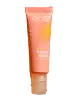
This lip moisturizer is formulated around Bis-Diglyceryl Polyacyladipate-2 and Ricinus Communis Seed Oil to hydrate lips.
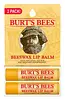
This lip moisturizer is formulated around Cera Alba and Cocos Nucifera Oil to hydrate lips.

What's inside
What's inside
 Key Ingredients
Benefits
Concerns
Ingredients Side-by-side
Octyldodecanol
Emollient
Synthetic Beeswax
Emulsion Stabilising

Bis-Diglyceryl Polyacyladipate-2
Emollient
Ricinus Communis Seed Oil
Masking

Petrolatum
Emollient

Cera Alba
Emollient

Aroma

Polyglyceryl-3 Diisostearate
Emulsifying
Butyrospermum Parkii Butter
Skin Conditioning
Persea Gratissima Oil
Skin Conditioning
Theobroma Cacao Seed Butter
Emollient
Jojoba Esters
Emollient
Helianthus Annuus Seed Wax
Skin Conditioning
Olea Europaea Fruit Oil
Masking
Acacia Decurrens Flower Wax
Emollient
Stevia Rebaudiana Leaf/Stem Extract
MaskingTocopheryl Acetate
Antioxidant


Ascorbyl Palmitate
Antioxidant

Sorbitan Oleate
Emulsifying
Polyglycerin-3
Humectant
Phytosterols
Skin Conditioning
Silica
Abrasive


Citric Acid
Buffering
Amyl Cinnamal
Perfuming
Limonene
Perfuming
Farnesol
Perfuming
Octyldodecanol, Synthetic Beeswax, Bis-Diglyceryl Polyacyladipate-2, Ricinus Communis Seed Oil, Petrolatum, Cera Alba, Aroma, Polyglyceryl-3 Diisostearate, Butyrospermum Parkii Butter, Persea Gratissima Oil, Theobroma Cacao Seed Butter, Jojoba Esters, Helianthus Annuus Seed Wax, Olea Europaea Fruit Oil, Acacia Decurrens Flower Wax, Stevia Rebaudiana Leaf/Stem Extract, Tocopheryl Acetate, Ascorbyl Palmitate, Sorbitan Oleate, Polyglycerin-3, Phytosterols, Silica, Citric Acid, Amyl Cinnamal, Limonene, Farnesol






Reviews
Ingredients Explained
These ingredients are found in both products.
Ingredients higher up in an ingredient list are typically present in a larger amount.
This is another name for beeswax; it's a natural wax produced by honey bees to build their honeycomb.
Because it forms a protective layer on your skin, it can help lock in moisture and reduce water loss. It is also widely used as a thickener and emulsifier in lip balms and lotions. Research suggests beeswax containing moisturizers can support skin barrier integrity.
In comedogenic testing, Beeswax scored a 0-2, which is on the low end. Whether or not a product clogs your pores really comes down to the formula as a whole (not any single ingredient on its own) and your skin.
Beeswax is not vegan since it is animal-derived. It cannot be removed with water, but can be taken off with an oil cleanser.
People with a known Propolis allergy also report to have reactions from beeswax.
Beeswax's wax esters are derived primarily from palmitic and oleic acid (C16 and C18:1). Both of these fall within the C11-C24 feeding window.
The Malassezia yeast can potentially cleave these esters and release usable fatty acids, so this ingredient may not be fungal acne safe. However, not everyone will react to this ingredient.
Learn more about Cera AlbaLimonene is a fragrance that adds scent and taste to a formulation.
It's found in the peel oil of citrus fruits and other plants such as lavender and eucalyptus. The scent of limonene is generally described as "sweet citrus".
Limonene acts as an antioxidant, meaning it helps neutralize free radicals.
When exposed to air, oxidized limonene may sensitize the skin. Because of this, limonene is often avoided by people with sensitive skin.
The term 'fragrance' is not regulated in many countries. In many cases, it is up to the brand to define this term. For instance, many brands choose to label themselves as "fragrance-free" because they are not using synthetic fragrances. However, their products may still contain ingredients such as essential oils that are considered a fragrance.
Learn more about Limonene

