Dove Radiant + Care Serum Bar Niacinamide + Vitamin C And E Versus Dermorepubliq Potassium Azeloyl Diglycinate Face Bar


What's inside
What's inside
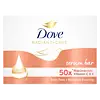 Key Ingredients
Benefits
Concerns
Ingredients Side-by-side
Sodium Lauroyl Isethionate
CleansingStearic Acid
Cleansing



Lauric Acid
Cleansing

Sodium Palmate
CleansingWater
Skin ConditioningSodium Isethionate
CleansingSodium Stearate
CleansingCocamidopropyl Betaine
Cleansing

Parfum
Masking

Sodium Palm Kernelate
CleansingSodium Chloride
MaskingZinc Oxide
Cosmetic Colorant


Propylene Glycol
Humectant
Niacinamide
Smoothing










Titanium Dioxide
Cosmetic Colorant
Glycerin
Humectant
Sodium Benzoate
Masking
Caramel
Cosmetic ColorantTetrasodium Etidronate
Emulsion StabilisingTetrasodium EDTA
Sodium Ascorbyl Phosphate
Antioxidant

Tocopheryl Acetate
Antioxidant
Alumina
Abrasive
CI 14700
Cosmetic ColorantCI 15985
Cosmetic ColorantCI 17200
Cosmetic ColorantCI 61570
Cosmetic ColorantSodium Lauroyl Isethionate, Stearic Acid, Lauric Acid, Sodium Palmate, Water, Sodium Isethionate, Sodium Stearate, Cocamidopropyl Betaine, Parfum, Sodium Palm Kernelate, Sodium Chloride, Zinc Oxide, Propylene Glycol, Niacinamide, Titanium Dioxide, Glycerin, Sodium Benzoate, Caramel, Tetrasodium Etidronate, Tetrasodium EDTA, Sodium Ascorbyl Phosphate, Tocopheryl Acetate, Alumina, CI 14700, CI 15985, CI 17200, CI 61570
Cocos Nucifera Oil
Masking
Water
Skin ConditioningSodium Hydroxide
BufferingPropylene Glycol
Humectant
Potassium Azeloyl Diglycinate
Skin Conditioning
Titanium Dioxide
Cosmetic Colorant
Sodium Lactate
Buffering
Glutathione
Alpha-Arbutin
Antioxidant
Allantoin
Skin Conditioning
Hamamelis Virginiana Extract
Antiseborrhoeic
Chamomilla Recutita Flower Extract
Masking
Glycyrrhiza Glabra Root Extract
Bleaching
Centella Asiatica Extract
Cleansing
Ingredients Explained
These ingredients are found in both products.
Ingredients higher up in an ingredient list are typically present in a larger amount.
Propylene Glycol is a synthetic, colorless, odorless liquid that has been a staple in cosmetics for decades. It is a skin conditioning agent, humectant, and solvent.
As a humectant, it draw water to the skin to reduce flaking and restore suppleness. It's also a solvent that helps dissolve other actives and keeps formulas stable across temperature changes.
The CIR Expert Panel has confirmed this ingredient to be nontoxic and clinical studies show no sensitization at cosmetic use concentrations.
True allergic reactions are quite rare: a 15-year retrospective study of 6,751 patients found only 0.31% had a positive reaction (and less than half were considered clinically relevant).
It seemed that when sensitization does occur, it's most commonly linked to topical medication (like corticosteroids) and not cosmetics. Allergic contact dermatitis also appears largely limited to individuals with underlying skin conditions.
Overall, propylene glycol is a well-studied ingredient that most people can tolerate without issue.
Learn more about Propylene GlycolTitanium Dioxide (TD) is a mineral UV filter widely used in sunscreens and cosmetics.
It's one of only two UV filters officially classified as "mineral" by regulatory agencies (the other being Zinc Oxide).
A really common myth is that mineral filters work by reflecting UV light off your skin like tiny mirrors.
They don't only do that; modern research shows TD protects mostly by absorbing UV radiation, the same way chemical filters do.
When researchers measured this, reflection accounted for only about 4-5% of the protection (and less than SPF 2 on its own). The other ~95% comes from absorption: the UV photons hit the particle and their energy gets soaked up by its semiconductor band gap rather than bouncing off.
So "reflects vs. absorbs" was never really the right way to split mineral from chemical filters.
TD gives broad-spectrum protection that's strongest in the UVB and UVA-2 range and weaker in the UVA-1 range. Its UVA protection isn't quite as strong as Zinc Oxide's which is why you'll often see the two paired together.
Together, they make a solid broad-spectrum system.
TD is a great pick for sensitive, acne-prone, or redness-prone skin because it's non-irritating and chemically inert. Regulatory reviews classify it as a non-sensitizer and mild-to-non-irritant.
It's also unlikely to cause the "eye sting" some chemical filters are known for.
The main trade-off is cosmetic; TD can leave a white cast and has a thicker texture. This is why mineral sunscreens are often less cosmetically elegant than chemical or hybrid formulas (and harder to shade-match on deeper skin tones).
Formulators often use micronized or nano-sized TD to cut down on white case and improve spreadability. Smaller particles scatter less visible light so the formula looks less chalky while still filtering UV.
TD is almost always bundled with coatings like Alumina, Silica, Stearic Acid, or Dimethicone. These coatings do two important jobs:
TD can be used at up to 25% in a finished sunscreen; this is the regulatory ceiling in both the US and the EU.
In practice, the amount in any given product varies a lot depending on the target SPF and whether it's paired with other UV filters.
TD is one of the most heavily vetted sunscreen ingredients out there. It is approved as a UV filter in all major markets worldwide, including the US, EU, UK, Japan, Korea, China, Australia, and Canada.
The safety evidence is solid. There was an old worry that nano particles might absorb through skin into the body but multiple studies (including on damaged, sunburned, and UV-irradiated skin) have shown that TD stays on the surface and the layer of dead skin cells on top of everything else.
There's also no evidence of carcinogenicity, mutagenicity, or reproductive toxicity from dermal exposure of this ingredient.
For those who have seen the headline about a 2022 EU ban on TD, that was on TD as a food additive (a complete separate use from topical sunscreen).
There are ongoing questions about how nano-TD might affect marine ecosystems. As of now, there has been no conclusive evidence that any form of TD (or any other sunscreen filter) harms coral reefs or marine life.
The science is still developing and it's a space worth watching rather than packing over.
However, several destinations have reef-safety sunscreen rules that restrict certain chemical filters and steer visitors toward mineral, non-nano options. If you're traveling somewhere with these rules, a non-nano mineral sunscreen is the safe bet.
Learn more about Titanium DioxideWater. It's the most common cosmetic ingredient of all. You'll usually see it at the top of ingredient lists, meaning that it makes up the largest part of the product.
So why is it so popular? Water most often acts as a solvent - this means that it helps dissolve other ingredients into the formulation.
You'll also recognize water as that liquid we all need to stay alive. If you see this, drink a glass of water. Remember to stay hydrated!
Learn more about Water

