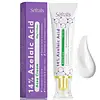
This acne treatment is formulated around Azelaic Acid to clear breakouts and calm redness.
This acne treatment is formulated around Azelaic Acid to clear breakouts and calm redness.


What's inside
What's inside
 Key Ingredients
Benefits
Concerns
Ingredients Side-by-side



Water
Skin ConditioningAzelaic Acid
Buffering









Butylene Glycol
Humectant

Methylpropanediol
SolventDimethicone
Emollient
Cetearyl Glucoside
Emulsifying

Dipropylene Glycol
HumectantSorbitan Olivate
Emulsifying
Polyacrylate-6
Squalane
Emollient
Cetyl Alcohol
Emollient

Hydroxypropyl Cyclodextrin
Masking1,2-Hexanediol
Skin Conditioning
Hydroxyacetophenone
Antioxidant
Hydroxyethylpiperazine Ethane Sulfonic Acid
BufferingStearyl Alcohol
Emollient
Allantoin
Skin Conditioning
Cyclodextrin
AbsorbentCapryloyl Glycine
CleansingXanthan Gum
EmulsifyingO-Cymen-5-Ol
Antimicrobial
Madecassoside
Antioxidant
Centella Asiatica Extract
Cleansing
Lavandula Angustifolia Oil
Masking




Saururus Chinensis Leaf/Root Extract
Antimicrobial
Taraxacum Officinale Leaf Extract
Skin ConditioningStephania Tetrandra Root Extract
Skin ConditioningWater, Azelaic Acid, Butylene Glycol, Methylpropanediol, Dimethicone, Cetearyl Glucoside, Dipropylene Glycol, Sorbitan Olivate, Polyacrylate-6, Squalane, Cetyl Alcohol, Hydroxypropyl Cyclodextrin, 1,2-Hexanediol, Hydroxyacetophenone, Hydroxyethylpiperazine Ethane Sulfonic Acid, Stearyl Alcohol, Allantoin, Cyclodextrin, Capryloyl Glycine, Xanthan Gum, O-Cymen-5-Ol, Madecassoside, Centella Asiatica Extract, Lavandula Angustifolia Oil, Saururus Chinensis Leaf/Root Extract, Taraxacum Officinale Leaf Extract, Stephania Tetrandra Root Extract
Ingredients Explained
These ingredients are found in both products.
Ingredients higher up in an ingredient list are typically present in a larger amount.
Azelaic acid is a multitasker ingredient that helps treat acne, pigmentation, and irritation. It is a great option for sensitive skin.
What makes it special?
OTC Azelaic acid is usually available in concentrations from 10-15% and anything over requires a prescription.
Here's what each tier does best:
Unlike other acids, azelaic acid will not make your skin more photosensitive/sun sensitive.
Though this ingredient is naturally occurring in grains like wheat, rye, and barley, it is usually synthetically created for cosmetics to ensure stability and effectiveness.
Learn more about Azelaic AcidCetearyl Glucoside is a sugar-based emulsifier. It is usually made by combining cetearyl alcohol and glucose.
Belonging to the aklyl polyglucoside (APG) family, Cetearyl Glucoside has a sugar "head" that loves water and a fatty "tail" that loves oil. This means it can shuffle oil and water into a stable and smooth emulsion.
Typical use levels are between 1-5% and this ingredient is considered to be non-irritating by the CIR Expert Panel Review.
Once applied, your skin's glucoside hydrolases breaks it down to the parent fatty alcohol and glucose. This is why this ingredient may not be fungal acne safe.
Learn more about Cetearyl GlucosideDimethicone is a type of synthetic silicone created from natural materials such as quartz. It is also known as polydimethylsiloxane.
What it does:
Dimethicone comes in different viscosities:
Depending on the viscosity, dimethicone has different properties.
Ingredients lists don't always show which type is used, so we recommend reaching out to the brand if you have questions about the viscosity.
This ingredient is unlikely to cause irritation because it does not get absorbed into skin. However, people with silicone allergies should be careful about using this ingredient.
Note: Dimethicone may contribute to pilling. This is because it is not oil or water soluble, so pilling may occur when layered with products. When mixed with heavy oils in a formula, the outcome is also quite greasy.
Learn more about DimethiconeSorbitan Olivate is created from the fatty acids in olive oil and sorbitol.
This ingredient is an oil in water emulsifier. It helps stabilize a product by preventing oils and waters from separating. Sorbitan Olivate also helps hydrate the skin.
This ingredient is also known as part of Olivem 1000, with Cetearyl Olivate being the other part.
According to a manufacturer, this ingredient helps preserve the natural microbiome of skin. Having a healthy microbiome helps keep our skin healthy and protects against harmful bacteria.
Please note, having a healthy microbiome is different from fungal acne; a healthy microbiome includes small amounts of yeast that normally live on your skin without causing problems.
Fungal acne happens when one type of yeast (Malassezia) grows out of control. This is usually because it's feeding on certain oils or fatty acids. Due to the olive oil base, this ingredient may not be fungal acne safe.
Learn more about Sorbitan OlivateWater. It's the most common cosmetic ingredient of all. You'll usually see it at the top of ingredient lists, meaning that it makes up the largest part of the product.
So why is it so popular? Water most often acts as a solvent - this means that it helps dissolve other ingredients into the formulation.
You'll also recognize water as that liquid we all need to stay alive. If you see this, drink a glass of water. Remember to stay hydrated!
Learn more about WaterXanthan gum is used as a stabilizer and thickener within cosmetic products. It helps give products a sticky, thick feeling - preventing them from being too runny.
On the technical side of things, xanthan gum is a polysaccharide - a combination consisting of multiple sugar molecules bonded together.
Xanthan gum is a pretty common and great ingredient. It is a natural, non-toxic, non-irritating ingredient that is also commonly used in food products.
Learn more about Xanthan Gum

