
What's inside
What's inside
 Key Ingredients
Benefits
Concerns
Ingredients Side-by-side
Prunus Amygdalus Dulcis Oil
Skin Conditioning





Hydrogenated Ethylhexyl Olivate
EmollientGlycerin
Humectant

Hydrogenated Olive Oil Unsaponifiables
Emollient
Sucrose Laurate
Emollient
Squalane
Emollient
Citrullus Lanatus Seed Oil
Emollient
Argania Spinosa Kernel Oil
Emollient

Brassica Campestris/Aleurites Fordi Oil Copolymer
Skin Conditioning
Helianthus Annuus Extract
Emollient
Coco-Caprylate/Caprate
Emollient
Sucrose Stearate
EmollientSucrose Palmitate
EmollientWater
Skin ConditioningC9-12 Alkane
SolventVp/Va Copolymer
Tocopherol
Antioxidant



Parfum
Masking


Dehydroacetic Acid
Preservative
Benzyl Alcohol
Perfuming

Limonene
Perfuming
Linalool
Perfuming
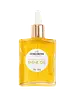
Prunus Amygdalus Dulcis Oil, Hydrogenated Ethylhexyl Olivate, Glycerin, Hydrogenated Olive Oil Unsaponifiables, Sucrose Laurate, Squalane, Citrullus Lanatus Seed Oil, Argania Spinosa Kernel Oil, Brassica Campestris/Aleurites Fordi Oil Copolymer, Helianthus Annuus Extract, Coco-Caprylate/Caprate, Sucrose Stearate, Sucrose Palmitate, Water, C9-12 Alkane, Vp/Va Copolymer, Tocopherol, Parfum, Dehydroacetic Acid, Benzyl Alcohol, Limonene, Linalool
Alternatives
Ingredients Explained
These ingredients are found in both products.
Ingredients higher up in an ingredient list are typically present in a larger amount.
Citrullus Lanatus Seed Oil is made by expressing watermelon seeds. It is a non-fragrant oil with antioxidant and hydrating properties.
Watermelon seed oil contains a high percentage of linoleic acid and other fatty acids. These fatty acids make it a great skin hydrator. This ingredient may not be fungal-acne safe.
Coco-Caprylate/Caprate is a lightweight ester created from coconut oil fatty acids, caprylic acid, and capric acid.
It is an emollient that helps soften skin and reduce transepidermal water loss (TEWL). What sets it apart from heavier emollients is its ultralight, non-greasy feel.
Once applied, this ingredient dries down quickly and leaves a dry, silky finish behind. This also helps improve spreadability and texture.
This ingredient has an excellent safety-record and is non-irritating.
Typical concentrations for cosmetics range from 0.5-62%.
Research on Malassezia growth found no growth on fatty acid esters with chain lengths shorter than 12 carbons (it prefers C11-24).
Since Coco-Caprylate/Caprate is built on C8 and C10 fatty acids, it is out of the range that Malassezia metabolizes, and therefore safe for fungal acne.
Learn more about Coco-Caprylate/CaprateWe don't have a description for Hydrogenated Ethylhexyl Olivate yet.
Hydrogenated Olive Oil Unsaponifiables are the "leftover" part of olive oil after the fatty acids get turned into soap.
Most of what's left behind is a concentrated blend of squalene, phytosterols, and vitamin E.
Squalene is pretty cool because it's already naturally found in our skin and makes up about 13% of sebum. This makes it a great moisturizing and skin-barrier-supporting ingredient.
This ingredient is typically used at low concentrations (~1-3%) and occasionally up to 25% when acting as the main ingredient in a formula.
Fungal acne note: Though this ingredient is largely free of fatty acid esters that feed Malassezia, it may still have some residual fatty acids depending on the purity. This is why this ingredient is marked as not fungal acne safe.
People with existing olive oil allergies should be cautious as well.
Learn more about Hydrogenated Olive Oil UnsaponifiablesTocopherol is a fat-soluble antioxidant known as Vitamin E.
You'll find this ingredient in the vast majority of skincare (for good reason). It works to neutralize free radicals, or unstable molecules generated by UV exposure, pollution, and other environmental stressors, before they can cause oxidative damage to your skin cells.
Topically applied tocopherol has been shown to protect against UV damage by ramping up the skin's own natural defense enzymes.
It also acts as a skin conditioning agent; some studies show that regular topical use can improve the skin's water-binding capacity over 2-4 weeks.
This ingredient is especially loved for being a team player. When combined with Vitamin C, the photoprotective effect of both ingredients roughly doubles and the combo also helps reduce UV-induced DNA damage.
This ingredient has some brightening potential but it's more of a prevention ingredient than spot-fader. Cell studies show it can slow down melanin production but it's worth noting that it's not the most powerful brightener out there.
In formulations, it also serves as a stabilizer that helps protect other oxidation-prone ingredients from degrading.
Concentrations usually range from 0.1-1% in most leave-on products.
Learn more about Tocopherol

