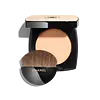
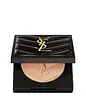
Chanel Les Beiges Healthy Glow Powder Versus Yves Saint Laurent All Hours Hyper Finish Setting Powder

What's inside
What's inside
 Key Ingredients
Benefits
Concerns
Ingredients Side-by-side
Synthetic Fluorphlogopite
Silica
Abrasive


Triheptanoin
Skin ConditioningLauroyl Lysine
Skin Conditioning
Boron Nitride
Absorbent
Dimethicone
Emollient

Magnesium Myristate


Magnesium Stearate
Cosmetic ColorantButyrospermum Parkii Butter
Skin Conditioning




Aluminum Hydroxide
EmollientCaprylyl Glycol
Emollient
Jasminum Grandiflorum Stem Extract
Jasminum Grandiflorum Flower Extract
Masking


Potassium Sorbate
Preservative
Parfum
Masking
Ethylhexyl Palmitate
Emollient
Chlorphenesin
Antimicrobial
Water
Skin ConditioningTocopheryl Acetate
Antioxidant


Propanediol
Solvent
Isopropyl Titanium Triisostearate
Emollient
Tin Oxide
Abrasive
Stearic Acid
Cleansing
Sodium Hyaluronate
Humectant


Sodium Lauroyl Aspartate
CleansingZinc Chloride
AntimicrobialCitric Acid
Buffering
CI 77007
Cosmetic ColorantCI 77491
Cosmetic ColorantCI 77492
Cosmetic ColorantCI 77499
Cosmetic ColorantCI 77891
Cosmetic ColorantMica
Cosmetic ColorantSynthetic Fluorphlogopite, Silica, Triheptanoin, Lauroyl Lysine, Boron Nitride, Dimethicone, Magnesium Myristate, Magnesium Stearate, Butyrospermum Parkii Butter, Aluminum Hydroxide, Caprylyl Glycol, Jasminum Grandiflorum Stem Extract, Jasminum Grandiflorum Flower Extract, Potassium Sorbate, Parfum, Ethylhexyl Palmitate, Chlorphenesin, Water, Tocopheryl Acetate, Propanediol, Isopropyl Titanium Triisostearate, Tin Oxide, Stearic Acid, Sodium Hyaluronate, Sodium Lauroyl Aspartate, Zinc Chloride, Citric Acid, CI 77007, CI 77491, CI 77492, CI 77499, CI 77891, Mica
Talc
Abrasive
Silica
Abrasive
Perlite
Absorbent
Caprylic/Capric Triglyceride
Masking
Octyldodecyl Stearoyl Stearate
Emollient
Boron Nitride
Absorbent
Magnesium Stearate
Cosmetic ColorantCaprylyl Glycol
Emollient
Parfum
Masking
Niacinamide
Smoothing




Sodium Hyaluronate
Humectant
Citrus Limon Peel Extract
EmollientCI 77491
Cosmetic ColorantCI 77492
Cosmetic ColorantCI 77499
Cosmetic ColorantCI 77891
Cosmetic ColorantIngredients Explained
These ingredients are found in both products.
Ingredients higher up in an ingredient list are typically present in a larger amount.
Boron Nitride is compound consisting of boron and nitrogen. It is used to absorb oil and modify adherence/ slip in products.
This means it is often used in makeup products to help them last longer.
Caprylyl Glycol is a humectant, skin conditioner, emollient, and preservative booster derived from either caprylic acid or synthetically created.
Typical use levels vary from 0.3-1% as a preservative booster and go up to 2% to condition skin.
Because it is not a free-fatty acid, this ingredient is fungal acne safe (there's nothing for Malassezia to feed on).
Learn more about Caprylyl GlycolCi 77491 is also hydrated iron III oxide. It's sole purpose is to give a red/pink hue to products.
Iron III oxides are classified as inorganic chemicals for coloring.
Synthetically created Ci 77491 is considered safer than those naturally found. This is because the synthetically created version may contain less impurities. Iron oxides are generally non-toxic and non-allergenic.
Learn more about CI 77491CI 77492 is also hydrated iron III oxide. It's sole purpose is to give a yellow hue to products.
Iron III oxides are classified as inorganic chemicals for coloring.
Synthetically created CI 77492 is considered safer than those naturally found. This is because the synthetically created version may contain less impurities. Iron oxides are generally non-toxic and non-allergenic.
Learn more about CI 77492Ci 77499 is also hydrated iron III oxide. It is created from mixing red and black iron oxides. This helps give shades of darkness to a product.
Iron III oxides are classified as inorganic chemicals for coloring.
Ci 77891 is a white pigment from Titanium dioxide. It is naturally found in minerals such as rutile and ilmenite.
It's main function is to add a white color to cosmetics. It can also be mixed with other colors to create different shades.
Ci 77891 is commonly found in sunscreens due to its ability to block UV rays.
Learn more about CI 77891Magnesium Stearate is a salt that is 2 parts stearic acid and 1 part magnesium.
It is a white powder that can be used to add bulk and color to products by binding to oil ingredients.
Parfum is a catch-all term for an ingredient or more that is used to give a scent to products.
Also called "fragrance", this ingredient can be a blend of hundreds of chemicals or plant oils. This means every product with "fragrance" or "parfum" in the ingredients list is a different mixture.
For instance, Habanolide is a proprietary trade name for a specific aroma chemical. When used as a fragrance ingredient in cosmetics, most aroma chemicals fall under the broad labeling category of “FRAGRANCE” or “PARFUM” according to EU and US regulations.
The term 'parfum' or 'fragrance' is not regulated in many countries. In many cases, it is up to the brand to define this term.
For instance, many brands choose to label themselves as "fragrance-free" because they are not using synthetic fragrances. However, their products may still contain ingredients such as essential oils that are considered a fragrance by INCI standards.
One example is Calendula flower extract. Calendula is an essential oil that still imparts a scent or 'fragrance'.
Depending on the blend, the ingredients in the mixture can cause allergies and sensitivities on the skin. Some ingredients that are known EU allergens include linalool and citronellol.
Parfum can also be used to mask or cover an unpleasant scent.
The bottom line is: not all fragrances/parfum/ingredients are created equally. If you are worried about fragrances, we recommend taking a closer look at an ingredient. And of course, we always recommend speaking with a professional.
Learn more about ParfumSilica, also known as silicon dioxide, is a naturally occurring mineral. It is used as a fine, spherical, and porous powder in cosmetics.
Though it has exfoliant properties, the function of silica varies depending on the product.
The unique structure of silica enhances the spreadability and adds smoothness, making it a great texture enhancer.
It is also used as an active carrier, emulsifier, and mattifier due to its ability to absorb excess oil.
In some products, tiny microneedles called spicules are made from silica or hydrolyzed sponge. When you rub them in, they lightly polish away dead skin layers and enhance the penetration of active ingredients.
Learn more about SilicaSodium Hyaluronate is the salt form of hyaluronic acid. It is a long sugar chain that is naturally found in your skin, joints, and connective tissue that maintains hydration and elasticity.
In skincare, it works as a humectant. It pulls water from the environment and deeper layers of skin and binds it to the surface.
Interestingly, the size of the molecule affects its behavior:
Some clinical evidence links low molecular weight versions to improved wrinkle depth, elasticity, anti-inflammatory effects, and barrier repair.
Many serums use a blend of both weights so you can get surface hydration plus longer-lasting and deeper effects.
You'll typically see concentrations between 0.1-2% for this ingredient.
Learn more about Sodium Hyaluronate

