Balea Ultra Sensitive Intensivcreme Urea Versus Balea Med Ultra Sensitive Anti-Pickel Gesichspflege Cica
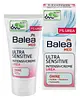
This barrier-repair moisturizer is formulated around Urea and Panthenol to strengthen the skin barrier and hydrate skin.
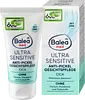
This acne moisturizer is formulated around Zinc PCA and Madecassoside to clear breakouts and calm redness.

What's inside
What's inside
 Key Ingredients
Benefits
Concerns
Ingredients Side-by-side
Water
Skin ConditioningGlycerin
Humectant


Urea
Buffering

Octyldodecanol
Emollient
Dicaprylyl Ether
Emollient
Butylene Glycol
Humectant
Glyceryl Stearate Citrate
Emollient

Stearyl Alcohol
Emollient
Butyrospermum Parkii Butter
Skin Conditioning


Glyceryl Stearate
Emollient
Tocopheryl Acetate
Antioxidant


Prunus Amygdalus Dulcis Oil
Skin Conditioning
Hydrogenated Coco-Glycerides
Emollient
Triacetin
AntimicrobialPanthenol
Skin Conditioning

Allantoin
Skin Conditioning
Chondrus Crispus Powder
Abrasive
Xanthan Gum
EmulsifyingTocopherol
Antioxidant

Pentylene Glycol
Skin Conditioning
Sodium Carboxymethyl Betaglucan
Caprylyl Glycol
Emollient
Caprylhydroxamic Acid
Water, Glycerin, Urea, Octyldodecanol, Dicaprylyl Ether, Butylene Glycol, Glyceryl Stearate Citrate, Stearyl Alcohol, Butyrospermum Parkii Butter, Glyceryl Stearate, Tocopheryl Acetate, Prunus Amygdalus Dulcis Oil, Hydrogenated Coco-Glycerides, Triacetin, Panthenol, Allantoin, Chondrus Crispus Powder, Xanthan Gum, Tocopherol, Pentylene Glycol, Sodium Carboxymethyl Betaglucan, Caprylyl Glycol, Caprylhydroxamic Acid
Water
Skin ConditioningGlycerin
Humectant
Dipropylheptyl Carbonate
EmollientCetyl Alcohol
Emollient
Dicaprylyl Ether
Emollient
Glucomannan
Skin ConditioningPanthenol
Skin Conditioning
Hydroxyacetophenone
Antioxidant
Sodium Stearoyl Glutamate
CleansingDistarch Phosphate
AbsorbentAllantoin
Skin Conditioning
Dipotassium Glycyrrhizate
Humectant
1,2-Hexanediol
Skin Conditioning
Caprylyl Glycol
Emollient
Zinc PCA
Humectant



Tocopherol
Antioxidant
Chondrus Crispus Powder
Abrasive
Madecassoside
Antioxidant
Lactic Acid
Buffering

Water, Glycerin, Dipropylheptyl Carbonate, Cetyl Alcohol, Dicaprylyl Ether, Glucomannan, Panthenol, Hydroxyacetophenone, Sodium Stearoyl Glutamate, Distarch Phosphate, Allantoin, Dipotassium Glycyrrhizate, 1,2-Hexanediol, Caprylyl Glycol, Zinc PCA, Tocopherol, Chondrus Crispus Powder, Madecassoside, Lactic Acid
Reviews
Ingredients Explained
These ingredients are found in both products.
Ingredients higher up in an ingredient list are typically present in a larger amount.
Allantoin is a soothing ingredient known for its protective and moisturizing properties; it's basically a quiet workhorse ingredient you can find in a huge range of cosmetics.
Though it can be derived from the comfrey plant, allantoin is produced synthetically for cosmetic products to ensure purity.
Research shows it can encourage your skin cells to turn over and renew by stimulating keratinocyte and fibroblast proliferation.
It also has mild keratolytic properties to help loosen and shed dead skin cells without being harsh.
Studies also suggest allantoin can help calm inflammation by dialing down some of the chemical signals your skin sends out when it is irritated.
This ingredient is typically used in the 0.1-0.5% range, and the FDA recognizes it as a skin protectant in OTC products up to 2%.
Overall, allantoin is a wonderful addition to most routines; it is stable across a wide pH range (~4-8), works well with other ingredients, and is considered non-sensitizing/non-irritating.
Fun fact: Allantoin is naturally occurring in comfrey root, beets, chamomile, and wheat sprouts. Our bodies even produce it as a byproduct of uric acid metabolism.
Learn more about AllantoinCaprylyl Glycol is a humectant, skin conditioner, emollient, and preservative booster derived from either caprylic acid or synthetically created.
Typical use levels vary from 0.3-1% as a preservative booster and go up to 2% to condition skin.
Because it is not a free-fatty acid, this ingredient is fungal acne safe (there's nothing for Malassezia to feed on).
Learn more about Caprylyl GlycolChondrus Crispus Powder is just Irish moss, a red seaweed harvested, dried, and ground into a fine powder. Because it's the whole plant rather than a liquid extract, it has an official INCI job as an "abrasive".
This ingredient also happens to be loaded with carrageenan, a sugar-based polysaccharide, that allows it to double as a thickener and light hydrator.
Real world concentration is low; industry surveys report a maximum of 0.1% across 63 leave-on products.
The Cosmetic Ingredient Review Expert Panel reviewed it in 2021 and concluded it's safe at current use levels and every human sensitization study on it came back negative.
Allergy risk is very low with no documented pattern of reactions but anyone with a known seaweed or iodine sensitivity may want to patch test since dried Chondrus crispus does carry a small amount of natural iodine.
Learn more about Chondrus Crispus PowderDicaprylyl Ether is created from caprylic acid. It is a texture-enhancer and emollient.
As an emollient, Dicaprylyl Ether is non-comedogenic. It helps soften and smooth the skin by creating a barrier on top. This barrier helps trap moisture in, helping to hydrate the skin.
Dicaprylyl Ether gives a non-greasy feel and better spreadability to products.
Learn more about Dicaprylyl EtherGlycerin (or glycerol) is a compound naturally found in your skin. It's a powerhouse humectant that pulls water into the stratum corneum.
Topically, glycerin does several things at once:
Your skin makes glycerin on its own (mostly from sebaceous oil breakdown) and shuttles it to your outermost layer of skin, or your epidermis, via aquaporin-3.
Aquaporin-3 is a transporter that is essential for normal skin hydration, elasticity, and repair. Interestingly, mice lacking in AQP3 have dry and less elastic skin that can be fully corrected with glycerin.
This ingredient is non-irritating, plays well with almost every ingredient, and works across all skin types. Typical use is anywhere between 3-10% but can go up to 79% in some leave-on products.
Just know very high concentrations (>40%) can feel tacky in low humidity.
Glycerin is the name for this ingredient in American English. British English uses Glycerol/Glycerine.
Learn more about GlycerinPanthenol is a common ingredient that helps hydrate and soothe the skin. It is found naturally in our skin and hair.
There are two forms of panthenol: D and L.
D-panthenol is also known as dexpanthenol. Most cosmetics use dexpanthenol or a mixture of D and L-panthenol.
Panthenol is famous due to its ability to go deeper into the skin's layers. Using this ingredient has numerous pros (and no cons):
Like hyaluronic acid, panthenol is a humectant. Humectants are able to bind and hold large amounts of water to keep skin hydrated.
This ingredient works well for wound healing. It works by increasing tissue in the wound and helps close open wounds.
Once oxidized, panthenol converts to pantothenic acid. Panthothenic acid is found in all living cells.
This ingredient is also referred to as pro-vitamin B5.
Learn more about PanthenolTocopherol is a fat-soluble antioxidant known as Vitamin E.
You'll find this ingredient in the vast majority of skincare (for good reason). It works to neutralize free radicals, or unstable molecules generated by UV exposure, pollution, and other environmental stressors, before they can cause oxidative damage to your skin cells.
Topically applied tocopherol has been shown to protect against UV damage by ramping up the skin's own natural defense enzymes.
It also acts as a skin conditioning agent; some studies show that regular topical use can improve the skin's water-binding capacity over 2-4 weeks.
This ingredient is especially loved for being a team player. When combined with Vitamin C, the photoprotective effect of both ingredients roughly doubles and the combo also helps reduce UV-induced DNA damage.
This ingredient has some brightening potential but it's more of a prevention ingredient than spot-fader. Cell studies show it can slow down melanin production but it's worth noting that it's not the most powerful brightener out there.
In formulations, it also serves as a stabilizer that helps protect other oxidation-prone ingredients from degrading.
Concentrations usually range from 0.1-1% in most leave-on products.
Learn more about TocopherolWater. It's the most common cosmetic ingredient of all. You'll usually see it at the top of ingredient lists, meaning that it makes up the largest part of the product.
So why is it so popular? Water most often acts as a solvent - this means that it helps dissolve other ingredients into the formulation.
You'll also recognize water as that liquid we all need to stay alive. If you see this, drink a glass of water. Remember to stay hydrated!
Learn more about Water

