Andalou Naturals Age Defying Hyaluronic DMAE Lift & Firm Cream Versus Bambu Earth Petitgrain Moisturizer
This anti-aging moisturizer is formulated around Sodium Hyaluronate and Resveratrol to soften the look of wrinkles and hydrate skin.
This barrier-repair moisturizer is formulated around Butyrospermum Parkii Butter and Prunus Amygdalus Dulcis Oil to strengthen the skin barrier and hydrate skin.

What's inside
What's inside
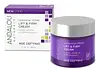 Key Ingredients
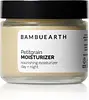
No key ingredients
Benefits
Concerns
Ingredients Side-by-side
Aloe Barbadensis Leaf Juice
Skin Conditioning


Water
Skin ConditioningButyrospermum Parkii Butter
Skin Conditioning





Glyceryl Stearate
Emollient
Argania Spinosa Kernel Oil
Emollient


Simmondsia Chinensis Seed Oil
Emollient
Malus Domestica Fruit Cell Culture Extract
Skin ConditioningDimethylaminoethanol Tartrate
EmollientSodium Hyaluronate
Humectant

Tocopherol
Antioxidant


Resveratrol
Antioxidant
Ubiquinone
Antioxidant
Helianthus Annuus Seed Oil
Emollient
Panthenol
Skin Conditioning
Allantoin
Skin Conditioning
Magnesium Ascorbyl Phosphate
Antioxidant


Bisabolol
Antioxidant
Riboflavin
Cosmetic ColorantBorago Officinalis Seed Oil
Emollient
Oenothera Biennis Oil
Emollient
Camellia Sinensis Leaf Extract
Antimicrobial
Hibiscus Sabdariffa Flower Extract
Skin ConditioningPhenethyl Alcohol
MaskingEthylhexylglycerin
Skin ConditioningRubus Idaeus Fruit
AstringentEthyl Vanillate
Perfuming

Citrus Aurantium Dulcis Peel Oil
Masking
Aloe Barbadensis Leaf Juice, Water, Butyrospermum Parkii Butter, Glyceryl Stearate, Argania Spinosa Kernel Oil, Simmondsia Chinensis Seed Oil, Malus Domestica Fruit Cell Culture Extract, Dimethylaminoethanol Tartrate, Sodium Hyaluronate, Tocopherol, Resveratrol, Ubiquinone, Helianthus Annuus Seed Oil, Panthenol, Allantoin, Magnesium Ascorbyl Phosphate, Bisabolol, Riboflavin, Borago Officinalis Seed Oil, Oenothera Biennis Oil, Camellia Sinensis Leaf Extract, Hibiscus Sabdariffa Flower Extract, Phenethyl Alcohol, Ethylhexylglycerin, Rubus Idaeus Fruit, Ethyl Vanillate, Citrus Aurantium Dulcis Peel Oil
Ingredients Explained
These ingredients are found in both products.
Ingredients higher up in an ingredient list are typically present in a larger amount.
This ingredient is also known as shea butter. It is a plant-derived extract from the nuts of the Africa shea tree and one of the most well-studied emollients.
Because it has a high concentration of fatty acids (primarily oleic, stearic, and linoleic) it is able to form a protective barrier on the skin's surface. This helps seal in moisture and prevents transepidermal water loss (TEWL).
In vitro research found an increase in skin hydration by 58% and a decrease in TEWL by 37.8% after 24 hours of applying this ingredient (pretty impressive for a single ingredient!).
Besides hydration, shea butter also contains triterpenes that have anti-inflammatory potential. In particule, lupeol cinnamate has shown the highest anti-inflammatory activity in vivo.
Shea butter also contains vitamins A and E which may contribute to antioxidant activity.
While Shea Butter has an SPF rating of about 3-4, it is not a sunscreen replacement.
This ingredient may not be fungal acne safe because its fatty acids fall within the C11-C24 range that the Malassezia yeast can metabolize.
This ingredient shows up on a lot of "pore-clogging" lists but there's no real evidence behind that. It doesn't even have a comedogenic rating from an actual study; the numbers you'll find online come from blogs citing other blogs.
Ratings for other ingredients mostly come from a 1980s rabbit ear test. This test doesn't translate well to human skin or to real products because the ingredient sits at a much lower percentage.
Some people still find it breaks them out. So if that's you, definitely trust your skin. Just know this one's based on experience and not evidence.
Learn more about Butyrospermum Parkii ButterJojoba oil is one of the most well-studied plant-derived ingredients in cosmetics. It is an emollient with a special structure.
Because it is made up of 97-98% wax esters, it closely mirrors the linear monoesters found in human sebum. This makes it skin compatible, non-greasy, and lightweight.
Unlike other plant oils, jojoba wax doesn't easily penetrate skin. It mostly works in the uppermost layers as an emollient. This just means it forms a light barrier on the skin to help retain moisture.
Formulations with jojoba esters up to 90% reduced transepidermal water loss (TEWL) and increased barrier recovery by 81% (outperforming bisabolol at 47%).
Besides barrier support, the science also suggests jojoba to have anti-inflammatory effects and potential applications for skin infections, aging, and wound healing.
Fun fact: Indigenous cultures have used jojoba as a moisturizer and to help treat burns for centuries.
Fungal acne: The Malassezia yeast is known to metabolize fatty acids in the C11-24 range and jojoba's dominant fatty acid components fall into this range. This ingredient may not be fungal acne safe.
Learn more about Simmondsia Chinensis Seed Oil

