Skin Alchemy Calendula 68 Facial Balm
A moisturizer with 25 ingredients.
This calming moisturizer is formulated around Calendula Officinalis Flower and Hippophae Rhamnoides Fruit Oil to calm redness and hydrate skin.
Worth noting
Contains Santalum Album Oil, an EU-listed fragrance allergen.
We independently verify ingredients, backed by peer-reviewed research. Suggest an update.
What's inside
Ingredients List
Tallow
Skin Conditioning



Prunus Armeniaca Kernel Oil
Masking

Beeswax
Emulsion Stabilising
Vitis Vinifera Seed Oil
Emollient
Mangifera Indica Seed Butter
Skin Conditioning
Camellia Oleifera Seed Oil
Skin Conditioning
Rubus Idaeus Seed Oil
Emollient
Punica Granatum Seed Oil
Emollient
Hippophae Rhamnoides Fruit Oil
Skin Protecting
Santalum Album Oil
Masking

Ormenis Multicaulis Flower Oil
Perfuming

Ocimum Tenuiflorum Flower Extract
MaskingZingiber Officinale Root Extract
Masking
Equisetum Giganteum Extract
Skin ConditioningGinkgo Biloba Leaf Extract
Skin Conditioning
Calendula Officinalis Flower
Skin Conditioning
Withania Somnifera Root Extract
Skin Conditioning
Panax Ginseng Root Extract
Emollient
Origanum Vulgare Flower Extract
AntiseborrhoeicRosmarinus Officinalis Leaf
Skin ConditioningCamellia Sinensis Leaf Extract
Antimicrobial




Fusanus Spicatus Wood Oil
Masking
Anthemis Nobilis Flower Oil
Masking
Nardostachys Jatamansi Root Oil
Masking
Abies Alba Leaf Oil
Masking
Tallow, Prunus Armeniaca Kernel Oil, Beeswax, Vitis Vinifera Seed Oil, Mangifera Indica Seed Butter, Camellia Oleifera Seed Oil, Rubus Idaeus Seed Oil, Punica Granatum Seed Oil, Hippophae Rhamnoides Fruit Oil, Santalum Album Oil, Ormenis Multicaulis Flower Oil, Ocimum Tenuiflorum Flower Extract, Zingiber Officinale Root Extract, Equisetum Giganteum Extract, Ginkgo Biloba Leaf Extract, Calendula Officinalis Flower, Withania Somnifera Root Extract, Panax Ginseng Root Extract, Origanum Vulgare Flower Extract, Rosmarinus Officinalis Leaf, Camellia Sinensis Leaf Extract, Fusanus Spicatus Wood Oil, Anthemis Nobilis Flower Oil, Nardostachys Jatamansi Root Oil, Abies Alba Leaf Oil
Key Ingredients
Benefits
Concerns
Ingredients Explained
Tallow is the fat of a cow and has occlusive properties, like petrolatum. It is rich in fatty acids like oleic, palmitic, stearic, and linoleic.
Fatty acids are moisturizing ingredients that can help hydrate your skin - they are not the same as exfoliating acids such as AHAs or BHA.
While there are reports that tallow can disrupt your skin barrier, we cannot find sufficient proof of this.
Since tallow is an occlusive, it cannot be used alone as a moisturizer. Occlusives sit on top of skin and lock in the hydration that’s already there (from other ingredients). So using tallow alone will cause skin to dry out.
Due to the high fatty acid content, this ingredient may cause breakouts.
Learn more about TallowThis ingredient is also known as Apricot kernel oil, and it comes form the seed kernels of apricot (a member of the Rosaceae family like almond, peach, cherry, and plum).
It's mostly made up of triglycerides: oleic acid (43.9-78.5%), linoleic acid (9.7-37%), and palmitic acid (4.9-7.3%). These numbers vary depending on the variety of Prunus and the ripeness of the fruit; oleic tends to go up at late harvest while linoleic goes down.
Vitamin E is also prevalent in this ingredient and the most dominant form is gamma-tocopherol.
These compounds give the ingredient emollient and skin conditioning properties that keep the skin soft and hydrated.
There's no regulatory maximum cap for this ingredient so you'll see it across a huge concentration range (100% as a single ingredient facial oil).
On allergies: refined cosmetic-grade oils carry almost no protein. The CIR notes that people allergic to a food generally do not react to the refined oil because the allergenic protein does not partition into it (though cold-pressed grades retain more).
However, it's worth patch testing if you have a stone fruit or tree nut allergy because manufacturer processes for removing the protein can vary.
Malassezia lacks the cytosolic fatty acid synthase gene so the yeast cannot make palmitate on its own and instead uses lipases and phospholipases to release fatty acids from host lipids. Since apricot kernel oil is entirely C16-18 (right in the usable range of C11-24), this ingredient may not be fungal acne safe.
Old rabbit-ear testing did assign this ingredient a comedogenic rating of 1-2. The original author has stated that testing on rabbit ears is not an ideal model for human comedogenicity.
Human testing has proved that any finished product with a comedogenic ingredient won't automatically make you break out; it really comes down to concentration, formula, and your skin.
Just know high-oleic oils tend to feel heavier on oily skin so it's worth patch testing.
Learn more about Prunus Armeniaca Kernel OilBeeswax is natural wax produced by honey bees to build their honeycomb.
Because it forms a protective layer on your skin, it can help lock in moisture and reduce water loss. It is also widely used as a thickener and emulsifier in lip balms and lotions. Research suggests beeswax containing moisturizers can support skin barrier integrity.
In comedogenic testing, Beeswax scored a 0-2, which is on the low end. Whether or not a product clogs your pores really comes down to the formula as a whole (not any single ingredient on its own) and your skin.
Cera Alba is the white, bleached form of this ingredient.
Just so you know, beeswax is not vegan since it is animal-derived. It cannot be removed with water, but can be taken off with an oil cleanser.
People with a known Propolis allergy also report to have reactions from beeswax.
Beeswax's wax esters are derived primarily from palmitic and oleic acid (C16 and C18:1). Both of these fall within the C11-C24 feeding window.
The Malassezia yeast can potentially cleave these esters and release usable fatty acids, so this ingredient may not be fungal acne safe. However, not everyone will react to this ingredient.
Learn more about BeeswaxVitis Vinifera Seed Oil comes from the grape vine. Grape seeds are a byproduct of creating grape juice or wine.
The components of grape seeds have many skin benefits. Research has found it to be antimicrobial and anti-inflammatory. It also contains many potent antioxidants such as Vitamin E , Vitamin C, proanthocyanidins, polyphenols, flavonoids, and anthocyanins. Proanthocyanidin has been shown to help even out skin tone.
Antioxidants help fight free-radical molecules. Free-radical molecules are capable of damaging our cells and other genetic material. Antioxidants help stabilize free-radicals by donating extra electrons. Grape seed extract may help reduce the signs of aging.
The antimicrobial properties of grape seed may help treat acne. However, more research is needed to support this claim.
Grape seed has also been found to help absorb UV rays. Grape seed extract should not replace your sunscreen.
The fatty acids of grape seed oil give it emollient properties. Emollients help soothe and soften your skin by creating a film. This film traps moisture within, keeping your skin hydrated.
Learn more about Vitis Vinifera Seed OilThough this ingredient might sound like a juicy fruit extract, it's actually the fat pressed from the mango seed kernel (or the pit).
In skincare, it behaves more like shea butter and cocoa butter than like a plant active.
The fatty acid makeup of mango seed butter makes it special; it's typically rich in stearic acid and oleic acid, with small amounts of palmitic and linoleic acid.
This combo helps it melt on skin, feel creamy, and leave behind a protective "seal" that slows down water loss.
It also contains a small amount of "extras" like tocopherols (vitamin E) and phytosterols, which are often used to support skin soothing.
Due to its fatty acid content (like oleic acid), this ingredient may not be fungal acne safe. In vitro studies have shown that Oleic Acid is one of the fatty acids that induce rapid Malassezia growth in lab settings.
Learn more about Mangifera Indica Seed ButterCamellia Oleifera Seed Oil comes from a green tea plant native to China. It is closely related to Camellia sinensis. Both plants have very similar properties. This plant also has similar properties to olive oil.
This ingredient is rich in oleic acid. This makes it an effective moisturizer. By creating a thin film on the skin, Camellia Oleifera Seed Oil traps moisture within. This helps keep your skin smooth and hydrated.
The antioxidant and soothing properties of this ingredient come from Vitamin E and polyphenols.
The seed oil comes from the dried kernels of the plant.
Learn more about Camellia Oleifera Seed OilRubus Idaeus Seed Oil is created from the seeds of the raspberry fruit. Raspberries are native to northern Europe and Asia.
Raspberry seed oil is an emollient with antioxidant and anti-inflammatory properties. It is rich in fatty acids, tocopherols, flavonoids, Vitamin C, and Vitamin E.
As an emollient, raspberry seed oil helps hydrate your skin. Emollients prevent moisture from evaporating by creating a film on top.
Learn more about Rubus Idaeus Seed OilPunica Granatum Seed Oil is created from the seeds of the pomegranate. Pomegranate seed oil helps hydrate the skin, is anti-inflammatory, and contains antioxidants.
Pomegranates are rich in fatty acids, including an unsaturated fatty acid by the name of Punicic acid. Other components of pomegranates include Vitamin E, Vitamin C, and bioactive lipids such as phytosterols, phospholipids, and triterpenes. Punicic acid helps soothe inflammation.
As an emollient, pomegranate oil creates a thin film on the skin. This film helps prevent moisture loss, keeping your skin hydrated.
Learn more about Punica Granatum Seed OilHippophae Rhamnoides Fruit Oil comes from the seabuckthorn berry. The seabuckthorn fruit contains carotenoids, palmitic acid, palmitoleic acid and vitamin E.
The nutritious content of seabuckthorn fruit oil helps hydrate and nourish the skin. A study from 2018 found seabuckthorn may help with alleviating UV damage due to its anti-inflammatory property.
Carotenoids and Vitamin E help nourish your skin's natural barrier. This barrier protects your skin and is responsible for firm skin.
Learn more about Hippophae Rhamnoides Fruit OilSantalum Album Oil is created from the Santalum album, or the East Indian sandalwood tree. This oil has fragrance and masking properties due to its unique scent.
Sandalwood may sensitize the skin for those sensitive to fragrances.
It has been used in traditional Indian Ayurvedic medicine for centuries.
Learn more about Santalum Album OilOrmenis Multicaulis Flower Oil is a fragrance and is an oil.
We don't have a description for Ocimum Tenuiflorum Flower Extract yet.
Zingiber Officinale is more commonly known as ginger.
Ginger root has antioxidant, anti-inflammation, and antimicrobial properties.
The antioxidant properties help protect your body from free-radicals. Free-radicals are molecules that may damage your skin cells. As a result, ginger may help slow down signs of aging such as hyperpigmentation and wrinkles.
Studies show ginger inhibits the enzyme that breaks down collagen. It also helps with:
This ingredient has no negative side-effects and is safe to use unless one has a specific allergy to it.
Ginger originates from Southeast Asia but has spread throughout the world. It is now a common spice used in many cultures.
Learn more about Zingiber Officinale Root ExtractWe don't have a description for Equisetum Giganteum Extract yet.
Ginkgo Biloba Leaf Extract comes from the leaves of the Ginkgo tree. It has soothing and antioxidant properties.
The leaves of ginkgo contains flavonoids and terpenoids, potent antioxidants. Antioxidants may protect your skin from damage caused by external sources such as pollution.
Its soothing ability comes from a variety of compounds including biflavones, a type of flavonoid. Studies show gingko biloba has strong anti-inflammatory properties.
Fun fact: This tree is native to China and has been used in traditional Chinese medicine for thousands of years.
Learn more about Ginkgo Biloba Leaf ExtractCalendula Officinalis Floweris also know as the common Marigold plant. Marigolds contain flavonoids.
Flavonoids are a group of substances found naturally in plants. They possess antioxidant and inflammation properties.
Antioxidants help fight free-radical molecules. Free-radical molecules are capable of damaging our cells and other genetic material. Antioxidants help stabilize free-radicals by donating extra electrons. This may help reduce the signs of aging.
Calendula Officinalis Flowers may help soothe your skin by reducing inflammation. Emerging studies show it inhibits NO production safely, therefore reducing inflammation.
Marigolds have been used in traditional medicine throughout Asia and Europe.
Learn more about Calendula Officinalis FlowerWithania Somnifera Root Extract is also known as Ashwaganda extract. Ashwaganda is an evergreen shrub grown in India, the Middle East, and parts of Africa.
Ashwaganda contains many antioxidant compounds. Antioxidants may help with anti-aging as they neutralize free-radical molecules. These molecules may damage skin cells and DNA. By neutralizing them, antioxidants may help slow the signs of aging.
Other compounds found in ashwaganda include Vitamin C, caffeic acid, and ferulic acid. These three acids are antioxidants but also provide other skin benefits as well.
Ongoing studies show ashwaganda to prevent damage from UV-B radiation.
Ashwaganda root powder has traditionally been used in Indian medicine.
Learn more about Withania Somnifera Root ExtractGinseng root is a well-loved ingredient in Asian skincare for good reason. It hydrates the skin, soothes irritation, and helps even out skin tone.
In traditional East Asian medicine, ginseng has been used for centuries both as food and as a healing remedy, and modern research continues to confirm its skin benefits.
One of the standout features of ginseng is its ability to improve blood circulation and oxygen delivery to the skin, bringing a fresh supply of nutrients to support overall skin health. It also has antioxidant and anti-inflammatory properties. This helps to protect your skin against damage from UV exposure, pollution, and daily stress.
Additionally, studies suggest that ginseng may help reduce hyperpigmentation by inhibiting tyrosinase, the enzyme involved in melanin production.
There are different types of ginseng used in skincare, and while they all share core benefits, their potency can vary.
Most products use fresh or white ginseng because it’s more affordable. However, red ginseng, produced by steaming the root, contains higher levels of ginsenosides, which are compounds with proven anti-aging effects. These ginsenosides help reduce the appearance of wrinkles and improve skin elasticity.
Note: All forms of ginseng are listed simply as “Panax ginseng” in ingredient lists. We recommend reaching out to the brand if you have questions about which type of ginseng is used in their ingredients.
For general antioxidant benefits, any ginseng extract will do, but for wrinkle care or firmer skin, red or fermented ginseng is often more effective.
In short, ginseng is a powerhouse ingredient that supports hydration, radiance, and resilience.
Learn more about Panax Ginseng Root ExtractWe don't have a description for Origanum Vulgare Flower Extract yet.
Rosmarinus Officinalis Leaf comes from the Rosemary plant. Rosemary is native to the Mediterranean.
Rosemary leaves can help protect your skin against damage from free-radical molecules. It contains many antioxidants such as rosmarinic acid and caffeic acid. Rosemarinic acid has been found to help soothe skin conditions such as eczema and acne.
Camellia Sinensis Leaf Extract (tea extract) is one of the most well-researched plant extracts in skincare with an impressive resume.
Black tea, green tea, and oolong tea are all harvested from the Camellia Sinensis plant.
Studies show green tea extract and its catechins (like epigallocatechin gallate (EGCG)) help your skin cells product energy more efficiently and reducing the number of free-radicals that can damage your skin from the inside.
In lab-grown skin models, this translated to younger, healthier, and stronger skin.
There's also good sun protection data; researchers saw less DNA damage and redness on human skin when green tea was applied before UVB exposure. And the more they applied, the better the protection.
Needless to say, this ingredient shouldn't replace your sunscreen. But it is a great supportive ingredient that you can already find in many sunscreens and antioxidant serums.
A 2009 study found a 2% green tea lotion was effective for mild-to-moderate acne thanks to its anti-inflammatory and mild antimicrobial activity.
The quality of the extract matters a lot here:
Good extracts contain 50-90% catechins while lower quality ones are mostly there for marketing. We recommend reaching out to the brand if you have questions about the quality or source of their ingredients.
Human Repeated Insult Patch Testing showed no irritation or sensitization at use concentrations (0.86% in leave-on products and up to 30% as leaf water).
Learn more about Camellia Sinensis Leaf ExtractFusanus Spicatus Wood Oil is an oil.
This oil is created by distilling the dried flower heads of the Roman Chamomile flower.
Chamomile is rich in antioxidants and has anti-inflammatory properties. Several compounds found in chamomile help with soothing, such as bisbolol.
Nardostachys Jatamansi Root Oil is an oil.
Abies Alba Leaf Oil is a fragrance and is an oil.
Reviews
No written reviews yet. Be the first to review this product.
Recent searches
Search reviews by skin type, ingredient, or keyword.
Where it's from
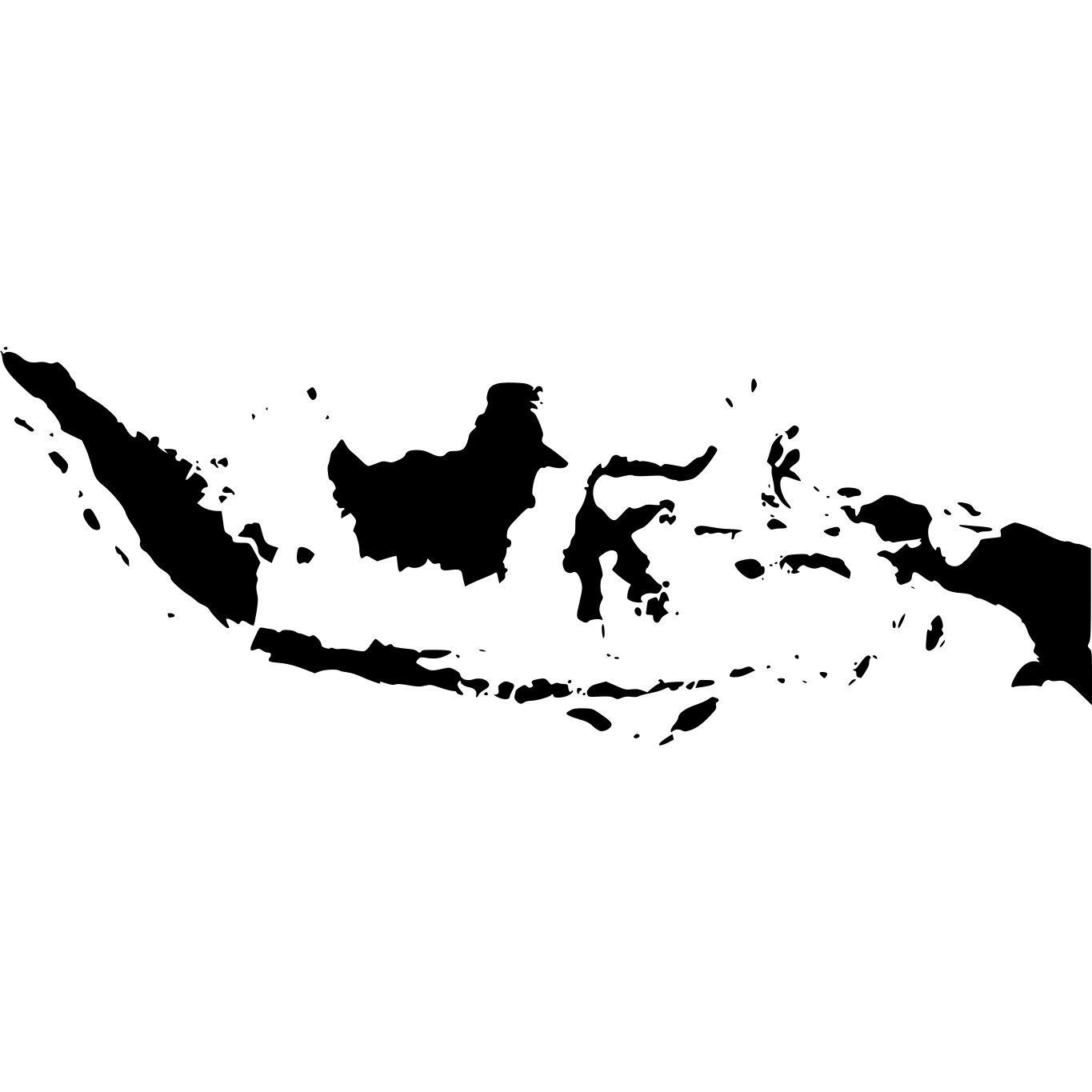
Skin Alchemy is a Indonesian brand

We're dedicated to providing you with the most up-to-date and science-backed ingredient info out there.
The data we've presented on this page has been verified by a member of the SkinSort Team.
Read more about us· Updated May 27, 2026 • Added by kr9


