Biozell Color Tech Shampoo
Shampoo with 21 ingredients
We independently verify ingredients, backed by peer-reviewed research. Suggest an update.
What's inside
Ingredients List
Water
Skin ConditioningSodium Laureth Sulfate
Cleansing



Disodium Cocoamphodiacetate
CleansingGlycerin
Humectant


Butylene Glycol
Humectant
Sodium Chloride
MaskingCocamidopropyl Hydroxysultaine
Cleansing
Lauryl Glucoside
CleansingVaccinium Myrtillus Fruit Extract
Skin ConditioningPolyquaternium-10
Dimethylpabamidopropyl Laurdimonium Tosylate
Ethylhexyl Methoxycinnamate
UV Absorber

PEG-18 Glyceryl Oleate/Cocoate
Emulsifying

Tetrasodium EDTA
ChelatingPhenoxyethanol
Preservative
Potassium Sorbate
Preservative
Sorbic Acid
Preservative
Iodopropynyl Butylcarbamate
Preservative
CI 60730
Cosmetic ColorantCI 16035
Cosmetic ColorantCitric Acid
Buffering

Water, Sodium Laureth Sulfate, Disodium Cocoamphodiacetate, Glycerin, Butylene Glycol, Sodium Chloride, Cocamidopropyl Hydroxysultaine, Lauryl Glucoside, Vaccinium Myrtillus Fruit Extract, Polyquaternium-10, Dimethylpabamidopropyl Laurdimonium Tosylate, Ethylhexyl Methoxycinnamate, PEG-18 Glyceryl Oleate/Cocoate, Tetrasodium EDTA, Phenoxyethanol, Potassium Sorbate, Sorbic Acid, Iodopropynyl Butylcarbamate, CI 60730, CI 16035, Citric Acid
Benefits
Concerns
Ingredients Explained
Water. It's the most common cosmetic ingredient of all. You'll usually see it at the top of ingredient lists, meaning that it makes up the largest part of the product.
So why is it so popular? Water most often acts as a solvent - this means that it helps dissolve other ingredients into the formulation.
You'll also recognize water as that liquid we all need to stay alive. If you see this, drink a glass of water. Remember to stay hydrated!
Learn more about WaterSodium Laureth Sulfate (SLES) is a foaming, cleansing, and emulsifying ingredient. It is created from palm kernel oil or coconut oil. SLES is not the same as sodium lauryl sulfate. It is much milder and less likely to irritate.
SLES helps create foam in personal products. It also prevents ingredients from separating, helping to elongate the shelf life.
Sodium Laureth Sulfate is a type of sulfate. It can be drying. We recommend speaking with a professional about using this ingredient if you have concerns.
Learn more about Sodium Laureth SulfateDisodium Cocoamphodiacetate is a surfactant and helps cleanse skin. It is created from the fatty acids of coconut oil.
Surfactants help rinse oil, dirt, and other pollutants easily from skin. It has a faint fruit-like scent.
Glycerin (or glycerol) is a compound naturally found in your skin. It's a powerhouse humectant that pulls water into the stratum corneum.
Topically, glycerin does several things at once:
Your skin makes glycerin on its own (mostly from sebaceous oil breakdown) and shuttles it to your outermost layer of skin, or your epidermis, via aquaporin-3.
Aquaporin-3 is a transporter that is essential for normal skin hydration, elasticity, and repair. Interestingly, mice lacking in AQP3 have dry and less elastic skin that can be fully corrected with glycerin.
This ingredient is non-irritating, plays well with almost every ingredient, and works across all skin types. Typical use is anywhere between 3-10% but can go up to 79% in some leave-on products.
Just know very high concentrations (>40%) can feel tacky in low humidity.
Glycerin is the name for this ingredient in American English. British English uses Glycerol/Glycerine.
Learn more about GlycerinButylene Glycol (or BG) is used within cosmetic products for a few different reasons:
Overall, Butylene Glycol is a safe and well-rounded ingredient that works well with other ingredients.
Though this ingredient works well with most skin types, some people with sensitive skin may experience a reaction such as allergic rashes, closed comedones, or itchiness.
Learn more about Butylene GlycolChances are, you eat sodium chloride every day. Sodium Chloride is also known as table salt. This ingredient has many purposes in skincare: thickener, emulsifier, and exfoliator.
You'll most likely find this ingredient in cleansers where it is used to create a gel-like texture. As an emulsifier, it also prevents ingredients from separating.
You might see people debate whether Sodium Chloride is comedogenic, but there actually haven't been any comedogenic tests done on it. Either way, the overall formulation of a product matters a lot more than any single ingredient.
You might see this ingredient used in scrubs as a primary exfoliating ingredient.
Learn more about Sodium ChlorideCocamidopropyl Hydroxysultaine is a synthetic cleansing agent, though it is derived from coconut oil.
It is used to enhance the texture of products by boosting lather and thickening the texture. As a cleanser, Cocamidopropyl Hydroxysultaine is mild.
Lauryl Glucoside sugar- and lipid-based cleansing agent. It is created from glucose and lauryl alcohol.
This ingredient is a surfactant, making it easier to rinse oil, dirt, and other pollutants away.
A British study found lauryl glucoside to cause skin sensitivity for some people. We recommend speaking with a professional if you have concerns.
Other names for this ingredient include "Lauryl Polyglucose", "Lauryl glycoside", and "D-Glucopyranoside".
Learn more about Lauryl GlucosideVaccinium Myrtillus Fruit Extract comes from the bilberry plant. This plant is native to Eurasia.
Bilberry contains antioxidant compounds called anthocyanins. Anthocyanins help fight free-radicals. Free-radicals are molecules that may damage your skin cells. Fighting off these molecules can help reduce signs of aging.
Vaccinium Myrtillus Fruit Extract also helps reduce irritation.
Learn more about Vaccinium Myrtillus Fruit ExtractPolyquaternium-10 is an ammonium salt of hydroxyethylcellulose. It is a white and granular powder used as a film-former and anti-static agent.
This ingredient is commonly found in hair conditioning products. According to a manufacturer, its positive charge makes it great for absorbing hair proteins. The manufacturer also states this ingredient helps with curl retention.
For haircare friends: this ingredient is not a silicone.
Learn more about Polyquaternium-10We don't have a description for Dimethylpabamidopropyl Laurdimonium Tosylate yet.
This ingredient is also known as Octinoxate and is one of the oldest and most widely used chemical UV filters in skincare.
It has a simple job: soap up UVB radiation (290-320 nm), the wavelengths responsible for sunburn and a big chunk of long-term sun damage.
In formulas, it's always paired with a separate UVA filter because octinoxate solely protects skin from UVB.
Because it's an oil-soluble liquid, it's easy to blend into the oil phase of lotions/creams and gives a cosmetically elegant feel.
The one quirk about formulating this ingredient is photostability; the molecule slowly changes shape into a less effective version when sunlight hits it. So the longer you're in the sun, the weaker its protection gets. The drop can be more than 30% in some formulas.
It also doesn't play nice with Avobenzone (the common UVA filter) since avobenzone destabilizes octinoxate and the two degrade each other. But don't worry: brands have solved this issue by adding photostabilizers like Tinosorb S to prevent degradation and keep SPF stable under heavy UV exposure.
The maximum allowed level is 10% in the EU and Australia, 7.5% in the US and Canada, and 20% in Japan.
The Cosmetic Ingredient Review Panel has concluded this ingredient to be safe in cosmetics up to 10%.
One last thing worth knowing for context:
Octinoxate has been the subject of ongoing review in Europe where the Scientific Committee on Consumer Safety's (SCCS) 2025 final opinion is that this ingredient is an endocrine-active substance.
Lab and animal studies suggest it can act a bit like a hormone in the body (mildly mimicking estrogen and slightly blocking male hormones). It's important to know this hasn't really been shown to happen in everyday human use.
This ingredient is also banned in Hawaii over coral reef concerns.
Learn more about Ethylhexyl MethoxycinnamatePEG-18 Glyceryl Oleate/Cocoate isn't fungal acne safe. It can be bad for dry skin.
Tetrasodium EDTA is the salt formed from neutralizing ethylenediamine tetraacetic acid with sodium hydroxide. It is a chelating agent and used to prevent metal ions from binding to other ingredients. This helps keep the product and ingredients stable.
Tetrasodium EDTA comes as a white solid and is soluble in water.
Phenoxyethanol is one of the most widely used preservatives in skincare (and for good reason!).
It has a large spectrum of antimicrobial activity and especially effective bacteria, yeast, and mold while only having a weak effect on your skin's natural microbiome.
On a cellular level, it disrupts the cell membranes of microbes by poking holes that make the cell leak. This shuts down the chemical reactions the microbe needs to make energy so it can no longer survive.
Another perk of this ingredient is that it stays functional across a wide pH range (3-10).
You'll often see it paired with boosters like Ethylhexylglycerin; one study showed that a 1:9 ratio of Ethylhexylglycerin to Phenoxyethanol damages bacterial membranes as effectively as doubling the Phenoxyethanol concentration on its own.
Typical use concentrations range from 0.3-1% depending on the formula, and this ingredient is capped at 1% int the EU.
Safety-wise, the fear mongering does not hold up to the evidence. The EU's Scientific Committee on Consumer Safety and FDA consider it safe as a preservative at up to 1%, including for children of all ages.
Adverse systemic effects only showed up in animal studies at exposures roughly 200x higher than what people get from cosmetics. And despite its very widespread use, this ingredient is a rare sensitizer and allergic reactions are uncommon.
Learn more about PhenoxyethanolPotassium Sorbate is a preservative used to prevent yeast and mold in products. It is commonly found in both cosmetic and food products.
This ingredient comes from potassium salt derived from sorbic acid. Sorbic acid is a natural antibiotic and effective against fungus.
Both potassium sorbate and sorbic acid can be found in baked goods, cheeses, dried meats, dried fruit, ice cream, pickles, wine, yogurt, and more.
You'll often find this ingredient used with other preservatives.
Learn more about Potassium SorbateSorbic Acid is a preservative that stops your product from spoiling by stopping microbes from growing.
As a preservative, it's kind of a specialist: it has a broad spectrum of activity against yeast and molds but is weaker against bacteria. That's why it's often paired with another preservative to cover that gap.
This ingredient is also pretty picky about pH; it performs best at pH 6.5 or below.
At the right pH level, sorbic acid is "active" and can slip through the outer wall of a microbe. Once inside, it turns the cell's interior more acidic to shut down the microbe from the inside.
The EU caps this ingredient at 0.6% while the CIR has concluded it's safe at concentrations up to 1%. It's most often used around 0.05-0.2% in cosmetics.
Though this ingredient is considered low-sensitizing and well-tolerated, a very small number of people may have a contact allergy to it. Be sure to patch test if you have a history of allergies towards preservatives.
Learn more about Sorbic AcidIodopropynyl Butylcarbamate (IPBC) is a preservative that is especially good at getting fungi and mold out of your cosmetics.
IPBC works by leveraging the antimicrobial properties of its iodine containing structure. Iodine has been used as a germicide since the late 1800s and IPBC is a more refined and stable derivative of it.
It is typically used at very low levels in cosmetics, with most formulations using 0.0125% or less (well below its approved maximum).
In the EU, IPBC concentration limits are set at 0.02% in rinse-off products and 0.01% in leave-on products.
Though IPBC is a relatively uncommon contact allergen, patch testing studies show positive reaction rates ranging from 0.3%-0.9% of patients tested. This is still quite low compared to preservatives like methylisothiazolinone which sits at around 4-5%.
Researchers note that existing iodine sensitives or rubber allergies may be the cause of this as IPBC shares a structure with both thiuram (used in rubber) and iodine.
Be sure to patch test if you are unsure and speak with a medical professional about using this ingredient.
Learn more about Iodopropynyl ButylcarbamateThis ingredient is a purple dye. It is also known as Violet No. 2 or Acid Violet 43 and is a synthetic dye derived from coal tar.
According to a manufacturer, this dye it known for its intense color saturation and resistance to fading.
Ci 16035 is a synthetic dark-red dye. This dye is created from an acid called Allura red AC, an azo dye.
Azo dyes need to be purified thoroughly before use. This makes them more stable and longer lasting.
This dye is commonly used in foods, approved by both the FDA and EFSA.
Learn more about CI 16035Citric Acid is an alpha hydroxy acid (AHA) naturally found in citrus fruits like oranges, lemons, and limes.
Like other AHAs, citric acid can exfoliate skin by breaking down the bonds that hold dead skin cells together. This helps reveal smoother and brighter skin underneath.
However, this exfoliating effect only happens at high concentrations (20%) which can be hard to find in cosmetic products.
Due to this, citric acid is usually included in small amounts as a pH adjuster. This helps keep products slightly more acidic and compatible with skin's natural pH.
In skincare formulas, citric acid can:
While it can provide some skin benefits, research shows lactic acid and glycolic acid are generally more effective and less irritating exfoliants.
Most citric acid used in skincare today is made by fermenting sugars (usually from molasses). This synthetic version is identical to the natural citrus form but easier to stabilize and use in formulations.
Rosacea skin has a lower threshold for acids generally, with 62.5% of rosacea subjects in one study reacting to lactic acid in a sting test. This is why we mark citric acid as a potential rosacea trigger.
However, this ingredient shows up as a pH adjuster or chelator at roughly 0.1-1% in many products. These low levels are unlikely to be an issue for rosacea skin and becomes a potential trigger at exfoliating concentrations (20%). Because everybody's skin is unique, we recommend a patch test if you are unsure.
Learn more about Citric AcidReviews
No written reviews yet. Be the first to review this product.
Recent searches
Search reviews by skin type, ingredient, or keyword.
Where it's from
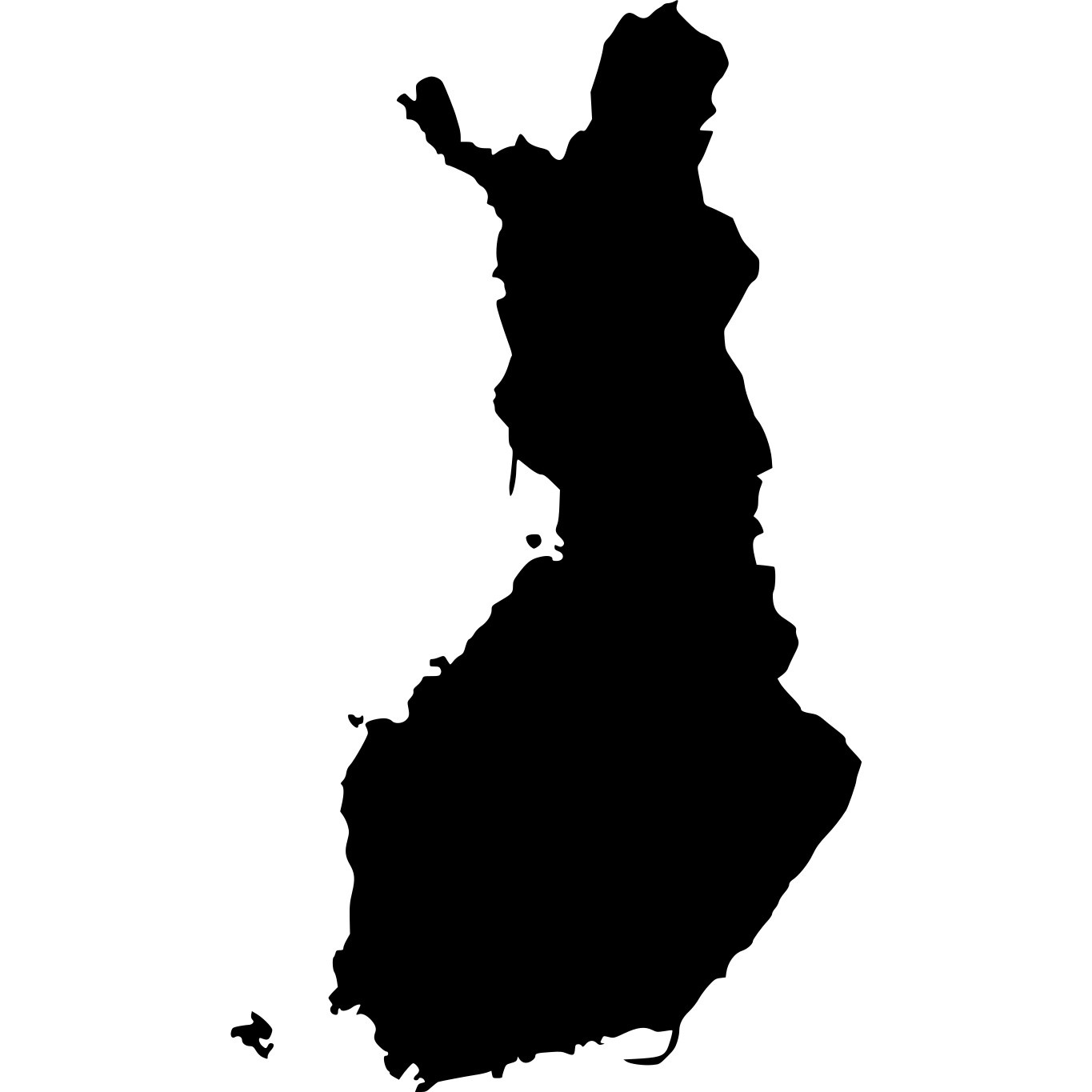
Biozell is a Finnish brand
Often compared with

We're dedicated to providing you with the most up-to-date and science-backed ingredient info out there.
The data we've presented on this page has been verified by a member of the SkinSort Team.
Read more about us· Updated August 19, 2026 • Added by SN23


