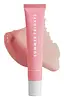
This barrier-repair lip moisturizer is formulated around Butyrospermum Parkii Butter and Sodium Hyaluronate to strengthen the lip barrier and hydrate lips.


What's inside
What's inside
 Key Ingredients
Benefits
Concerns
Ingredients Side-by-side
Phytosteryl/Isostearyl/Cetyl/Stearyl/Behenyl Dimer Dilinoleate
Skin Conditioning

Diisostearyl Malate
EmollientHydrogenated Polyisobutene
EmollientPolybutene
Hydrogenated Poly(C6-14 Olefin)
EmollientButyrospermum Parkii Butter
Skin Conditioning




Cera Microcristallina
Emulsion StabilisingOctyldodecanol
Emollient
Synthetic Wax
Abrasive
Disteardimonium Hectorite
StabilisingAstrocaryum Murumuru Seed Butter
Emollient
Sodium Hyaluronate
Humectant


Tocopherol
Antioxidant



Propylene Carbonate
SolventPolyglyceryl-2 Diisostearate
Emulsifying
Aluminum Hydroxide
EmollientParfum
Masking


Mica
Cosmetic ColorantBHT
Antioxidant
Benzyl Alcohol
Perfuming


Benzyl Benzoate
Antimicrobial
CI 15850
Cosmetic ColorantCI 45410
Cosmetic ColorantCI 77891
Cosmetic ColorantPhytosteryl/Isostearyl/Cetyl/Stearyl/Behenyl Dimer Dilinoleate, Diisostearyl Malate, Hydrogenated Polyisobutene, Polybutene, Hydrogenated Poly(C6-14 Olefin), Butyrospermum Parkii Butter, Cera Microcristallina, Octyldodecanol, Synthetic Wax, Disteardimonium Hectorite, Astrocaryum Murumuru Seed Butter, Sodium Hyaluronate, Tocopherol, Propylene Carbonate, Polyglyceryl-2 Diisostearate, Aluminum Hydroxide, Parfum, Mica, BHT, Benzyl Alcohol, Benzyl Benzoate, CI 15850, CI 45410, CI 77891
Lanolin
Emollient
Lanolin Oil
Emollient
Aroma
Tocopherol
Antioxidant
Calcium Sodium Borosilicate
Ricinus Communis Seed Oil
Masking
Helianthus Annuus Seed Oil
Emollient
Limonene
Perfuming
Benzyl Alcohol
Perfuming
Mica
Cosmetic ColorantPrunus Amygdalus Dulcis Oil
Skin Conditioning
Geraniol
Perfuming
Tin Oxide
Abrasive
CI 15850
Cosmetic ColorantCI 77891
Cosmetic Colorant
Reviews
Ingredients Explained
These ingredients are found in both products.
Ingredients higher up in an ingredient list are typically present in a larger amount.
Benzyl Alcohol is an aromatic alcohol with several roles: it's a preservative, solvent, and mild fragrance component with a floral scent.
This ingredient has been deemed safe for use in cosmetic formulations at concentrations up to 5%, and up to 10% in hair dyes. You'll typically see 0.5-2% in most rinse-off or leave-on products.
As a preservative, it works by disrupting the membrane of microbial proteins. This helps keep bacteria and fungi from growing in your products.
The sensitization picture is actually quite assuring as well:of nearly 71,000 patients patch tested with benzyl alcohol, only 0.21% showed a positive reaction with most of them being weakly positive.
This led researchers to conclude that benzyl alcohol cannot be regarded as a significant contact allergen.
It is worth noting this ingredient is classified as one of the EU's regulated fragrance allergens and restricted to 1% in finished products.
Labels must also declare it in concentrations above 0.001% in leave-on products and 0.01% in rinse-off products.
At concentrations around 5%, localized redness and itching can appear as a direct irritant response and not as a true allergic reaction.
Learn more about Benzyl AlcoholCi 15850 is the pigment color red. It is an azo dye and created synthetically.
Azo dyes need to be thoroughly purified before use. This allows them to be more stable and longer-lasting.
This ingredient is common in foundations, lipsticks, and blushes. This color is described as brown/orangey red.
It has many secondary names such as Red 6 and Red 7. According to a manufacturer, Red 6 usually contains aluminum.
Learn more about CI 15850Ci 77891 is a white pigment from Titanium dioxide. It is naturally found in minerals such as rutile and ilmenite.
It's main function is to add a white color to cosmetics. It can also be mixed with other colors to create different shades.
Ci 77891 is commonly found in sunscreens due to its ability to block UV rays.
Learn more about CI 77891Mica is a naturally occurring mineral used to add shimmer and color in cosmetics. It can also help improve the texture of a product or give it an opaque, white/silver color.
Serecite is the name for very fine but ragged grains of mica.
This ingredient is often coated with metal oxides like titanium dioxide. Trace amounts of heavy metals may be found in mica, but these metals are not harmful in our personal products.
Mica has been used since prehistoric times throughout the world. Ancient Egyptian, Indian, Greek, Roman, Aztec, and Chinese civilizations have used mica.
Learn more about MicaTocopherol is a fat-soluble antioxidant known as Vitamin E.
You'll find this ingredient in the vast majority of skincare (for good reason). It works to neutralize free radicals, or unstable molecules generated by UV exposure, pollution, and other environmental stressors, before they can cause oxidative damage to your skin cells.
Topically applied tocopherol has been shown to protect against UV damage by ramping up the skin's own natural defense enzymes.
It also acts as a skin conditioning agent; some studies show that regular topical use can improve the skin's water-binding capacity over 2-4 weeks.
This ingredient is especially loved for being a team player. When combined with Vitamin C, the photoprotective effect of both ingredients roughly doubles and the combo also helps reduce UV-induced DNA damage.
This ingredient has some brightening potential but it's more of a prevention ingredient than spot-fader. Cell studies show it can slow down melanin production but it's worth noting that it's not the most powerful brightener out there.
In formulations, it also serves as a stabilizer that helps protect other oxidation-prone ingredients from degrading.
Concentrations usually range from 0.1-1% in most leave-on products.
Learn more about Tocopherol

