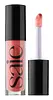
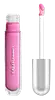
Saie Glossybounce High-Shine Hydrating Lip Gloss Oil Versus r.e.m. beauty Essential Drip Glossy Balm

What's inside
What's inside
 Key Ingredients
Benefits
Concerns
Ingredients Side-by-side
Ricinus Communis Seed Oil
Masking




Oleic/Linoleic/Linolenic Polyglycerides
Emollient
Copernicia Cerifera Wax
Simmondsia Chinensis Seed Oil
Emollient

Polyhydroxystearic Acid
Emulsifying
Silica
Abrasive


Sodium Hyaluronate
Humectant


Butyrospermum Parkii Butter
Skin Conditioning


Cocos Nucifera Oil
Masking
Hydrogenated Castor Oil
Emollient
Water
Skin ConditioningStevia Rebaudiana Leaf/Stem Extract
MaskingCitric Acid
Buffering

Caprylyl Glycol
Emollient
Sorbitan Oleate
Emulsifying
CI 77891
Cosmetic ColorantCI 77491
Cosmetic ColorantCI 77492
Cosmetic ColorantCI 77499
Cosmetic ColorantCI 17200
Cosmetic ColorantCI 15850
Cosmetic ColorantCI 15985
Cosmetic ColorantRicinus Communis Seed Oil, Oleic/Linoleic/Linolenic Polyglycerides, Copernicia Cerifera Wax, Simmondsia Chinensis Seed Oil, Polyhydroxystearic Acid, Silica, Sodium Hyaluronate, Butyrospermum Parkii Butter, Cocos Nucifera Oil, Hydrogenated Castor Oil, Water, Stevia Rebaudiana Leaf/Stem Extract, Citric Acid, Caprylyl Glycol, Sorbitan Oleate, CI 77891, CI 77491, CI 77492, CI 77499, CI 17200, CI 15850, CI 15985
Polybutene
Diisostearyl Malate
EmollientSilica Dimethyl Silylate
EmollientPassiflora Edulis Seed Oil
Emollient
Ethyl Vanillin
MaskingOctyldodecyl Stearoyl Stearate
Emollient
Pentaerythrityl Tetraisostearate
Emollient
Simmondsia Chinensis Seed Oil
Emollient
Ricinus Communis Seed Oil
Masking
Tocopheryl Acetate
Antioxidant

Benzotriazolyl Dodecyl P-Cresol
UV AbsorberSodium Hyaluronate
Humectant
Punica Granatum Flower Extract
Skin Conditioning
Hydrogenated Castor Oil
Emollient
Titanium Dioxide
Cosmetic Colorant

CI 45410
Cosmetic ColorantCI 42090
Cosmetic ColorantPolybutene, Diisostearyl Malate, Silica Dimethyl Silylate, Passiflora Edulis Seed Oil, Ethyl Vanillin, Octyldodecyl Stearoyl Stearate, Pentaerythrityl Tetraisostearate, Simmondsia Chinensis Seed Oil, Ricinus Communis Seed Oil, Tocopheryl Acetate, Benzotriazolyl Dodecyl P-Cresol, Sodium Hyaluronate, Punica Granatum Flower Extract, Hydrogenated Castor Oil, Titanium Dioxide, CI 45410, CI 42090
Reviews
Ingredients Explained
These ingredients are found in both products.
Ingredients higher up in an ingredient list are typically present in a larger amount.
Hydrogenated Castor Oil (aka "castor wax") is what you get when castor oil is turned into a wax.
Its dominant fatty acid is ricinoleic acid, giving it both emollient and mild humectant properties.
According to EU CosIng, this ingredient helps soften skin, keep oil and water stay mixed, and thickens products.
Hydrogenated castor oil at 30% did not trigger a positive patch-test reaction and is well-tolerated.
Since this ingredient is based on an 18-carbon fatty acid, it falls into the chain-length range that Malassezia can feed on and may not be fungal acne safe.
Learn more about Hydrogenated Castor OilThis ingredient is also known as castor oil. It is a skin conditioning ingredient.
The star component of castor oil is ricinoleic acid, an unusual fatty acid that makes up ~80-92% of its composition.
In skincare, it is an emollient that dries down to a solid film with water-binding properties. This helps keep skin hydrated and helps reduce transepidermal water loss (TEWL).
A 2026 dermatology review pulls together its broader uses:
Human clinical testing found this ingredient to be non-irritating and non-sensitizing.
Because castor oil contains fatty acids in the C11-24 range, this ingredient may not be fungal acne safe.
At this time, the literature does not support castor oil in regrowing hair. A 2022 systematic review found no strong evidence that it supports hair growth and only weak evidence that it improves hair shine.
Castor oil itself carries "perfuming" and "masking" function tags according to the official CosIng database. This is because of its mild odor and odor-dampening properties.
Learn more about Ricinus Communis Seed OilJojoba oil is one of the most well-studied plant-derived ingredients in cosmetics. It is an emollient with a special structure.
Because it is made up of 97-98% wax esters, it closely mirrors the linear monoesters found in human sebum. This makes it skin compatible, non-greasy, and lightweight.
Unlike other plant oils, jojoba wax doesn't easily penetrate skin. It mostly works in the uppermost layers as an emollient. This just means it forms a light barrier on the skin to help retain moisture.
Formulations with jojoba esters up to 90% reduced transepidermal water loss (TEWL) and increased barrier recovery by 81% (outperforming bisabolol at 47%).
Besides barrier support, the science also suggests jojoba to have anti-inflammatory effects and potential applications for skin infections, aging, and wound healing.
Fun fact: Indigenous cultures have used jojoba as a moisturizer and to help treat burns for centuries.
Fungal acne: The Malassezia yeast is known to metabolize fatty acids in the C11-24 range and jojoba's dominant fatty acid components fall into this range. This ingredient may not be fungal acne safe.
Learn more about Simmondsia Chinensis Seed OilSodium Hyaluronate is the salt form of hyaluronic acid. It is a long sugar chain that is naturally found in your skin, joints, and connective tissue that maintains hydration and elasticity.
In skincare, it works as a humectant. It pulls water from the environment and deeper layers of skin and binds it to the surface.
Interestingly, the size of the molecule affects its behavior:
Some clinical evidence links low molecular weight versions to improved wrinkle depth, elasticity, anti-inflammatory effects, and barrier repair.
Many serums use a blend of both weights so you can get surface hydration plus longer-lasting and deeper effects.
You'll typically see concentrations between 0.1-2% for this ingredient.
Learn more about Sodium Hyaluronate

