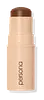
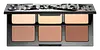
Persona Dreamstick Cream Bronzer Versus KVD Vegan Beauty Shade + Light Refillable Powder Face Contour Palette

What's inside
What's inside
 Key Ingredients
Benefits
Concerns
Ingredients Side-by-side
Octyldodecanol
Emollient
Polyethylene
Abrasive

Hydrogenated Polyisobutene
EmollientKaolin
Abrasive


Nylon-12

Paraffin
Skin Conditioning
Phenoxyethanol
Preservative
Ethylhexylglycerin
Skin ConditioningTocopheryl Acetate
Antioxidant


Carthamus Tinctorius Seed Oil
Masking



Camellia Sinensis Leaf Extract
Antimicrobial


Camellia Oleifera Leaf Extract
AstringentCI 77891
Cosmetic ColorantIron Oxides
Mica
Cosmetic ColorantZinc Stearate
Cosmetic ColorantDimethicone
Emollient

Ethylhexyl Palmitate
Emollient

Silica
Abrasive
Squalane
Emollient
Polyethylene
Abrasive
Lauroyl Lysine
Skin Conditioning
Glyceryl Caprylate
EmollientSodium Dehydroacetate
Preservative
Potassium Sorbate
Preservative
Tocopheryl Acetate
Antioxidant
Carthamus Tinctorius Seed Oil
Masking
Rosa Canina Flower Extract
AstringentCI 77891
Cosmetic ColorantCI 19140
Cosmetic ColorantCI 77491
Cosmetic ColorantCI 77492
Cosmetic ColorantCI 77499
Cosmetic ColorantWater
Skin ConditioningSodium Sulfate
CI 77007
Cosmetic ColorantCI 77742
Cosmetic ColorantMica, Zinc Stearate, Dimethicone, Ethylhexyl Palmitate, Silica, Squalane, Polyethylene, Lauroyl Lysine, Glyceryl Caprylate, Sodium Dehydroacetate, Potassium Sorbate, Tocopheryl Acetate, Carthamus Tinctorius Seed Oil, Rosa Canina Flower Extract, CI 77891, CI 19140, CI 77491, CI 77492, CI 77499, Water, Sodium Sulfate, CI 77007, CI 77742
Reviews
Alternatives
Ingredients Explained
These ingredients are found in both products.
Ingredients higher up in an ingredient list are typically present in a larger amount.
Carthamus Tinctorius Seed Oil comes from the seeds of the safflower plant. It is a skin conditioning agent that helps soften skin and keep it hydrated.
This seed oil has an unusual fatty acid profile: it is one of the highest linoleic acid plant oils out there (~55-77%). It also has low amounts of oleic acid, and this high-linoleic/low-oleic ratio gets people excited.
Linoleic acid helps maintain skin barrier integrity and is a building block for the ceramides in your stratum corneum. Notably, people with acne tend to have lower linoleic acid in their skin lipids as well (and this gets worse as acne gets more severe).
Overall, it's a lightweight, fast-absorbing oil that has a long safety track record. Lab testing has found it to be non-irritating for skin or eyes.
The Malassezia yeast can metabolize the fatty acids in this oil to grow; therefore this ingredient may not be fungal acne safe.
Learn more about Carthamus Tinctorius Seed OilCi 77891 is a white pigment from Titanium dioxide. It is naturally found in minerals such as rutile and ilmenite.
It's main function is to add a white color to cosmetics. It can also be mixed with other colors to create different shades.
Ci 77891 is commonly found in sunscreens due to its ability to block UV rays.
Learn more about CI 77891Polyethylene is a synthetic ingredient that helps the skin retain moisture. It is a polymer.
It is also typically used within product formulations to help bind solid ingredients together and thicken oil-based ingredients. When added to balms and emulsions, it helps increase the melting point temperature.
Tocopheryl Acetate is a stable, shelf-friendly form of vitamin E.
Formulators love it because plain vitamin E oxidizes quickly once it hits air. This acetate version stays stable and resists going off, helping to extend a product's shelf life.
It's actually inactive on its own and works like a slow-release "storage" form; the enzymes in your skin called esterases gradually convert it into active vitamin E over time.
One in vivo study showed 5% of the acetate in the living layer of the epidermis converted to vitamin E after 5 days of application. This study also found the skin gained protection against UV damage even though the conversion was slow and small.
Once converted, vitamin E acts as a skin's main fat-soluble antioxidant that fights free radicals to protect skin from damage.
Topical vitamin E generally boosts the skin's photoprotection, and it reduced UV-damage in animal models.
This ingredient has some brightening potential but it's more of a prevention ingredient than spot-fader. Cell studies show it can slow down melanin production but it's worth noting that it's not the most powerful brightener out there.
Overall, it has a pretty solid safety profile and has been found to be non-irritating and non-comedogenic. Allergic reactions may happen but stay rare due to how widely the ingredient gets used.
The concentration will vary depending on the formula; industry data shows 0.1% in baby lotions, 3% in lipsticks, and 5% in foot powders. You can also find this ingredient at 100% in a pure vitamin E oil.
Most leave-on skincare keeps it at the lower end, often between 0.5-1%.
Learn more about Tocopheryl Acetate

