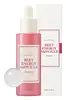
This calming ampoule is formulated around Centella Asiatica Extract and Beta-Glucan to calm redness and strengthen the skin barrier.
This barrier-repair ampoule is formulated around Squalane and Niacinamide to strengthen the skin barrier and hydrate skin.

What's inside
What's inside
 Key Ingredients
Benefits
Ingredients Side-by-side
Solanum Melongena Fruit Extract
Skin ConditioningWater
Skin ConditioningPropanediol
Solvent

Glycerin
Humectant
Hydroxyethyl Urea
Humectant
1,2-Hexanediol
Skin Conditioning
Carbomer
Emulsion StabilisingBetaine
Humectant
C12-14 Pareth-12
EmulsifyingTromethamine
BufferingDimethyl Sulfone
SolventCellulose Gum
Emulsion StabilisingEthylhexylglycerin
Skin ConditioningBetula Alba Juice
AstringentCalendula Officinalis Flower Extract
Masking

Centella Asiatica Extract
Cleansing

Houttuynia Cordata Extract
Skin Conditioning
Salvia Hispanica Seed Extract
Emollient
Beta-Glucan
Skin Conditioning
Trehalose
Humectant
Lupeol
Skin ConditioningAcanthopanax Sessiliflorus Bark/Root/Stem Extract
Skin ConditioningHydroxycinnamic Acid
Skin ConditioningRutin
Antioxidant
Disodium EDTA
ChelatingSolanum Melongena Fruit Extract, Water, Propanediol, Glycerin, Hydroxyethyl Urea, 1,2-Hexanediol, Carbomer, Betaine, C12-14 Pareth-12, Tromethamine, Dimethyl Sulfone, Cellulose Gum, Ethylhexylglycerin, Betula Alba Juice, Calendula Officinalis Flower Extract, Centella Asiatica Extract, Houttuynia Cordata Extract, Salvia Hispanica Seed Extract, Beta-Glucan, Trehalose, Lupeol, Acanthopanax Sessiliflorus Bark/Root/Stem Extract, Hydroxycinnamic Acid, Rutin, Disodium EDTA






Reviews
Ingredients Explained
These ingredients are found in both products.
Ingredients higher up in an ingredient list are typically present in a larger amount.
1,2-Hexanediol is a synthetic liquid and another multi-functional powerhouse.
It is a:
- Humectant, drawing moisture into the skin
- Emollient, helping to soften skin
- Solvent, dispersing and stabilizing formulas
- Preservative booster, enhancing the antimicrobial activity of other preservatives
Glycerin (or glycerol) is a compound naturally found in your skin. It's a powerhouse humectant that pulls water into the stratum corneum.
Topically, glycerin does several things at once:
Your skin makes glycerin on its own (mostly from sebaceous oil breakdown) and shuttles it to your outermost layer of skin, or your epidermis, via aquaporin-3.
Aquaporin-3 is a transporter that is essential for normal skin hydration, elasticity, and repair. Interestingly, mice lacking in AQP3 have dry and less elastic skin that can be fully corrected with glycerin.
This ingredient is non-irritating, plays well with almost every ingredient, and works across all skin types. Typical use is anywhere between 3-10% but can go up to 79% in some leave-on products.
Just know very high concentrations (>40%) can feel tacky in low humidity.
Glycerin is the name for this ingredient in American English. British English uses Glycerol/Glycerine.
Learn more about GlycerinPropanediol is an all-star ingredient. It softens, hydrates, and smooths the skin.
It’s often used to:
Propanediol is not likely to cause sensitivity and considered safe to use. It is derived from corn or petroleum with a clear color and no scent.
Learn more about PropanediolTromethamine (aka THAM) is a synthetic amino acid that shows up in skincare as a helper ingredient.
It functions as a pH adjuster to help neutralize acidic ingredients and set a formula's pH to the right spot.
This matters a lot because a lot of actives (like vitamin C) needs a specific pH to work well and feel comfortable on skin.
Concentration use ranges from 0.1-1.0% depending on the formula.
Learn more about Tromethamine

