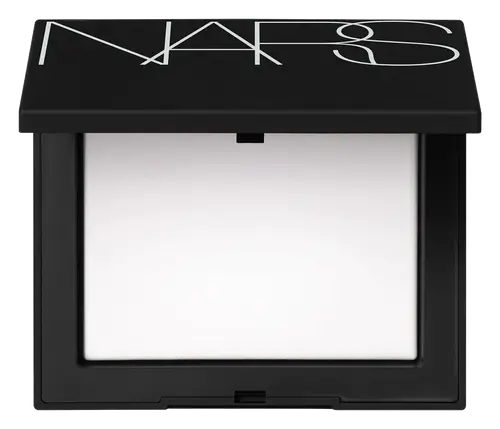
NARS Cosmetics Light Reflecting Pressed Setting Powder Versus Dior Forever Nude Radiant Filter Blurring Setting Powder

What's inside
What's inside
 Key Ingredients
Benefits
Concerns
Ingredients Side-by-side
Synthetic Fluorphlogopite
Silica
Abrasive


Cetearyl Ethylhexanoate
Emollient

Glycerin
Humectant


Squalane
Emollient
Octyldodecyl Stearoyl Stearate
Emollient
Polysorbate 80
Emulsifying
Caprylyl Glycol
Emollient
Ethylhexylglycerin
Skin ConditioningChondrus Crispus Extract
Skin Conditioning
Xanthan Gum
Emulsifying1,2-Hexanediol
Skin Conditioning
Pentaerythrityl Tetra-Di-T-Butyl Hydroxyhydrocinnamate
Antioxidant
Maris Aqua
HumectantAscophyllum Nodosum Extract
Skin Conditioning

Magnesium Silicate
AbsorbentTocopheryl Acetate
Antioxidant

Phenoxyethanol
Preservative
Potassium Sorbate
Preservative
Tin Oxide
Abrasive
Mica
Cosmetic ColorantCI 77891
Cosmetic ColorantCI 77491
Cosmetic ColorantCI 77492
Cosmetic ColorantCI 77499
Cosmetic ColorantSynthetic Fluorphlogopite, Silica, Cetearyl Ethylhexanoate, Glycerin, Squalane, Octyldodecyl Stearoyl Stearate, Polysorbate 80, Caprylyl Glycol, Ethylhexylglycerin, Chondrus Crispus Extract, Xanthan Gum, 1,2-Hexanediol, Pentaerythrityl Tetra-Di-T-Butyl Hydroxyhydrocinnamate, Maris Aqua, Ascophyllum Nodosum Extract, Magnesium Silicate, Tocopheryl Acetate, Phenoxyethanol, Potassium Sorbate, Tin Oxide, Mica, CI 77891, CI 77491, CI 77492, CI 77499
Synthetic Fluorphlogopite
Silica
Abrasive
Cetearyl Ethylhexanoate
Emollient
Polysorbate 20
Emulsifying
Sorbitan Isostearate
Emulsifying
Polysorbate 60
Emulsifying
Caprylyl Glycol
Emollient
Ethylhexylglycerin
Skin ConditioningIris Florentina Root Extract
MaskingGlycerin
Humectant
Parfum
Masking


Gellan Gum
1,2-Hexanediol
Skin Conditioning
Calcium Chloride
AstringentWater
Skin ConditioningLinalyl Acetate
Masking
Sodium Citrate
BufferingXanthan Gum
EmulsifyingHyaluronic Acid
Humectant
Tocopherol
Antioxidant
Sodium Benzoate
Masking
Potassium Sorbate
Preservative
Synthetic Fluorphlogopite, Silica, Cetearyl Ethylhexanoate, Polysorbate 20, Sorbitan Isostearate, Polysorbate 60, Caprylyl Glycol, Ethylhexylglycerin, Iris Florentina Root Extract, Glycerin, Parfum, Gellan Gum, 1,2-Hexanediol, Calcium Chloride, Water, Linalyl Acetate, Sodium Citrate, Xanthan Gum, Hyaluronic Acid, Tocopherol, Sodium Benzoate, Potassium Sorbate
Reviews
Ingredients Explained
These ingredients are found in both products.
Ingredients higher up in an ingredient list are typically present in a larger amount.
1,2-Hexanediol is a synthetic liquid and another multi-functional powerhouse.
It is a:
- Humectant, drawing moisture into the skin
- Emollient, helping to soften skin
- Solvent, dispersing and stabilizing formulas
- Preservative booster, enhancing the antimicrobial activity of other preservatives
Caprylyl Glycol is a humectant, skin conditioner, emollient, and preservative booster derived from either caprylic acid or synthetically created.
Typical use levels vary from 0.3-1% as a preservative booster and go up to 2% to condition skin.
Because it is not a free-fatty acid, this ingredient is fungal acne safe (there's nothing for Malassezia to feed on).
Learn more about Caprylyl GlycolCetearyl Ethylhexanoate is derived from cetearyl alcohol and sorbic acid.
It is an emollient and helps hydrate the skin. Emollients form a barrier on the skin to prevent water from escaping.
Ethylhexylglycerin is created from glycerin. It is a multitasker ingredient that:
The CIR Expert Panel found minimal skin absorption or sensitization of any kind in a safety assessment. Though this ingredient is considered well-tolerated, a small number of cases of allergic dermatitis have been published since 2002. Just be sure to patch test if you are unsure.
Industry-reported use ranges from 8% in rinse-off products and 2% in leave-on formulations.
Learn more about EthylhexylglycerinGlycerin (or glycerol) is a compound naturally found in your skin. It's a powerhouse humectant that pulls water into the stratum corneum.
Topically, glycerin does several things at once:
Your skin makes glycerin on its own (mostly from sebaceous oil breakdown) and shuttles it to your outermost layer of skin, or your epidermis, via aquaporin-3.
Aquaporin-3 is a transporter that is essential for normal skin hydration, elasticity, and repair. Interestingly, mice lacking in AQP3 have dry and less elastic skin that can be fully corrected with glycerin.
This ingredient is non-irritating, plays well with almost every ingredient, and works across all skin types. Typical use is anywhere between 3-10% but can go up to 79% in some leave-on products.
Just know very high concentrations (>40%) can feel tacky in low humidity.
Glycerin is the name for this ingredient in American English. British English uses Glycerol/Glycerine.
Learn more about GlycerinPotassium Sorbate is a preservative used to prevent yeast and mold in products. It is commonly found in both cosmetic and food products.
This ingredient comes from potassium salt derived from sorbic acid. Sorbic acid is a natural antibiotic and effective against fungus.
Both potassium sorbate and sorbic acid can be found in baked goods, cheeses, dried meats, dried fruit, ice cream, pickles, wine, yogurt, and more.
You'll often find this ingredient used with other preservatives.
Learn more about Potassium SorbateSilica, also known as silicon dioxide, is a naturally occurring mineral. It is used as a fine, spherical, and porous powder in cosmetics.
Though it has exfoliant properties, the function of silica varies depending on the product.
The unique structure of silica enhances the spreadability and adds smoothness, making it a great texture enhancer.
It is also used as an active carrier, emulsifier, and mattifier due to its ability to absorb excess oil.
In some products, tiny microneedles called spicules are made from silica or hydrolyzed sponge. When you rub them in, they lightly polish away dead skin layers and enhance the penetration of active ingredients.
Learn more about SilicaSynthetic Fluorphlogopite is the synthethic version of mica. It consists of fluorine, aluminum and silicate.
Synthetic Fluorphlogopite is used to add volume to products.
It is considered non-irritating on the skin.
Learn more about Synthetic FluorphlogopiteXanthan gum is used as a stabilizer and thickener within cosmetic products. It helps give products a sticky, thick feeling - preventing them from being too runny.
On the technical side of things, xanthan gum is a polysaccharide - a combination consisting of multiple sugar molecules bonded together.
Xanthan gum is a pretty common and great ingredient. It is a natural, non-toxic, non-irritating ingredient that is also commonly used in food products.
Learn more about Xanthan Gum

