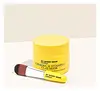
This wash off mask is made with Kaolin for a rinse-off oil-control boost.
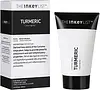
This calming moisturizer is formulated around Squalane and Avena Sativa Kernel Oil to calm redness and hydrate skin.


What's inside
What's inside
 Key Ingredients
Benefits
Concerns
Ingredients Side-by-side
Aloe Barbadensis Leaf Juice
Skin Conditioning


Kaolin
Abrasive



Ricinus Communis Seed Oil
Masking



Betaine
Humectant
Cetearyl Alcohol
Emollient




Macadamia Integrifolia Seed Oil
Skin Conditioning
Xanthan Gum
EmulsifyingCurcuma Longa Root Powder
Skin ConditioningCannabis Sativa Seed Oil
Emollient
Saccharide Isomerate
Humectant
Citrus Sinensis Peel Oil Expressed
Perfuming

Citrus Limon Peel Oil
Masking

Glyceryl Caprylate
EmollientTocopheryl Acetate
Antioxidant


Prunus Davidiana Extract
Antioxidant
Terminalia Ferdinandiana Fruit Extract
Antioxidant
Camellia Sinensis Leaf Extract
Antimicrobial
Vitis Vinifera Fruit Extract
Skin ConditioningCitric Acid
Buffering
Sodium Citrate
BufferingP-Anisic Acid
MaskingBenzoic Acid
Masking
Aloe Barbadensis Leaf Juice, Kaolin, Ricinus Communis Seed Oil, Betaine, Cetearyl Alcohol, Macadamia Integrifolia Seed Oil, Xanthan Gum, Curcuma Longa Root Powder, Cannabis Sativa Seed Oil, Saccharide Isomerate, Citrus Sinensis Peel Oil Expressed, Citrus Limon Peel Oil, Glyceryl Caprylate, Tocopheryl Acetate, Prunus Davidiana Extract, Terminalia Ferdinandiana Fruit Extract, Camellia Sinensis Leaf Extract, Vitis Vinifera Fruit Extract, Citric Acid, Sodium Citrate, P-Anisic Acid, Benzoic Acid
Water
Skin ConditioningSqualane
Emollient
Cocos Nucifera Oil
Masking
C12-16 Alcohols
EmollientAvena Sativa Kernel Flour
Abrasive
Curcuma Longa Root Extract
Antioxidant
Avena Sativa Kernel Oil
Skin Conditioning
Palmitic Acid
Emollient
Tocopheryl Acetate
Antioxidant
Phenoxyethanol
Preservative
Lecithin
Emollient
Glycerin
Humectant
Xanthan Gum
EmulsifyingSodium Levulinate
Skin ConditioningSodium Anisate
AntimicrobialEthylhexylglycerin
Skin ConditioningSodium Stearoyl Glutamate
CleansingTrisodium Ethylenediamine Disuccinate
ChelatingTocopherol
Antioxidant
Water, Squalane, Cocos Nucifera Oil, C12-16 Alcohols, Avena Sativa Kernel Flour, Curcuma Longa Root Extract, Avena Sativa Kernel Oil, Palmitic Acid, Tocopheryl Acetate, Phenoxyethanol, Lecithin, Glycerin, Xanthan Gum, Sodium Levulinate, Sodium Anisate, Ethylhexylglycerin, Sodium Stearoyl Glutamate, Trisodium Ethylenediamine Disuccinate, Tocopherol
Reviews
Ingredients Explained
These ingredients are found in both products.
Ingredients higher up in an ingredient list are typically present in a larger amount.
Tocopheryl Acetate is a stable, shelf-friendly form of vitamin E.
Formulators love it because plain vitamin E oxidizes quickly once it hits air. This acetate version stays stable and resists going off, helping to extend a product's shelf life.
It's actually inactive on its own and works like a slow-release "storage" form; the enzymes in your skin called esterases gradually convert it into active vitamin E over time.
One in vivo study showed 5% of the acetate in the living layer of the epidermis converted to vitamin E after 5 days of application. This study also found the skin gained protection against UV damage even though the conversion was slow and small.
Once converted, vitamin E acts as a skin's main fat-soluble antioxidant that fights free radicals to protect skin from damage.
Topical vitamin E generally boosts the skin's photoprotection, and it reduced UV-damage in animal models.
This ingredient has some brightening potential but it's more of a prevention ingredient than spot-fader. Cell studies show it can slow down melanin production but it's worth noting that it's not the most powerful brightener out there.
Overall, it has a pretty solid safety profile and has been found to be non-irritating and non-comedogenic. Allergic reactions may happen but stay rare due to how widely the ingredient gets used.
The concentration will vary depending on the formula; industry data shows 0.1% in baby lotions, 3% in lipsticks, and 5% in foot powders. You can also find this ingredient at 100% in a pure vitamin E oil.
Most leave-on skincare keeps it at the lower end, often between 0.5-1%.
Learn more about Tocopheryl AcetateXanthan gum is used as a stabilizer and thickener within cosmetic products. It helps give products a sticky, thick feeling - preventing them from being too runny.
On the technical side of things, xanthan gum is a polysaccharide - a combination consisting of multiple sugar molecules bonded together.
Xanthan gum is a pretty common and great ingredient. It is a natural, non-toxic, non-irritating ingredient that is also commonly used in food products.
Learn more about Xanthan Gum

