Mizon Snail Repair Intensive Gold Eye Gel Patch Versus Revolution Beauty Skincare Gold Eye Hydrogel Hydrating Eye Patches
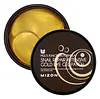
This anti-aging eye mask is formulated around Niacinamide and Snail Secretion Filtrate to soften the look of wrinkles and strengthen the skin barrier.
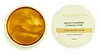
This hydrating eye mask is formulated around Chondrus Crispus Extract and Sodium Hyaluronate to hydrate skin and calm redness.


What's inside
What's inside
 Key Ingredients
Benefits
Concerns
Ingredients Side-by-side
Water
Skin ConditioningGlycerin
Humectant


Calcium Chloride
AstringentCeratonia Siliqua Gum
EmollientXanthan Gum
EmulsifyingNiacinamide
Smoothing









Dipropylene Glycol
HumectantMethylpropanediol
SolventSnail Secretion Filtrate
Skin Conditioning
1,2-Hexanediol
Skin Conditioning
Pentylene Glycol
Skin Conditioning
Citrus Grandis Seed Extract
Astringent
Bambusa Textilis Stem Extract
Skin ConditioningPinus Palustris Leaf Extract
TonicChondrus Crispus Powder
Abrasive


Hydrolyzed Collagen
Emollient
PEG-60 Hydrogenated Castor Oil
Emulsifying


Ethylhexylglycerin
Skin ConditioningPhellinus Linteus Extract
Skin ConditioningInonotus Obliquus Extract
Skin ConditioningGold
Cosmetic ColorantAdenosine
Skin Conditioning
Octapeptide-7
Skin Protecting
Sh-Octapeptide-4
Antioxidant
Sh-Oligopeptide-4
Skin Conditioning
Sh-Decapeptide-7
Antioxidant
Sh-Decapeptide-9
Skin Conditioning
Sh-Pentapeptide-19
Skin Conditioning
Caffeoyl Tripeptide-1
Antioxidant
Hydroxyethylcellulose
Emulsion StabilisingSynthetic Fluorphlogopite
Tin Oxide
Abrasive
Titanium Dioxide
Cosmetic Colorant

CI 77491
Cosmetic ColorantPhenoxyethanol
Preservative
Disodium EDTA
ChelatingParfum
Masking

Water, Glycerin, Calcium Chloride, Ceratonia Siliqua Gum, Xanthan Gum, Niacinamide, Dipropylene Glycol, Methylpropanediol, Snail Secretion Filtrate, 1,2-Hexanediol, Pentylene Glycol, Citrus Grandis Seed Extract, Bambusa Textilis Stem Extract, Pinus Palustris Leaf Extract, Chondrus Crispus Powder, Hydrolyzed Collagen, PEG-60 Hydrogenated Castor Oil, Ethylhexylglycerin, Phellinus Linteus Extract, Inonotus Obliquus Extract, Gold, Adenosine, Octapeptide-7, Sh-Octapeptide-4, Sh-Oligopeptide-4, Sh-Decapeptide-7, Sh-Decapeptide-9, Sh-Pentapeptide-19, Caffeoyl Tripeptide-1, Hydroxyethylcellulose, Synthetic Fluorphlogopite, Tin Oxide, Titanium Dioxide, CI 77491, Phenoxyethanol, Disodium EDTA, Parfum
Water
Skin ConditioningGlycerin
Humectant
Methylpropanediol
SolventChondrus Crispus Extract
Skin Conditioning
Sodium Hyaluronate
Humectant
Soluble Collagen
Humectant
Colloidal Gold
AntimicrobialAllantoin
Skin Conditioning
Potassium Chloride
Ceratonia Siliqua Gum
EmollientSucrose
Humectant
Xanthan Gum
EmulsifyingCellulose Gum
Emulsion StabilisingSynthetic Fluorphlogopite
Tin Oxide
Abrasive
PEG-60 Hydrogenated Castor Oil
Emulsifying
Disodium EDTA
ChelatingHydroxyacetophenone
Antioxidant
1,2-Hexanediol
Skin Conditioning
Glyceryl Caprylate
EmollientCI 77891
Cosmetic ColorantCI 77491
Cosmetic ColorantWater, Glycerin, Methylpropanediol, Chondrus Crispus Extract, Sodium Hyaluronate, Soluble Collagen, Colloidal Gold, Allantoin, Potassium Chloride, Ceratonia Siliqua Gum, Sucrose, Xanthan Gum, Cellulose Gum, Synthetic Fluorphlogopite, Tin Oxide, PEG-60 Hydrogenated Castor Oil, Disodium EDTA, Hydroxyacetophenone, 1,2-Hexanediol, Glyceryl Caprylate, CI 77891, CI 77491
Reviews
Ingredients Explained
These ingredients are found in both products.
Ingredients higher up in an ingredient list are typically present in a larger amount.
1,2-Hexanediol is a synthetic liquid and another multi-functional powerhouse.
It is a:
- Humectant, drawing moisture into the skin
- Emollient, helping to soften skin
- Solvent, dispersing and stabilizing formulas
- Preservative booster, enhancing the antimicrobial activity of other preservatives
Ceratonia Siliqua Gum is extracted from the seeds of the carob tree. You might know this ingredient as Carob Gum or Locust Bean Gum. It is used to stabilize other ingredients and improve the texture of products.
Carob gum is made up of long-chain polysaccharides. This makes it a natural thickener.
Yes! This ingredient comes from the seeds of a tree. The name 'Locust Bean Gum' can be misleading.
Learn more about Ceratonia Siliqua GumCi 77491 is also hydrated iron III oxide. It's sole purpose is to give a red/pink hue to products.
Iron III oxides are classified as inorganic chemicals for coloring.
Synthetically created Ci 77491 is considered safer than those naturally found. This is because the synthetically created version may contain less impurities. Iron oxides are generally non-toxic and non-allergenic.
Learn more about CI 77491Disodium EDTA is a chelating agent. It grabs onto and deactivates metal ions that sneak into your products from water, packaging, or air.
This ingredient mainly works behind the scenes and helps with:
On top of that, this ingredient can counteract the effects of hard water by binding to the minerals in it.
One thing worth knowing is that Disodium EDTA has been shown to be a mild penetration enhancer. It can help other ingredients absorb into skin more effectively which can be a double-edged sword (great for actives, but can also make the active too strong if you have sensitive skin).
Clinical patch testing showed no significant skin irritation at typical use concentrations and minimal dermal absorption.
You'll most likely see this ingredient near the end of an ingredient list. It's typically found in concentrations less than 1%.
Learn more about Disodium EDTAGlycerin (or glycerol) is a compound naturally found in your skin. It's a powerhouse humectant that pulls water into the stratum corneum.
Topically, glycerin does several things at once:
Your skin makes glycerin on its own (mostly from sebaceous oil breakdown) and shuttles it to your outermost layer of skin, or your epidermis, via aquaporin-3.
Aquaporin-3 is a transporter that is essential for normal skin hydration, elasticity, and repair. Interestingly, mice lacking in AQP3 have dry and less elastic skin that can be fully corrected with glycerin.
This ingredient is non-irritating, plays well with almost every ingredient, and works across all skin types. Typical use is anywhere between 3-10% but can go up to 79% in some leave-on products.
Just know very high concentrations (>40%) can feel tacky in low humidity.
Glycerin is the name for this ingredient in American English. British English uses Glycerol/Glycerine.
Learn more about GlycerinMethylpropanediol is a synthetic solvent and humectant.
As a solvent, it helps dissolve other ingredients, helping to evenly distribute ingredients throughout the product. This ingredient has also been shown to have antimicrobial properties which makes it a preservative booster.
Methylpropanediol is able to add a bit of moisture to the skin. It also helps other ingredients be better absorbed into the skin, such as salicylic acid.
Learn more about MethylpropanediolPeg-60 Hydrogenated Castor Oil comes from hydrogenated castor oil. It is a solubilizer and emulsifier.
As a solubilizer, it helps dissolve ingredients into a water-based version. It is also an emulsifer. Emulsifier help prevent oils and water from separating. Both these properties help create evenly-spread and uniform products.
Basically, Peg-60 Hydrogenated Castor Oil helps hold ingredients together.
Learn more about PEG-60 Hydrogenated Castor OilSynthetic Fluorphlogopite is the synthethic version of mica. It consists of fluorine, aluminum and silicate.
Synthetic Fluorphlogopite is used to add volume to products.
It is considered non-irritating on the skin.
Learn more about Synthetic FluorphlogopiteTin Oxide is an inorganic oxide used to add opacity and volume to a product. In nature, it is already found in mineral form. The main ore of tin is an opaque and shiny mineral called casseterite.
Tin Oxide helps remove translucency in a product, or make it more opaque. Besides adding opacity, tin oxide is used for bulking to add volume.
Water. It's the most common cosmetic ingredient of all. You'll usually see it at the top of ingredient lists, meaning that it makes up the largest part of the product.
So why is it so popular? Water most often acts as a solvent - this means that it helps dissolve other ingredients into the formulation.
You'll also recognize water as that liquid we all need to stay alive. If you see this, drink a glass of water. Remember to stay hydrated!
Learn more about WaterXanthan gum is used as a stabilizer and thickener within cosmetic products. It helps give products a sticky, thick feeling - preventing them from being too runny.
On the technical side of things, xanthan gum is a polysaccharide - a combination consisting of multiple sugar molecules bonded together.
Xanthan gum is a pretty common and great ingredient. It is a natural, non-toxic, non-irritating ingredient that is also commonly used in food products.
Learn more about Xanthan Gum

