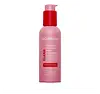
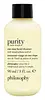
MCoBeauty. Salicylic Foaming Face Cleanser Versus Philosophy Purity Made Simple One-Step Facial Cleanser
This salicylic acid foaming cleanser is formulated around Salicylic Acid to clear breakouts and unclog pores.


What's inside
What's inside
 Key Ingredients
Benefits
Concerns
Ingredients Side-by-side
Water
Skin ConditioningCoco-Betaine
Cleansing
Sodium C14-16 Olefin Sulfonate
Cleansing

Sodium Cocoyl Isethionate
Cleansing
Glycolic Acid
Buffering










Phenoxyethanol
Preservative
Caprylyl Glycol
Emollient
Salicylic Acid
Masking

Potassium Sorbate
Preservative
Terminalia Ferdinandiana Fruit Extract
Antioxidant
Podocarpus Elatus Fruit Extract
Skin ConditioningPleiogynium Timoriense Fruit Extract
Skin ConditioningBackhousia Citriodora Leaf Oil
Masking


Pelargonium Graveolens Flower/Leaf/Stem Extract
MaskingCI 17200
Cosmetic ColorantGeraniol
Perfuming
Linalool
Perfuming
Water, Coco-Betaine, Sodium C14-16 Olefin Sulfonate, Sodium Cocoyl Isethionate, Glycolic Acid, Phenoxyethanol, Caprylyl Glycol, Salicylic Acid, Potassium Sorbate, Terminalia Ferdinandiana Fruit Extract, Podocarpus Elatus Fruit Extract, Pleiogynium Timoriense Fruit Extract, Backhousia Citriodora Leaf Oil, Pelargonium Graveolens Flower/Leaf/Stem Extract, CI 17200, Geraniol, Linalool
Water
Skin ConditioningSodium Lauroamphoacetate
CleansingSodium Trideceth Sulfate
Cleansing
Limnanthes Alba Seed Oil
Skin Conditioning

Coco-Glucoside
Cleansing
Coconut Alcohol
Emollient
PEG-120 Methyl Glucose Dioleate
Emulsifying
Glycerin
Humectant
Phenoxyethanol
Preservative
Isopropyl Alcohol
Solvent
Carbomer
Emulsion StabilisingPolysorbate 20
Emulsifying
Chlorphenesin
Antimicrobial
Citric Acid
Buffering
Disodium Phosphate
BufferingAniba Rosaeodora Wood Oil
Astringent
Linalool
Perfuming
Ethylhexylglycerin
Skin ConditioningXanthan Gum
EmulsifyingSodium Citrate
BufferingBulnesia Sarmientoi Wood Oil
Masking
Pelargonium Graveolens Flower Oil
Masking
Sodium Hydroxide
BufferingAmyris Balsamifera Bark Oil
Masking
Cymbopogon Martini Oil
Masking
Rosa Damascena Flower Oil
Masking
Tocopherol
Antioxidant

Daucus Carota Sativa Seed Oil
Emollient


Mimosa Tenuiflora Bark Extract
Skin ProtectingOrmenis Multicaulis Oil
Masking
Piper Nigrum Fruit Extract
Perfuming
Salvia Sclarea Oil
Masking
Santalum Album Oil
Masking
CI 19140
Cosmetic ColorantWater, Sodium Lauroamphoacetate, Sodium Trideceth Sulfate, Limnanthes Alba Seed Oil, Coco-Glucoside, Coconut Alcohol, PEG-120 Methyl Glucose Dioleate, Glycerin, Phenoxyethanol, Isopropyl Alcohol, Carbomer, Polysorbate 20, Chlorphenesin, Citric Acid, Disodium Phosphate, Aniba Rosaeodora Wood Oil, Linalool, Ethylhexylglycerin, Xanthan Gum, Sodium Citrate, Bulnesia Sarmientoi Wood Oil, Pelargonium Graveolens Flower Oil, Sodium Hydroxide, Amyris Balsamifera Bark Oil, Cymbopogon Martini Oil, Rosa Damascena Flower Oil, Tocopherol, Daucus Carota Sativa Seed Oil, Mimosa Tenuiflora Bark Extract, Ormenis Multicaulis Oil, Piper Nigrum Fruit Extract, Salvia Sclarea Oil, Santalum Album Oil, CI 19140
Reviews
Ingredients Explained
These ingredients are found in both products.
Ingredients higher up in an ingredient list are typically present in a larger amount.
Linalool is a small, naturally occurring scent molecule found in plants like lavender, coriander, bergamot, and more.
It is one of the two most-used fragrance ingredients in cosmetics and added purely for smell. Since it's not used for a skin benefit, there's no "effective dose". Concentration depends on the fragrance load of the product.
The EU requires it to be named on the label above 0.001% in leave-on and 0.01% in rinse-off products.
Fresh linalool is a weak sensitizer but air exposure turns some of it into hydroperoxides, which are strong sensitizers. Those oxidation products are the actual allergy concern.
Patch-test clinics see positive reactions to linalool hydroperoxides in about 4% to 12% of dermatitis patients depending on country and test concentration.
Resassuringly, one analytical study found hydroperoxide levels in real fragranced products to be orders of magnitude below what induced sensitization in animal studies with no evidence of oxidation building up during normal storage.
The practical takeaway is that linalool is fine for most people but worth avoiding if you have a confirmed fragrance contact allergy or a badly compromised barrier.
Products stored a long time after opening are also the high-risk scenario since that is when oxidation happens.
The scent of linalool is described as floral, spicy tropical, and citrus-like.
Learn more about LinaloolPhenoxyethanol is one of the most widely used preservatives in skincare (and for good reason!).
It has a large spectrum of antimicrobial activity and especially effective bacteria, yeast, and mold while only having a weak effect on your skin's natural microbiome.
On a cellular level, it disrupts the cell membranes of microbes by poking holes that make the cell leak. This shuts down the chemical reactions the microbe needs to make energy so it can no longer survive.
Another perk of this ingredient is that it stays functional across a wide pH range (3-10).
You'll often see it paired with boosters like Ethylhexylglycerin; one study showed that a 1:9 ratio of Ethylhexylglycerin to Phenoxyethanol damages bacterial membranes as effectively as doubling the Phenoxyethanol concentration on its own.
Typical use concentrations range from 0.3-1% depending on the formula, and this ingredient is capped at 1% int the EU.
Safety-wise, the fear mongering does not hold up to the evidence. The EU's Scientific Committee on Consumer Safety and FDA consider it safe as a preservative at up to 1%, including for children of all ages.
Adverse systemic effects only showed up in animal studies at exposures roughly 200x higher than what people get from cosmetics. And despite its very widespread use, this ingredient is a rare sensitizer and allergic reactions are uncommon.
Learn more about PhenoxyethanolWater. It's the most common cosmetic ingredient of all. You'll usually see it at the top of ingredient lists, meaning that it makes up the largest part of the product.
So why is it so popular? Water most often acts as a solvent - this means that it helps dissolve other ingredients into the formulation.
You'll also recognize water as that liquid we all need to stay alive. If you see this, drink a glass of water. Remember to stay hydrated!
Learn more about Water

