
What's inside
What's inside
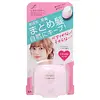 Key Ingredients
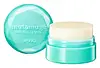
Benefits
Concerns
Ingredients Side-by-side
Ethylhexyl Palmitate
Emollient




Ricinus Communis Seed Oil
Masking


Microcrystalline Wax
Emulsion StabilisingGlyceryl Ethylhexanoate/Stearate/Adipate
EmollientParaffin
Skin Conditioning
Beeswax
Emulsion Stabilising
PEG-8 Glyceryl Isostearate
Emollient
Helianthus Annuus Seed Wax
Skin Conditioning
Silica
Abrasive


Sorbitan Sesquiisostearate
Emulsifying
Dipentaerythrityl Hexahydroxystearate/Hexastearate/Hexarosinate
Skin ConditioningParfum
Masking
Tocopheryl Acetate
Antioxidant


Butyrospermum Parkii Butter
Skin Conditioning
Ethylhexyl Methoxycinnamate
UV Absorber

Ethylhexyl Palmitate, Ricinus Communis Seed Oil, Microcrystalline Wax, Glyceryl Ethylhexanoate/Stearate/Adipate, Paraffin, Beeswax, PEG-8 Glyceryl Isostearate, Helianthus Annuus Seed Wax, Silica, Sorbitan Sesquiisostearate, Dipentaerythrityl Hexahydroxystearate/Hexastearate/Hexarosinate, Parfum, Tocopheryl Acetate, Butyrospermum Parkii Butter, Ethylhexyl Methoxycinnamate
Diethylhexyl Succinate
EmollientBeeswax
Emulsion Stabilising
Hexamethylindanopyran
Masking
PEG-30 Hydrogenated Castor Oil
Emulsifying
Euphorbia Cerifera Cera
Astringent
Hydrogenated Castor Oil
Emollient
Stearamide Mea
Foam BoostingCorn Starch Modified
AbsorbentCamellia Seed Oil
Argania Spinosa Kernel Oil
Emollient

Adansonia Digitata Seed Oil
Emollient
Vinyl Dimethicone/Methicone Silsesquioxane Crosspolymer

Hydrolyzed Silk
Humectant
Glycerin
Humectant
Betaine
Humectant
Triethylhexanoin
MaskingButylene Glycol
Humectant
Water
Skin ConditioningMethyl Methacrylate Crosspolymer
Silica
Abrasive
Paraffin
Skin Conditioning
Tocopherol
Antioxidant

BHT
Antioxidant
Diethylhexyl Succinate, Beeswax, Hexamethylindanopyran, PEG-30 Hydrogenated Castor Oil, Euphorbia Cerifera Cera, Hydrogenated Castor Oil, Stearamide Mea, Corn Starch Modified, Camellia Seed Oil, Argania Spinosa Kernel Oil, Adansonia Digitata Seed Oil, Vinyl Dimethicone/Methicone Silsesquioxane Crosspolymer, Hydrolyzed Silk, Glycerin, Betaine, Triethylhexanoin, Butylene Glycol, Water, Methyl Methacrylate Crosspolymer, Silica, Paraffin, Tocopherol, BHT
Reviews
Alternatives
Ingredients Explained
These ingredients are found in both products.
Ingredients higher up in an ingredient list are typically present in a larger amount.
Beeswax is natural wax produced by honey bees to build their honeycomb.
Because it forms a protective layer on your skin, it can help lock in moisture and reduce water loss. It is also widely used as a thickener and emulsifier in lip balms and lotions. Research suggests beeswax containing moisturizers can support skin barrier integrity.
In comedogenic testing, Beeswax scored a 0-2, which is on the low end. Whether or not a product clogs your pores really comes down to the formula as a whole (not any single ingredient on its own) and your skin.
Cera Alba is the white, bleached form of this ingredient.
Just so you know, beeswax is not vegan since it is animal-derived. It cannot be removed with water, but can be taken off with an oil cleanser.
People with a known Propolis allergy also report to have reactions from beeswax.
Beeswax's wax esters are derived primarily from palmitic and oleic acid (C16 and C18:1). Both of these fall within the C11-C24 feeding window.
The Malassezia yeast can potentially cleave these esters and release usable fatty acids, so this ingredient may not be fungal acne safe. However, not everyone will react to this ingredient.
Learn more about BeeswaxParaffin is a solid wax that pulls its weight as an emollient, occlusive, and consistency-booster.
It softens skin and lays down a protective film to slow water loss and gives products a stable body and structure.
The cosmetic grade stuff is highly refined with a solid safety record. The CIR Expert Panel has repeatedly reaffirmed this ingredient to be safe in current practices of use and concentration.
The worry about carcinogenic compounds only applies to industrial grades, not the purified version used in skincare.
Despite its reputation, the highly reformed form is non-comedogenic and doesn't penetrate deeply into skin.
The good news for fungal-acne prone folks: the Malassezia yeast feeds on fatty acids and lipids and paraffin doesn't contain any of these (so there's nothing for the yeast to metabolize). This ingredient is considered fungal acne safe.
Learn more about ParaffinSilica, also known as silicon dioxide, is a naturally occurring mineral. It is used as a fine, spherical, and porous powder in cosmetics.
Though it has exfoliant properties, the function of silica varies depending on the product.
The unique structure of silica enhances the spreadability and adds smoothness, making it a great texture enhancer.
It is also used as an active carrier, emulsifier, and mattifier due to its ability to absorb excess oil.
In some products, tiny microneedles called spicules are made from silica or hydrolyzed sponge. When you rub them in, they lightly polish away dead skin layers and enhance the penetration of active ingredients.
Learn more about Silica

