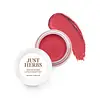
This calming lip moisturizer is formulated around Cocos Nucifera Oil and Moringa Oleifera Seed Oil to calm redness and hydrate lips.

What's inside
What's inside
 Key Ingredients
Benefits
Concerns
Ingredients Side-by-side
Cocos Nucifera Oil
Masking








Prunus Amygdalus Dulcis Oil
Skin Conditioning
Simmondsia Chinensis Seed Oil
Emollient

Moringa Oleifera Seed Oil
Emollient
Butyrospermum Parkii Butter
Skin Conditioning
Mangifera Indica Seed Butter
Skin Conditioning
Garcinia Indica Seed Butter
Skin Conditioning
Calendula Officinalis Flower Extract
Masking
Myristica Fragrans Aril Oil
Perfuming

Euphorbia Cerifera Cera
Astringent
Copernicia Cerifera Wax
Oryza Sativa Starch
AbsorbentLecithin
Emollient
Tocopherol
Antioxidant




CI 77491
Cosmetic ColorantCI 77492
Cosmetic ColorantCI 77499
Cosmetic ColorantCI 77891
Cosmetic ColorantMica
Cosmetic ColorantCI 77004
Cosmetic ColorantCI 73360
Cosmetic ColorantCI 16035
Cosmetic ColorantCI 15850
Cosmetic ColorantCocos Nucifera Oil, Prunus Amygdalus Dulcis Oil, Simmondsia Chinensis Seed Oil, Moringa Oleifera Seed Oil, Butyrospermum Parkii Butter, Mangifera Indica Seed Butter, Garcinia Indica Seed Butter, Calendula Officinalis Flower Extract, Myristica Fragrans Aril Oil, Euphorbia Cerifera Cera, Copernicia Cerifera Wax, Oryza Sativa Starch, Lecithin, Tocopherol, CI 77491, CI 77492, CI 77499, CI 77891, Mica, CI 77004, CI 73360, CI 16035, CI 15850
Cocos Nucifera Oil
Masking
Moringa Oleifera Seed Oil
Emollient
Prunus Amygdalus Dulcis Oil
Skin Conditioning
Psoralea Corylifolia Seed Powder
Skin ConditioningDipotassium Glycyrrhizate
Humectant
Hemidesmus Indicus Root Extract
Skin ConditioningRubia Cordifolia Root Extract
Skin ProtectingTerminalia Arjuna Bark Extract 0.2%
Skin ConditioningCaramel
Cosmetic ColorantHelianthus Annuus Seed Oil
Emollient
Garcinia Indica Seed Butter
Skin Conditioning
Beeswax
Emulsion Stabilising
Sorbitan Olivate
Emulsifying
Euphorbia Cerifera Cera
Astringent
Tocopherol
Antioxidant
Honey
Humectant
Oleic/Linoleic/Linolenic Polyglycerides
Emollient
Cocos Nucifera Oil, Moringa Oleifera Seed Oil, Prunus Amygdalus Dulcis Oil, Psoralea Corylifolia Seed Powder, Dipotassium Glycyrrhizate, Hemidesmus Indicus Root Extract, Rubia Cordifolia Root Extract, Terminalia Arjuna Bark Extract 0.2%, Caramel, Helianthus Annuus Seed Oil, Garcinia Indica Seed Butter, Beeswax, Sorbitan Olivate, Euphorbia Cerifera Cera, Tocopherol, Honey, Oleic/Linoleic/Linolenic Polyglycerides
Ingredients Explained
These ingredients are found in both products.
Ingredients higher up in an ingredient list are typically present in a larger amount.
This ingredient is also known as coconut oil. It is a plant-derived ingredient with skin conditioning properties.
The fatty acid profile of coconut oil is mostly lauric acid (~54%), followed by capric, caprylic, palmitic, and myristic acids. This profile allows it to penetrate easily into skin, moisturize, and improve dry skin.
A double-blind study confirmed that extra virgin coconut oil is as effective as mineral oil for treating very dry skin. Another study found it outperformed mineral oil for mild to moderate atopic dermatitis in children.
Another study from 2018 found that virgin coconut oil can soothe inflammation and boost key skin barrier proteins. Just know this evidence is still only from lab settings and not human trials.
It has also been shown to reduce Staphylococcus aureus, a bacteria that commonly overgrows in people with eczema.
Clinical testing shows very minimal skin irritation and no evidence of sensitization or phototoxicity.
Coconut oil gets flagged as a "fragrance" because it has a natural mild scent (not because it's a synthetic perfume). The European Cosmetic ingredient database also lists "perfuming" as a function of this ingredient.
Just so you know, the term "fragrance" is completely unregulated. Some brands still use botanical extracts or essential oils in their "fragrance-free" formulas, but regulatory databases technically classify these under "fragrance".
Coconut oil has a tiny and useless bit of natural SPF. Early lab studies clocked it around SPF 7-8 but a more recent study found the real number closer to SPF 1.2. It also offers no meaningful UVA protection (SPF only overs UVB rays).
The comedogenic rating of 4/5 means it has a high potential to clog pores; but it's worth noting that comedogenicity is highly individual and ratings cannot predict how an overall formula will behave on skin.
Since lauric acid is the dominant fatty acid, this ingredient may not be fungal acne safe. The Malassezia yeast feeds on fatty acids with carbon chain lengths between 11-24, and lauric acid falls within these lengths (C12).
Learn more about Cocos Nucifera OilEuphorbia Cerifera Cera (aka candelilla wax) is a vegan stand-in for beeswax. It is a plant-derived wax that functions as an astringent, emulsion stabilizer, film-former, and skin conditioner.
On skin, it forms a protective barrier that helps lock in moisture while it enhances product stability, prevents separation, and helps color last longer in makeup.
This ingredient is generally safe for use in cosmetics with one nuance: some grades of candelilla wax can naturally contain benzyl alcohol at concentrations high enough to require declaration under EU labeling rules. This isn't a concern for most people but relevant for those with fragrance sensitivities.
Candelilla wax contains fatty acids (mainly C31) and wax esters that can be used by the Malassezia yeast, so this ingredient may not be fungal acne safe.
You might see Euphorbia Cerifera "Wax" instead of "cera". This is because some brands, databases, or labels use it interchangeably; they're the same ingredient.
Learn more about Euphorbia Cerifera CeraGarcinia Indica Seed Butter isn't fungal acne safe.
Moringa Oleifera Seed Oil is a lightweight oil from the seeds of the Moringa oleifera tree. In cosmetics, it's an emollient that forms a light film to slow water loss and soften skin.
Its fatty acid composition is dominated by oleic acid (70-78%), with smaller amounts of behenic, palmitic, and stearic acids (this profile is actually pretty similar to olive oil).
Notably, this ingredient is oxidatively stable for an oil and resists going rancid as fast as other oils.
A small, in vivo study on 32 participants found a cream with this ingredient increased skin hydration with no reported skin irritation. It also found the tocopherol content gave it some antioxidant activity as well.
Because this oil is so high in oleic acid, Malassezia can use it as a food source and this ingredient may not be fungal acne safe.
For everyone else, this ingredient is well-tolerated and nourishing with a good safety track record.
This ingredient shows up on a lot of "pore-clogging" lists but there's no real evidence behind that. It doesn't even have a comedogenic rating from an actual study; the numbers you'll find online come from blogs citing other blogs.
Ratings for other ingredients mostly come from a 1980s rabbit ear test. This test doesn't translate well to human skin or to real products because the ingredient sits at a much lower percentage.
Some people still find it breaks them out. So if that's you, definitely trust your skin.
Learn more about Moringa Oleifera Seed OilThis ingredient is also known as sweet almond oil. It is a lightweight, cold-pressed oil from the ripe seeds of the sweet almond tree.
Sweet almond oil is rich in skin-nourishing fatty acids such as oleic acid (55-86%) and linolenic acid (7-35%).
As an emollient, it softens and hydrates skin by forming a thin barrier that locks in moisture.
Clinical studies have found it to be non-irritating and non-sensitizing. The CIR Expert Panel has evaluated the available safety data and concluded it is safe for topical use.
Because of the oleic acid content, this ingredient may not be fungal acne safe.
This ingredient does have a comedogenic rating of 3, but this doesn't mean a formula with this ingredient will clog pores.
Human testing has proved that any finished product with a comedogenic ingredient won't automatically make you break out; it really comes down to concentration, formula, and your skin.
Learn more about Prunus Amygdalus Dulcis OilTocopherol is a fat-soluble antioxidant known as Vitamin E.
You'll find this ingredient in the vast majority of skincare (for good reason). It works to neutralize free radicals, or unstable molecules generated by UV exposure, pollution, and other environmental stressors, before they can cause oxidative damage to your skin cells.
Topically applied tocopherol has been shown to protect against UV damage by ramping up the skin's own natural defense enzymes.
It also acts as a skin conditioning agent; some studies show that regular topical use can improve the skin's water-binding capacity over 2-4 weeks.
This ingredient is especially loved for being a team player. When combined with Vitamin C, the photoprotective effect of both ingredients roughly doubles and the combo also helps reduce UV-induced DNA damage.
This ingredient has some brightening potential but it's more of a prevention ingredient than spot-fader. Cell studies show it can slow down melanin production but it's worth noting that it's not the most powerful brightener out there.
In formulations, it also serves as a stabilizer that helps protect other oxidation-prone ingredients from degrading.
Concentrations usually range from 0.1-1% in most leave-on products.
Learn more about Tocopherol

