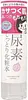
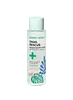
Ishizawa Labs Sukoyaka Suhada Urea Moisture Lotion Versus Peach Slices Snail Rescue Blemish Busting Toner
This hydrating toner is formulated around Urea and Ceramide Ng to hydrate skin and strengthen the skin barrier.
This calming toner is formulated around Snail Secretion Filtrate and Centella Asiatica Extract to calm redness and strengthen the skin barrier.


What's inside
What's inside
 Key Ingredients
Benefits
Concerns
No concerns
Ingredients Side-by-side
Water
Skin ConditioningGlycerin
Humectant


Dipropylene Glycol
HumectantPentylene Glycol
Skin Conditioning
Urea
Buffering


Ceramide Ng
Skin Conditioning


Sodium Hyaluronate
Humectant

Sodium Acetylated Hyaluronate
Humectant
Hydrolyzed Hyaluronic Acid
Humectant
Hydroxyethyl Urea
Humectant
Cirsium Flower/Leaf/Stem Extract
Skin ConditioningAnthemis Nobilis Flower Extract
Masking
Erica Cinerea Flower Extract
Skin ConditioningCalendula Officinalis Flower Extract
Masking
Centaurea Cyanus Flower Extract
Astringent
Pyrus Malus Fruit Extract
Skin Conditioning
Prunus Persica Leaf Extract
Emollient
Pimpinella Anisum Fruit Water
Skin ConditioningDipotassium Glycyrrhizate
Humectant
Sodium Citrate
BufferingLactic Acid
Buffering






Butylene Glycol
Humectant
PPG-4-Ceteth-20
EmulsifyingAlcohol Denat.
Antimicrobial

Phenoxyethanol
Preservative
Water, Glycerin, Dipropylene Glycol, Pentylene Glycol, Urea, Ceramide Ng, Sodium Hyaluronate, Sodium Acetylated Hyaluronate, Hydrolyzed Hyaluronic Acid, Hydroxyethyl Urea, Cirsium Flower/Leaf/Stem Extract, Anthemis Nobilis Flower Extract, Erica Cinerea Flower Extract, Calendula Officinalis Flower Extract, Centaurea Cyanus Flower Extract, Pyrus Malus Fruit Extract, Prunus Persica Leaf Extract, Pimpinella Anisum Fruit Water, Dipotassium Glycyrrhizate, Sodium Citrate, Lactic Acid, Butylene Glycol, PPG-4-Ceteth-20, Alcohol Denat., Phenoxyethanol



Reviews
Ingredients Explained
These ingredients are found in both products.
Ingredients higher up in an ingredient list are typically present in a larger amount.
Butylene Glycol (or BG) is used within cosmetic products for a few different reasons:
Overall, Butylene Glycol is a safe and well-rounded ingredient that works well with other ingredients.
Though this ingredient works well with most skin types, some people with sensitive skin may experience a reaction such as allergic rashes, closed comedones, or itchiness.
Learn more about Butylene GlycolHydrolyzed Hyaluronic Acid is hyaluronic acid (HA) that is broken down into lower molecular weight fragments.
It's a humectant that pulls and holds water in the skin to help with hydration, plumpness, and reduce transepidermal water loss.
Because hydrolyzed hyaluronic acid is smaller in size, it can slip past your outermost layer of skin more easily than full-sized HA.
Most formulations will combine all sizes to get the best of both worlds.
Typical usage levels range from 0.01-1%. Any percentage higher than 2% might become goopy and tacky.
Learn more about Hydrolyzed Hyaluronic AcidSodium Citrate is the sodium salts of citric acid. In skincare, it is used to alter pH levels and acts as a preservative.
Its main functions are to maintain the pH of a product and neutralize metal ions.
The acidity of our skin is maintained by our glands and skin biome; normal pH level of skin is slightly acidic (~4.75-5.5).
Being slightly acidic allows our skin to create an "acid mantle". This acid mantle is a thin barrier that protects our skin from bacteria and contaminants.
Learn more about Sodium CitrateSodium Hyaluronate is the salt form of hyaluronic acid. It is a long sugar chain that is naturally found in your skin, joints, and connective tissue that maintains hydration and elasticity.
In skincare, it works as a humectant. It pulls water from the environment and deeper layers of skin and binds it to the surface.
Interestingly, the size of the molecule affects its behavior:
Some clinical evidence links low molecular weight versions to improved wrinkle depth, elasticity, anti-inflammatory effects, and barrier repair.
Many serums use a blend of both weights so you can get surface hydration plus longer-lasting and deeper effects.
You'll typically see concentrations between 0.1-2% for this ingredient.
Learn more about Sodium Hyaluronate

